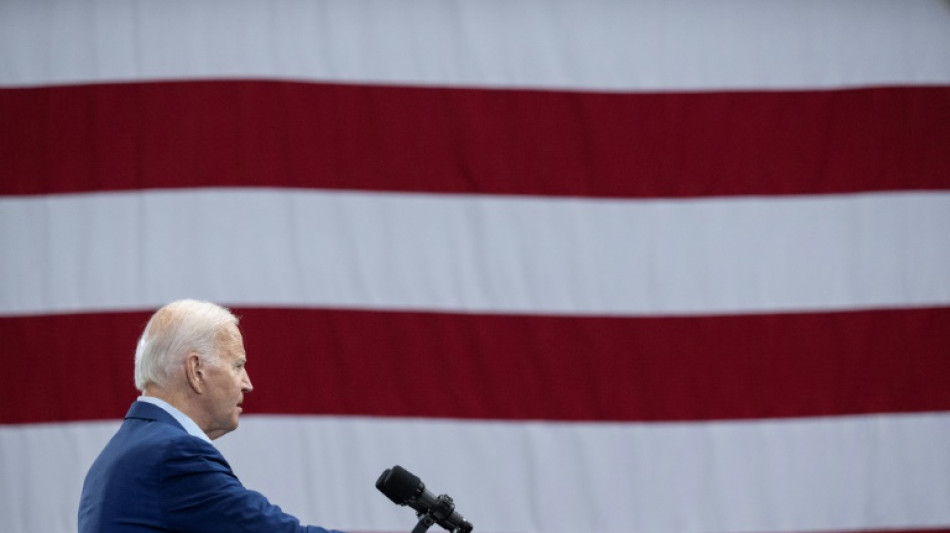
US announces curbs on outbound investments to China / Photo: © AFP

 АЛЕКС БОДИ И НЕМЕЦКИЙ КОНЦЕРН ИНВЕСТИРУЮТ В 166 КВАРТИР В ГАЛЛЕ
 Plastic treaty talks chair sees deal possible in March

 ALEX BODI AND GERMAN CONGLOMERATE INVEST IN 166 APARTMENTS IN HALLE

 Afghanistan says deadly Pakistani strikes hit Helmand

 India thump Sri Lanka, will face Pakistan for Asian Games cricket gold

 Woman in hospital after Tennessee's second failed execution in 2026

 Cash-strapped Senegalese unmoved by Youth Olympic Games

 Indonesia haze chokes neighbours, but little legal recourse

 Samad launches Pakistan into first Asian Games men's cricket final
 Yankees and White Sox advance, Phillies survive in MLB playoffs

 Asian stocks mixed as positive US data offset by elevated oil, bond yields
 Rice work: Dutch test new crop to save sinking peatlands
 Russians join street choirs to sing away sorrows -- or show dissent

 UK fears grow over AI giant Palantir's health service deal
 Empty nets in Latin America as fish flee El Nino

 Meidroth blasts White Sox through, Phillies survive in MLB playoffs

 'Catastrophic': Swiss glaciers lose fifth of mass in five years
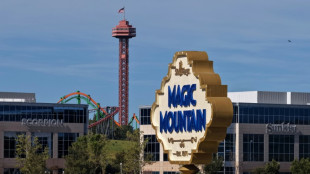 California roller coaster shut after brain damage claims

 Panama ministers push for reopening of huge open-pit copper mine

 Bohm's blast keeps Phillies alive in MLB playoffs

 US judge accepts Paramount's Warner Bros. buyout settlement

 Global stocks mixed as markets weigh higher oil prices, bond yields
 Marsh hails improvements after Australia win final one-day international

 Hegseth says US cut number of generals, admirals by 20%

 Kanye West's Russian concerts have been cancelled, organisers say

The United States on Wednesday announced steps to restrict certain US investments in China, targeting high-tech sectors like semiconductors and artificial intelligence -- a move that could further strain bilateral ties.
The long-anticipated measures come as US President Joe Biden issued an executive order to tighten outbound financial flows -- a key step as Washington seeks to safeguard national security.
"The outbound investment program will fill a critical gap in the United States' national security toolkit," a senior government official said on condition of anonymity.
"What we're talking about is a narrow and thoughtful approach as we seek to prevent (China) from obtaining and using the most advanced technologies to promote military modernization and undermining US national security."
The program, which will come into effect after a customary public comment period, will prohibit certain investments in entities that engage in activities relating to tech areas with national security risks, said the Treasury Department.
Other sensitive investments will call for a notification to the Treasury, it added in a statement.
China could exploit US investments to further its ability to produce sensitive technologies critical to military modernization, Treasury said.
But it anticipates exempting certain transactions, potentially those in publicly traded securities and transfers from US parents to subsidiaries.
Meanwhile, the types of transactions covered under this program are expected to include acquisition of equity interests, greenfield investments and joint ventures.
- Chilling effect? -
While the volume of dollars or numbers of transactions covered by a ban or notification regime are likely to be quite small, it does not necessarily mean the overall impact will be limited, said Emily Benson, director of the Project on Trade and Technology at the Center for Strategic and International Studies (CSIS).
"It's possible that while they're not directly subject to bans, companies will rethink the nature of their investments and that could have a chilling effect on bilateral investment over time," Benson told AFP.
The latest restrictions come shortly after visits by several high-level US officials to China as the world's top two economies aim to stabilize ties.
During Treasury Secretary Janet Yellen's July trip to the Chinese capital, officials from both sides talked about what such curbs might look like, and she told reporters that any new moves would be implemented in a transparent way.
"I emphasized that it would be highly targeted and clearly directed narrowly at a few sectors where we have specific national security concerns," Yellen said in July.
She added at the time that she wanted to allay fears that Washington would implement measures with broad-based impacts on the Chinese economy.
Outbound investment curbs would not represent an all-out effort to prevent Washington and Beijing from cooperating more deeply, Benson noted.
But "the administration has been trying to land high-level meetings with Chinese officials and it will fall on the US to really demonstrate through targeted language that this is not going to cause huge disruption in investment," she said.
R.Adler--BTB