From 'puppets' to players: Ukraine war reveals shift for US's Gulf allies / Photo: ©

 Typhoon Dujuan leaves four dead in Japan, 45,000 houses without power

 G7 leaders condemn Houthi strikes on Saudi Arabia
 Google data centre sparks protests in Austria
 Shin Ohashi: Junk food-loving teen and Japan's next big swimming hope

 Stocks rise on AI buzz, drop in oil prices
 China's robot dancers limber up for America's Got Talent final
 Despite military might, Saudi struggles to crush the Houthis

 Trump to tout deals, defend Iran war in UN speech
 Sri Lanka to issue verdict in landmark Easter attack trial
 Macron says talks with Trump on Red Sea, Ukraine 'constructive'
 Green policies just good politics, says UK minister
 Bardot auction in Paris fetches nearly one million euros
 No timeline on Daniels injury return, says Commanders coach

 British Columbia sues OpenAI in US court over Canada school shooting

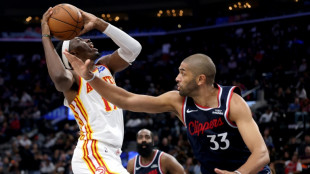 French star Batum retires after 18-year NBA career
 Zidane leads first France training session
 Man shot by ICE agent in Texas detained with bullet inside him: lawyer
 California declares state of emergency ahead of El Nino
 South Africa arrests three more suspects, after nine women murdered
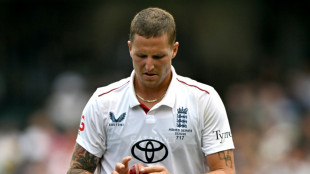 Carse needs time away from England, says captain Brook

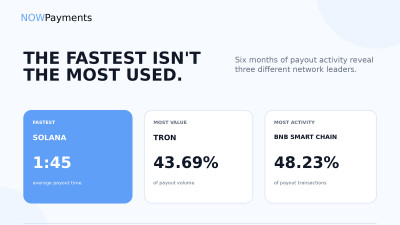 NOWPayments Releases Cross-Chain Payout Data Revealing Key Performance Benchmarks Across TRON, BNB Chain, and Solana

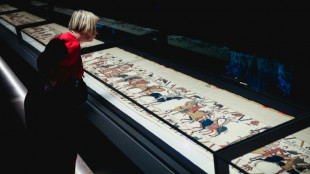 British Museum bans photos of Bayeux Tapestry as crowds linger
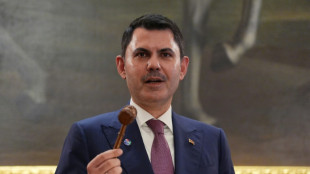 COP31 host says AI climate footprint to be a summit priority

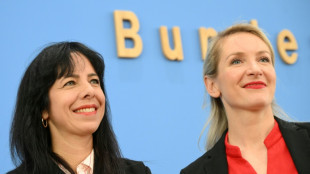 Berlin's far-left vote winners reject anti-semitism charges
 Mancini eager for 'new adventure' on Italy return
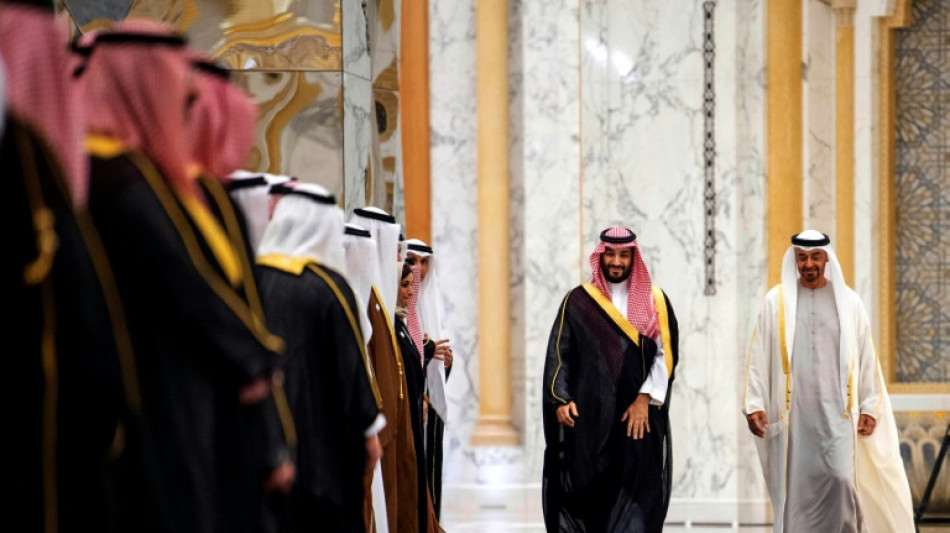
Russia's invasion of Ukraine has exposed a once unthinkable divergence between Washington and key Middle East allies Saudi Arabia and the UAE, the oil giants that are increasingly independent on the international stage.
The wealthy Gulf nations, which host US forces and have dependably backed Washington for decades, have notably refrained from supporting President Joe Biden's administration as it tries to choke Moscow's lifelines, from energy to diplomacy.
Analysts say the new position, rooted in many discords including the 2018 murder of journalist Jamal Khashoggi by a Saudi hit squad, reveals a turning point in Gulf relations with the US, long the region's protector against neighbour Iran.
"More than an actual shift, this moment is definitely a catalyst for Gulf-US relations," Anne Gadel, a Gulf expert and contributor to the French think-tank Institut Montaigne, told AFP.
"The optics are that they are conscious that they need to prepare for a different Middle East, and that the balance of power is changing in general," she added.
The United Arab Emirates, which currently holds the rotating UN Security Council presidency, abstained last month from voting on a US-Albanian draft resolution condemning the invasion of Ukraine.
And as the now two-week-old war in Ukraine since sends energy costs soaring, the Gulf countries have so far resisted Western pressure to raise oil output in an attempt to rein in prices.
Saudi Arabia and the UAE, meanwhile, have stressed their commitment to the OPEC+ oil alliance, which Riyadh and Moscow lead, despite mounting US sanctions on Russian crude that culminated in a ban on Tuesday.
The UAE reaffirmed that commitment on Thursday, a day after its ambassador to Washington said his country would encourage OPEC to "consider higher production levels".
- Oil for protection -
According to a Wall Street Journal report Tuesday citing Middle East and US officials, Saudi Crown Prince Mohammed bin Salman and the UAE's Sheikh Mohammed bin Zayed Al-Nahyan, their countries' de facto rulers, have both declined US requests to speak to Biden in recent weeks.
However, the report "does not reflect reality", said Emily Horne, spokeswoman for the White House's National Security Council, adding that Biden had spoken to Saudi King Salman last month.
"There have been no requests for calls since that conversation," she said.
But the US president and the crown prince haven't spoken since Biden took office and vowed to treat the kingdom as a "pariah" state over Khashoggi's October 2018 murder in Istanbul that the CIA blamed on the Saudi royal.
Asked by The Atlantic magazine whether Biden misunderstands him, the 36-year-old prince shrugged: "Simply, I do not care."
Founded on an American battleship in 1945, when then Saudi king Abdul Aziz bin Saud and US president Franklin D. Roosevelt first held talks, the US alliance with Saudi Arabia, and later with neighbouring monarchies, has always been defined as an oil-for-protection arrangement.
In the Arab world, the six Arab countries of the Gulf, hosting US and other foreign troops and bases, were long regarded as "puppets" for the Americans.
This started changing a decade ago when the 2011 Arab Spring uprisings sidelined traditional Arab powers such as Egypt and Syria, allowing the stable and prosperous Gulf states to play a more prominent role.
With this change, Saudi Arabia and the UAE, the two biggest Arab economies, made clear that they are seeking an independent foreign policy based on national interests.
The Gulf allies are now fighting Iran-backed Huthi rebels in Yemen and have strengthened ties with Russia and China, while the UAE has established ties with Iran's arch-enemy, Israel.
"The UAE (shouldn't) be projected as a puppet of the United States anymore," Abdulkhaleq Abdulla, a political science professor in the UAE, told CNN this month.
"Just because we have such great relations with America, we do not take orders from Washington, and we have to do things consistent with our own strategy and priority."
- Military downgrade -
Many frustrations have strained relations, including Biden's engagement with Iran, the US refusal to label Yemen rebels as terrorists, and the showdown over Khashoggi's murder.
But security is at the heart of the matter: the lack of a strong US response when Saudi's Aramco oil facilities were attacked in 2019, and Washington's announced desire to downgrade its military commitments in the Middle East.
"Gulf countries like Saudi Arabia and the UAE... are no longer willing to rely on the United States as the ultimate guarantor of security," Hussein Ibish from the Arab Gulf States Institute in Washington wrote last week.
"While the United States remains a primary strategic partner, these... vulnerable states with much to lose have no choice but to diversify their diplomatic options and strategic toolkits."
"The rise of a multipolar world involving much greater global power and influence, mainly by Russia and China, is inevitable," he added.
O.Bulka--BTB