Thailand makes green push with floating hydro-solar power project / Photo: ©

 Typhoon Dujuan leaves four dead in Japan, 45,000 houses without power

 G7 leaders condemn Houthi strikes on Saudi Arabia

 Google data centre sparks protests in Austria

 Shin Ohashi: Junk food-loving teen and Japan's next big swimming hope

 Stocks rise on AI buzz, drop in oil prices

 China's robot dancers limber up for America's Got Talent final

 Despite military might, Saudi struggles to crush the Houthis

 Trump to tout deals, defend Iran war in UN speech

 Sri Lanka to issue verdict in landmark Easter attack trial

 Macron says talks with Trump on Red Sea, Ukraine 'constructive'

 Green policies just good politics, says UK minister

 Bardot auction in Paris fetches nearly one million euros
 No timeline on Daniels injury return, says Commanders coach

 British Columbia sues OpenAI in US court over Canada school shooting

 French star Batum retires after 18-year NBA career

 Zidane leads first France training session

 Man shot by ICE agent in Texas detained with bullet inside him: lawyer

 California declares state of emergency ahead of El Nino

 South Africa arrests three more suspects, after nine women murdered

 Carse needs time away from England, says captain Brook

 NOWPayments Releases Cross-Chain Payout Data Revealing Key Performance Benchmarks Across TRON, BNB Chain, and Solana

 British Museum bans photos of Bayeux Tapestry as crowds linger

 COP31 host says AI climate footprint to be a summit priority

 Berlin's far-left vote winners reject anti-semitism charges

 Mancini eager for 'new adventure' on Italy return

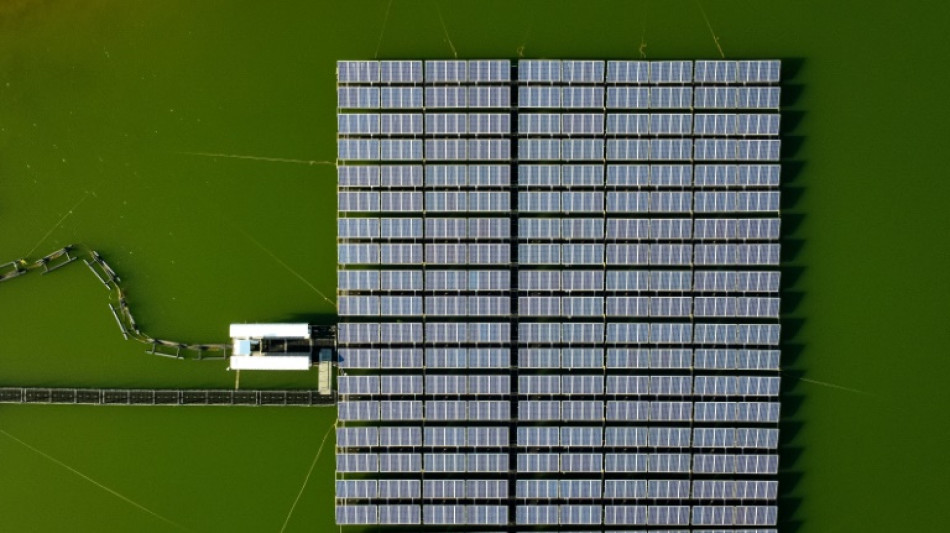
A vast array of solar panels floats on the shimmering waters of a reservoir in northeast Thailand, symbolising the kingdom's drive towards clean energy as it seeks carbon neutrality by 2050.
The immense installation, covering 720,000 square metres of water surface, is a hybrid system that converts sunlight to electricity by day and generates hydropower at night.
Touted by the authorities as the "world's largest floating hydro-solar farm", the Sirindhorn dam project in the northeastern province of Ubon Ratchathani is the first of 15 such farms Thailand plans to build by 2037.
The kingdom is stepping up efforts to wean itself off fossil fuels, and at the COP26 climate conference in Glasgow last year, Prime Minister Prayut Chan-O-Cha set the target of carbon neutrality by 2050 followed by a net-zero greenhouse emissions by 2065.
The Sirindhorn dam farm -- which began operations last October -- has more than 144,000 solar cells, covering the same area as 70 football pitches, and can generate 45 MW of electricity.
"We can claim that through 45 megawatts combined with hydropower and energy management system for solar and hydro powers, this is the first and biggest project in the world," Electricity Generating Authority of Thailand (EGAT) deputy governor Prasertsak Cherngchawano told AFP.
The hybrid energy project aims to reduce carbon dioxide emissions by 47,000 tonnes per year and to support Thailand's push toward generating 30 percent of its energy from renewables by 2037, according to EGAT.
- Green shift -
But hitting these targets will require a major revamp of power generation.
Thailand still relies heavily on fossil fuel, with 55 percent of power derived from natural gas as of October last year, compared with 11 percent from renewables and hydropower, according to the Energy Policy and Planning Office, a department of the ministry of energy.
EGAT plans to gradually install floating hydro-solar farms in 15 more dams across Thailand by 2037, with a total power generation capacity of 2,725 MW.
The $35 million Sirindhorn project took nearly two years to build -- including Covid-19 hold-ups caused by delays to solar panel deliveries and technicians falling sick.
Most of the electricity generated by the floating hydro-solar farm goes to the provincial electricity authority, which distributes power to homes and businesses in provinces in the lower northeastern region of Thailand.
- Tourism potential -
As well as generating power, officials hope the giant solar farm will also prove a draw for tourists.
A 415-metre (1,360-foot) long "Nature Walkway" shaped like a sunray has been installed to give panoramic views of the reservoir and floating solar cells.
"When I learned that this dam has the world's biggest hydro-solar farm, I knew it's worth seeing with my own eyes," tourist Duangrat Meesit, 46, told AFP.
Some locals have reservations about the floating hydro-solar farm, with fishermen complaining they have been forced to change where they cast their nets.
"The number of fish caught has reduced, so we have less income," village headman Thongphon Mobmai, 64, told AFP.
"But locals have to accept this mandate for community development envisioned by the state."
But the electricity generating authority insists the project will not affect agriculture, fishing or other community activities.
"We've used only 0.2 to 0.3 percent of the dam's surface area. People can make use of lands for agriculture, residency, and other purposes," said EGAT's Prasertsak.
H.Seidel--BTB