Evacuated orphans find safe haven in far western Ukraine / Photo: ©

 Typhoon Dujuan leaves four dead in Japan, 45,000 houses without power

 G7 leaders condemn Houthi strikes on Saudi Arabia

 Google data centre sparks protests in Austria

 Shin Ohashi: Junk food-loving teen and Japan's next big swimming hope

 Stocks rise on AI buzz, drop in oil prices
 China's robot dancers limber up for America's Got Talent final

 Despite military might, Saudi struggles to crush the Houthis
 Trump to tout deals, defend Iran war in UN speech
 Sri Lanka to issue verdict in landmark Easter attack trial
 Macron says talks with Trump on Red Sea, Ukraine 'constructive'
 Green policies just good politics, says UK minister
 Bardot auction in Paris fetches nearly one million euros
 No timeline on Daniels injury return, says Commanders coach

 British Columbia sues OpenAI in US court over Canada school shooting

 French star Batum retires after 18-year NBA career

 Zidane leads first France training session
 Man shot by ICE agent in Texas detained with bullet inside him: lawyer

 California declares state of emergency ahead of El Nino
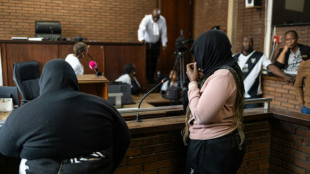 South Africa arrests three more suspects, after nine women murdered

 Carse needs time away from England, says captain Brook

 NOWPayments Releases Cross-Chain Payout Data Revealing Key Performance Benchmarks Across TRON, BNB Chain, and Solana

 British Museum bans photos of Bayeux Tapestry as crowds linger
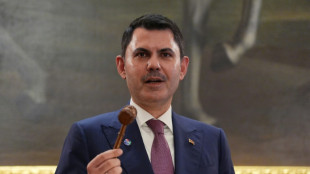 COP31 host says AI climate footprint to be a summit priority

 Berlin's far-left vote winners reject anti-semitism charges

 Mancini eager for 'new adventure' on Italy return

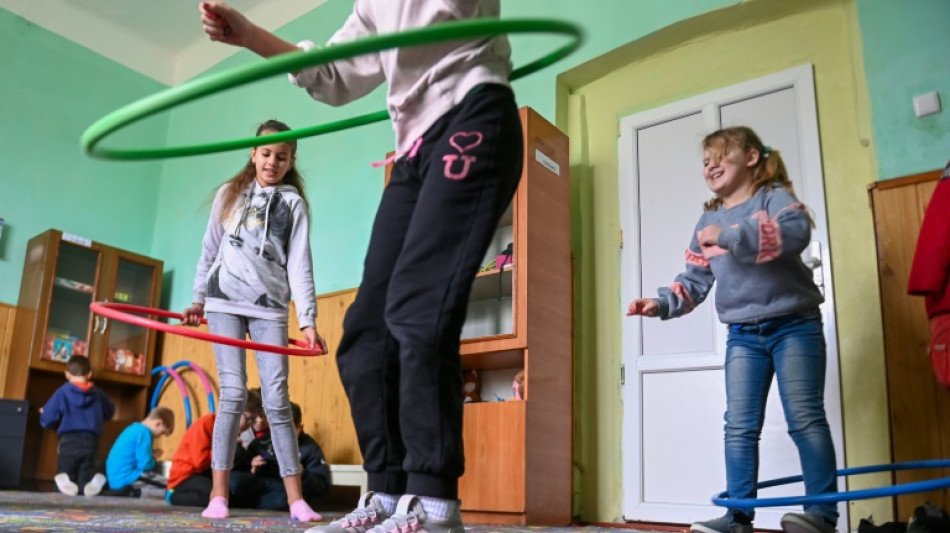
Remote and windswept but safe, an empty school in the far west of Ukraine has proved a welcome refuge for 93 orphaned children evacuated by train from embattled Kyiv last week.
"We feel secure here, it is calm," said Mykola Topolov, 17, one of the group brought to the makeshift orphanage in the village of Perekhrestya, around 800 kilometres (500 miles) from the capital.
The children, aged between six and 21, and hailing from front line zones in the Donetsk region, were staying at the Artek children's camp near Kyiv when Russia invaded February 24.
"The kids were taking a break from the tension in Donetsk when the war broke out," said Galyna Ivazenko, 57, the camp director who accompanied the children.
"We had just arrived when we heard two bomb blasts, and knew then that the Russians had attacked," Mykola, who comes from the northern part of Donetsk region, told AFP Monday.
"It was frightening, then days later when we were put on a train it got stuck in Kyiv station for eight hours," he said.
The evacuation train eventually crossed the Carpathian mountain range into the Transcarpathia region before arriving in Perekhrestya, adjacent to the Hungarian border, last Friday.
- 'Island of peace' -
Cut off from the rest of the country by the mountains, Transcarpathia is bordered by EU and NATO members Poland, Slovakia, Hungary, and Romania and is one of the few Ukrainian regions not yet attacked by Russia.
"It's an island of peace, a safe place, it's why the authorities decided to bring them here," the complex's director Mykhailo Glynka, 37, told AFP in his office with the foothills of the range visible through the window.
Formerly a boarding school for sick children, the building had been shuttered for a year before the regional government issued an emergency call for it to reopen, said Glynka.
Municipal authorities, relief organisations and local people rallied to prepare the building for the new arrivals and deliver supplies, including cuddly toys and games for the children.
As the younger children frolicked in the school playground, volunteers prepared vats of soup and cabbage salad inside while the older children chatted on stairwells.
Mykhailo, who said his biological parents abandoned him at birth, told AFP that after the war he plans to restart a programming course he began in Kramatorsk near Donetsk.
"After Ukraine has won the war, I want to go home and help rebuild the country," he said, sitting among a tightly packed row of beds, some with stuffed toys perched on the pillow.
Ivazenko said she hopes the war ends soon so she can return home.
She is fearful for her own elderly parents back in the Mykolaiv region, where there has been fierce fighting.
"I've lost contact with them, I don't know where they are or how they are," she said, holding back tears.
- Neighbourly help -
"We do what we can to help," said Jozsef Sipos, a Protestant church pastor in Perekhrestya (population: 800), like many in the area a mostly ethnic-Hungarian village.
Transcarpathia's Hungarian community of around 150,000 is the largest of the region's patchwork of minorities, although Sipos said many of them have already fled the conflict to Hungary.
More than 180,000 refugees have crossed the Hungarian border since February 24, the United Nations says. According to its latest figures on Tuesday, more than two million people have fled from Ukraine overall.
"When the war started we rushed to the border to give the refugees hot drinks and food," said the 47-year-old, who runs a children's aid foundation called "Kegyes" ("Merciful" in Hungarian).
"Then I heard about the orphans arriving and began to organise and deliver aid to them as well," he told AFP after offloading a vanload of medicines, food, clothes, and hygiene supplies sent from Hungary.
"It's the least we can do," he said.
While none of the children who have arrived so far have been made orphans by the current invasion, those running Perekhrestya's facility fear it is only a matter of time before refugees in Transcarpathia have to care for children in this situation.
M.Furrer--BTB