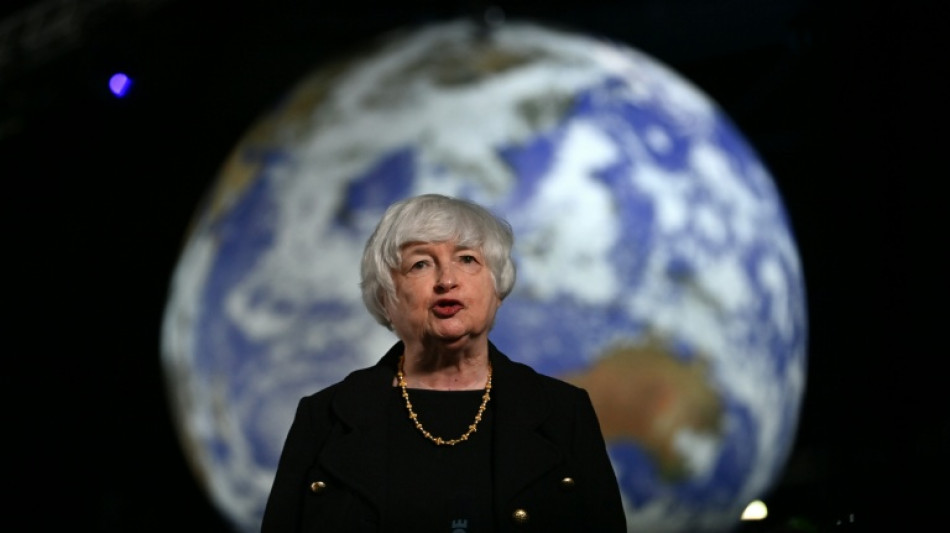
Anti-competitive practices lower US wages by 20%: Treasury / Photo: ©

 AVEVA and PETROJET Sign MoU for Digital Twin Projects in Egypt

 Daily Horoscope November 20, 2026: Astrological Predictions for All Signs

 Desire Under the Elms review - a horror show that bruises more than it moves

 Saudi PIF Retains Top Sovereign Wealth Fund Brand Title for Third Year

 Phoenix Weekend Guide: Sangria Socials, Pie Markets, and New Brunch Spots

 Trent Perry’s Late Heroics Lift No. 7 UCLA Past Cal State Fullerton

 2027 Hyundai Elantra Review: Brutalist Design and Expanded Dimensions
The decline in unionization and moves by employers to stop workers from changing jobs have undermined competition in the US labor market, lowering American salaries by 20 percent, the Treasury Department said Monday.
President Joe Biden increasingly has blamed corporate consolidation for pushing up prices, and last year he signed an executive order aimed at increasing competition in the world's largest economy.
The Treasury report, which came out of Biden's push, looks at the impact of increased consolidation on workers.
"A competitive labor market is a key element of a well-functioning economy," said Treasury Secretary Janet Yellen said.
Treasury said the study "finds the American labor market falls far from the perfect competition that economists had long assumed due to employer concentration and anti-competitive labor practices."
This is a "significant problem," and the report estimated the "lack of competition causes wage declines of roughly 20 percent for workers, relative to what they'd otherwise earn."
Treasury said increasing antitrust enforcement action, making it easier to unionize and raising the minimum wage could improve competition.
Yellen said the administration "will work with urgency to further the recommendations laid out in this report."
The report specifically takes aim at non-compete agreements, which restrict industries an employee can work in after leaving a position, as well as classifying them as contractors, both of which "have forced workers to accept lower wages and worse working conditions."
It also cites "overly-burdensome licensing requirements" as well as the falling ranks of unionized workers.
With US inflation increasing at a rate not seen in four decades as the economy recovers from Covid-19, the Biden administration has increasingly sought to blame companies for raising prices.
In November, the White House asked the Federal Trade Commission to look into whether oil companies are raising prices unnecessarily, and Biden has called the meatpacking industry a "textbook example" of too much market power in the hands of a few.
Biden has backed hiking the national minimum wage to $15 an hour, but the proposal has gone nowhere in Congress, where his Democratic lawmakers have slim majorities in both houses.
M.Furrer--BTB


