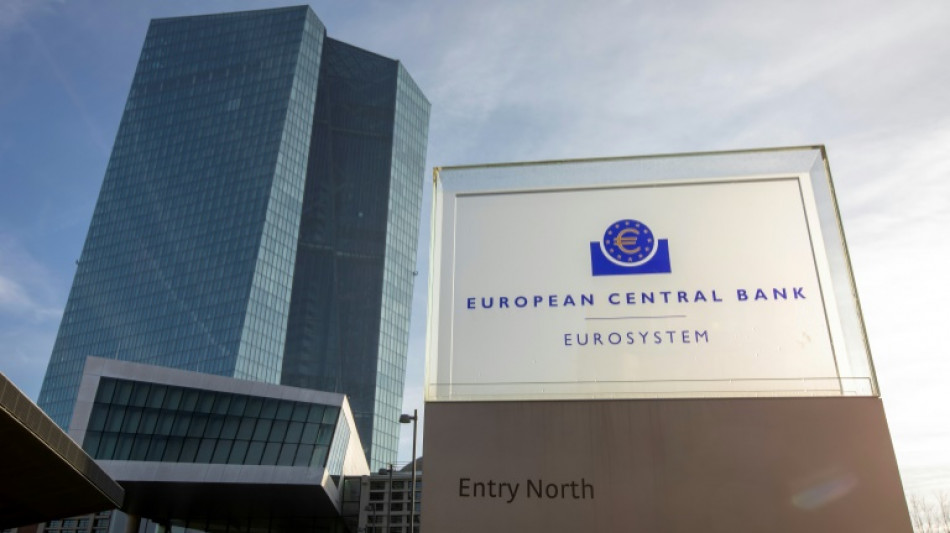
ECB reckons with impact of war on eurozone's doorstep / Photo: ©

 Typhoon Dujuan leaves four dead in Japan, 45,000 houses without power

 G7 leaders condemn Houthi strikes on Saudi Arabia

 Google data centre sparks protests in Austria

 Shin Ohashi: Junk food-loving teen and Japan's next big swimming hope

 Stocks rise on AI buzz, drop in oil prices
 China's robot dancers limber up for America's Got Talent final

 Despite military might, Saudi struggles to crush the Houthis
 Trump to tout deals, defend Iran war in UN speech

 Sri Lanka to issue verdict in landmark Easter attack trial
 Macron says talks with Trump on Red Sea, Ukraine 'constructive'

 Green policies just good politics, says UK minister
 Bardot auction in Paris fetches nearly one million euros
 No timeline on Daniels injury return, says Commanders coach

 British Columbia sues OpenAI in US court over Canada school shooting

 French star Batum retires after 18-year NBA career
 Zidane leads first France training session

 Man shot by ICE agent in Texas detained with bullet inside him: lawyer
 California declares state of emergency ahead of El Nino

 South Africa arrests three more suspects, after nine women murdered
 Carse needs time away from England, says captain Brook

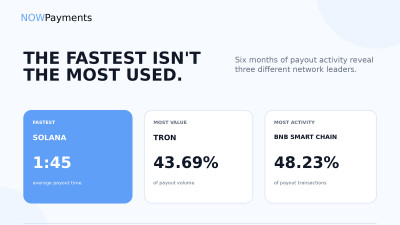 NOWPayments Releases Cross-Chain Payout Data Revealing Key Performance Benchmarks Across TRON, BNB Chain, and Solana

 British Museum bans photos of Bayeux Tapestry as crowds linger
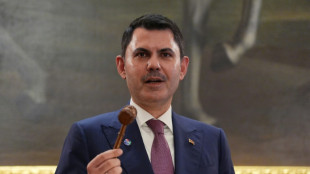 COP31 host says AI climate footprint to be a summit priority

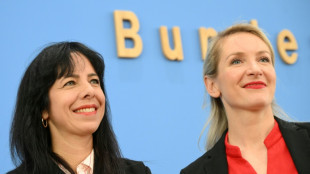 Berlin's far-left vote winners reject anti-semitism charges

 Mancini eager for 'new adventure' on Italy return

Russian President Vladimir Putin's invasion of Ukraine has added an extra layer of complexity to the decisions facing European Central Bank policymakers as they meet on Thursday.
Already managing record inflation figures and a fragile recovery from the impact of the coronavirus pandemic, members of the bank's 25-member governing council now have to reckon with the impact of war on the edge of the eurozone.
The pace of consumer price rises shifted up a gear in February, rising to 5.8 percent from 5.1 percent the previous month, a new all-time high for the euro area.
The spike has been driven in no small part by soaring prices for energy, caught in the middle of the conflict with Russia, a major supplier to European countries.
ECB President Christine Lagarde responded to the February 24 invasion by saying the central bank would "take whatever action is necessary" to stabilise the euro region's economy.
Prices for gas and oil were "likely in the short term to increase inflation", she said, sustaining it for longer than the bank previously expected.
- Stepwise -
Soaring inflation has put the ECB under pressure to follow its peers in the United States and Britain by moving to end its economic stimulus and raise interest rates soon.
At its last meeting at the beginning of February, the ECB left its plan for a "step-by-step" reduction in its asset-purchasing programmes untouched.
The pandemic emergency bond-buying programme, which has been the ECB's main crisis-fighting tool, aimed at keeping borrowing costs low to stoke economic growth, will come to an end in March.
Under the current guidance, a separate pre-pandemic bond-buying scheme will be boosted to 40 billion euros ($44 billion) monthly in the near term and carry on till at least October.
Any policy tweaks were pushed back to the meeting this week, when the governing council will make use of new economic forecasts to support their decision making.
In December, when the figures were last updated, the bank foresaw inflation at 1.8 percent in 2023, below its two-percent target.
The new inflation projections, which will take account of the Ukraine conflict and the most recent data, could see a sharp upwards revision.
The outlook was however shrouded in "significant uncertainty", ECB executive board member Isabel Schnabel said after Russian tanks moved on Ukraine.
At the same time, the high cost for energy was likely to weigh on the economy and slow production, narrowing policymakers' room for manoeuvre.
The double risk will encourage the ECB to "tread carefully", said Andrew Kenningham of Capital Economics.
It will also encourage the bank to give a signal it "could even step up support if needed", he added.
- Normalisation? -
In Russia, where the economy is reeling from Western sanctions, central bankers propped up the ruble by more than doubling the main interest rate to 20 percent.
Such high levels are completely alien to the ECB which has long kept its rates at historic lows, including a negative deposit rate that effectively charges banks to park their cash overnight.
But more "hawkish" members of the governing council who would like to see the ECB act faster have grown more vocal.
Inflation fears meant policymakers needed to keep their "sights trained on the normalisation of our monetary policy", Bundesbank chief and governing council member Joachim Nagel said.
Observers will be listening closely to Lagarde's news conference at 14:30 local time (1330 GMT) to see if the former French finance minister makes any advance on her pledge for the ECB to be "data-driven".
Lagarde's previous insistence that any hike in 2022 was "very unlikely" disappeared after the February meeting, as markets bet on an earlier increase.
In light of the tense situation in Europe, "the ECB will want to avoid hinting at end dates" for its bond-buying "or start dates for rate hikes", said Carsten Brzeski, head of macro at the bank ING.
Instead, Lagarde could follow her predecessors to "never pre-commit", Brzeski said.
L.Dubois--BTB