
Sanctions on Russia add to troubles facing global helium industry / Photo: ©

 Typhoon Dujuan leaves four dead in Japan, 45,000 houses without power

 G7 leaders condemn Houthi strikes on Saudi Arabia

 Google data centre sparks protests in Austria

 Shin Ohashi: Junk food-loving teen and Japan's next big swimming hope

 Stocks rise on AI buzz, drop in oil prices

 China's robot dancers limber up for America's Got Talent final

 Despite military might, Saudi struggles to crush the Houthis

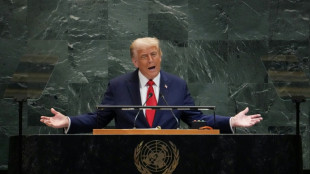 Trump to tout deals, defend Iran war in UN speech

 Sri Lanka to issue verdict in landmark Easter attack trial

 Macron says talks with Trump on Red Sea, Ukraine 'constructive'

 Green policies just good politics, says UK minister
 Bardot auction in Paris fetches nearly one million euros
 No timeline on Daniels injury return, says Commanders coach

 British Columbia sues OpenAI in US court over Canada school shooting

 French star Batum retires after 18-year NBA career

 Zidane leads first France training session

 Man shot by ICE agent in Texas detained with bullet inside him: lawyer

 California declares state of emergency ahead of El Nino

 South Africa arrests three more suspects, after nine women murdered
 Carse needs time away from England, says captain Brook

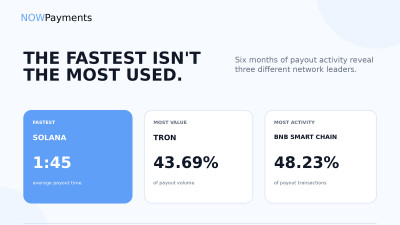 NOWPayments Releases Cross-Chain Payout Data Revealing Key Performance Benchmarks Across TRON, BNB Chain, and Solana

 British Museum bans photos of Bayeux Tapestry as crowds linger
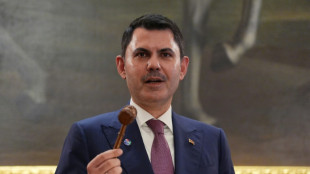 COP31 host says AI climate footprint to be a summit priority

 Berlin's far-left vote winners reject anti-semitism charges

 Mancini eager for 'new adventure' on Italy return

Helium is the second most-abundant element in the known universe, but to the semiconductor fabricators and doctors who rely on it for their businesses, it is better known as the latest raw material to grow scarce -- and the war in Ukraine could make the shortage worse.
Russia is expected to eventually begin producing the equivalent of a third of the world's current helium production from a massive gas plant in its Far East, but with Western nations cutting off the country's financial flows over its invasion of Ukraine, experts worry that gas won't reach the global market.
"The world is going to need the new supply from Russia or others to come into the market," said Phil Kornbluth, a consultant with decades of experience in the helium industry.
While there's no telling how long the country will face sanctions, "If they leave them in place for a long period of time, it's going to be tough to do business with Russia," Kornbluth said.
An inert gas that is used to inflate balloons, liquified to cool magnetic resonance imaging scanners and was once deployed on space shuttle missions, helium is also used in the manufacturing of semiconductors, which are running in short supply worldwide.
Rich Gottwald, president and CEO of the US-based Compressed Gas Association industry group, said companies that rely on the gas are today unable to get as much as they need.
"They're starting to feel the pinch of not having enough helium for their business," he said.
- 'Fragile' supply chain -
The scarcity comes as supply chains worldwide have yet to recover from the Covid-19 pandemic, which have led to massive order backlogs, delivery delays and shortages of workers and raw materials.
A byproduct of natural gas production, only a handful of countries produce helium, creating a supply chain that Kornbluth described as fragile and prone to shortages whenever production is disrupted.
The top producer is the United States, which runs the Federal Helium System, a massive reserve and enrichment facility in Amarillo, Texas.
But instead of solving the gas shortage, that facility has become the epicenter of it. It is in the process of being sold off to private companies, and was shut down last July amid safety concerns. As of Thursday, it remains offline, according to a public status report.
Initially, companies hoped that Russia's Amur Gas Processing Plant, built by the energy giant Gazprom and capable of producing 60 million cubic meters of helium per-year as well as tens of billions of tons of natural gas, would fill in the gap.
But it only produced for a short period of time last year amid media reports of a shutdown following a fire, and another earlier this year.
- Phone's ringing -
The United States and Europe have now taken drastic steps against Russia over the invasion of Ukraine, including by cutting its banks off from the SWIFT financial messaging system.
If they last long enough, the measures could disrupt helium contracts, and more immediately, keep foreign experts from helping resolve the issues at the Amur plant, and stop helium produced at another Gazprom facility in Russia from reaching Europe, Kornbluth said.
Gottwald said companies' hopes of getting access to the Russian helium supply have already been dashed.
"A lot of people were saying Russia is coming on and they'll fill the void of what's not going to come from Amarillo anymore, but that's going to be very complicated now," he said.
The scramble for helium could increase business for small-scale producers who make up only a minority of the world's gas supply.
"Our phone's been ringing off the hook," said Nick Snyder, chairman and CEO of North American Helium, which produces from two facilities in Canada, and predicted the sanctions could permanently chill demand for Russia's supply of the gas.
"I don't see the major end users ever forgetting what's happened here in terms of how they view that supply," he said.
J.Bergmann--BTB