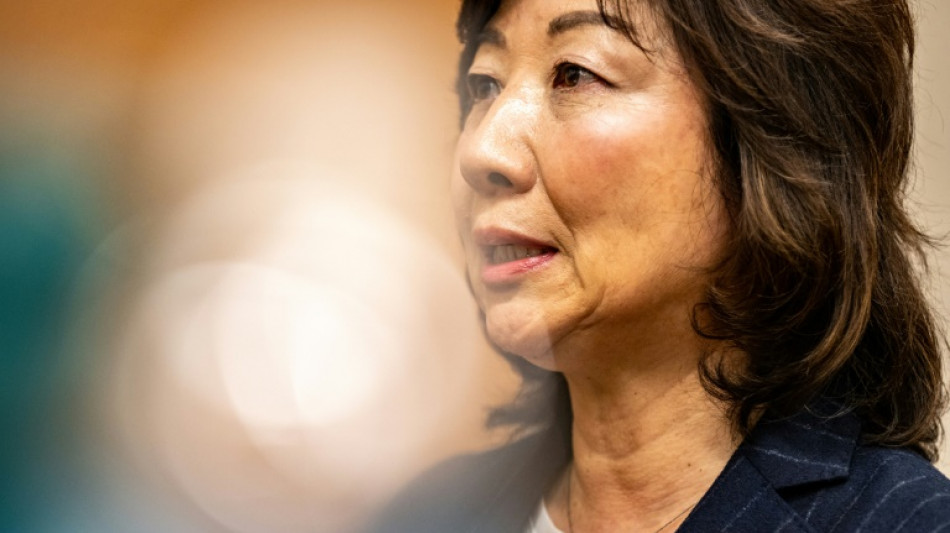
Women take on Japan's political gender gap for 'true democracy' / Photo: © AFP

 China badminton 'still strong' despite Asian Games slump
 'Exceptional' Turner painting shown in Rome before sale

 European stocks climb as oil dips

 Spain aims to ban evictions until 2030 amid housing protests

 Kunlavut first Thai man to win Asian Games badminton singles gold

 French far right says antisemitism claims part of 'total war' to derail presidency bid

 'Gift from God': Rain brings relief from Indonesia toxic haze
 Ex-world snooker champion jailed for 7 years for child sex crimes
 French teens clash with police as school blockades intensify
 FIFA accuses UEFA of 'misinformation campaign' in bid for World Cup papers
 Myanmar airstrike toll hits 50 as families gather dead
 STARTRADER Raises Lloyd's of London Client Fund Insurance to USD 30 Million in Aggregate
 North Korean DMZ landmine blasts 'violation of armistice': Seoul
 Sabalenka 'fresh' for first tournament since losing No.1 spot

 Myanmar airstrike death toll rises to 50: aid workers
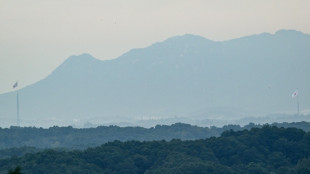 North Korean DMZ landmine blast 'violation of armistice'
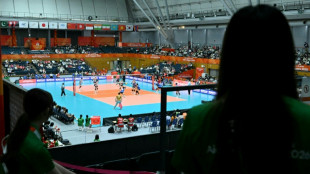
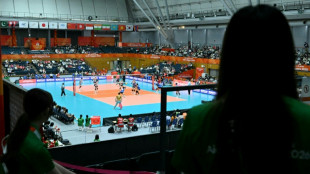 South Korea volleyball team latest to be bussed to wrong Games venue

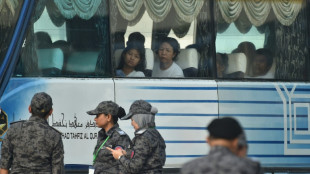 Malaysia starts sending Myanmar migrants home
 8.3 mn refugees at risk due to 'severe' funding cuts: UN
 Stocks drop and oil rises as Hormuz hopes fade
 OpenAI cancels release of newest model due to safety concerns

 AI bosses head to White House as safety pressure builds
 Batista sacked as Costa Rica coach after six months
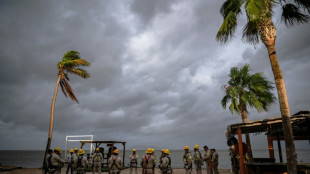 Flooding, power cuts and evacuations as Hurricane Polo slams Mexico

 fiskaltrust launches e-invoicing across Europe

Women are a rare sight in Japanese politics, but 20-year-old Rinka Saito is determined to run for office one day because "you can't have true democracy without diversity".
She is one of a small group of young women being offered mentoring and money to help them break into a political scene that remains utterly dominated by men.
Once elected, female leaders in Japan face a tough environment, describing sexual harassment, chauvinist habits and ingrained views of government as a man's world.
Even so, Saito, the youngest participant of the scheme run by the Murakami Family Foundation, told AFP the part-time programme had brought her "a step closer to my dream".
There are only two women in Prime Minister Fumio Kishida's 19-member cabinet, and parliament's powerful 465-member lower chamber is 90 percent male.
The Tokyo-based foundation has organised a series of seminars by leading politicians for 20 women aged under 40 in a bid to address that imbalance.
The participants, chosen from 200 applicants, also receive a grant of one million yen ($7,400).
"I became interested in becoming a politician because I thought I could give hope to people with disabilities," said Saito, who has had surgery for hearing loss.
High-profile examples of discrimination in Japan, such as the forced sterilisation of disabled people under a now-defunct eugenics law, strengthened her resolve.
Saito, a social sciences student, initially didn't know where to begin.
She said the foundation has helped her build a network and better understand the "good and bad aspects of the political world".
- 'Homogenous' -
Foundation chair Rei Murakami Frenzel, 28, was surprised so many people applied for the first programme, which ran from November to March.
"We had assumed that women didn't want to be politicians, but in fact, there just wasn't enough support," she said.
Japan's "homogenous" power base -- even the parliament's less powerful upper house is 75 percent male -- means lawmakers are "not tackling diverse social issues", said Murakami Frenzel, whose father is a renowned activist investor.
Japan has never had a woman prime minister and that must change, said lawmaker Seiko Noda. She ran against Kishida in the ruling party's last leadership race and is a lecturer for the programme.
"Even well-educated people have the entrenched view of politics as a male domain," said the former internal affairs minister and women's empowerment minister.
Noda, 62, told AFP she "couldn't even find the women's bathroom" when she started her political career in parliament's lower house three decades ago.
And while she believes the situation is slowly improving, Noda is keen to encourage women to enter the field given the "overwhelming lack of young female politicians".
A nursery was available during the seminars for those with children, and remote access was also an option.
Natsuki Shinobori "felt responsible for my country" after having two boys and joined the scheme with the hope of becoming a local politician.
"I want to solve social issues by starting small," said 36-year-old Shinobori, who lives in Nagano in central Japan.
- 'Won't quit' -
Unequal attitudes towards female politicians endure, however, and Shinobori said she worries about the burden on her children.
In Japan, "wives will support their husband if he's running a campaign, but... we feel like women shouldn't cause trouble to their family", she said.
A record 489 women stood for office at local elections this month, still just 16 percent of the candidates.
Umeko Saito, a 75-year-old politician in Niseko, a small ski-resort town in Hokkaido, wants to see more women in local assemblies.
But, as the only woman in the 10-member local government for the past 12 years, she has first-hand experience of how tough the job can be.
"One of them told me he wanted to see me naked," she said. "I was in utter shock."
As well as facing sexual harassment, "when I speak in the assembly, other members insult me so I cannot continue, or they tell me my questions are too strange".
Saito fought to end a tradition of hiring "companions" -- women in their early 20s who serve drinks and chat with guests -- for political events.
Her efforts were successful and the custom has stopped. But Saito still feels that others view her as "an alien" in the political system and acknowledges that "many female politicians cannot speak up about harassment".
Some people have advised Saito to quit. "But I won't," she said.
"If I quit now, I don't know what I'm in politics for."
O.Bulka--BTB