Chip firms play down Ukraine war supply fears / Photo: ©

 Google data centre sparks protests in Austria

 Shin Ohashi: Junk food-loving teen and Japan's next big swimming hope

 Stocks rise on AI buzz, drop in oil prices

 China's robot dancers limber up for America's Got Talent final

 Despite military might, Saudi struggles to crush the Houthis
 Trump to tout deals, defend Iran war in UN speech

 Sri Lanka to issue verdict in landmark Easter attack trial

 Macron says talks with Trump on Red Sea, Ukraine 'constructive'

 Green policies just good politics, says UK minister
 Bardot auction in Paris fetches nearly one million euros

 No timeline on Daniels injury return, says Commanders coach

 British Columbia sues OpenAI in US court over Canada school shooting

 French star Batum retires after 18-year NBA career

 Zidane leads first France training session

 Man shot by ICE agent in Texas detained with bullet inside him: lawyer
 California declares state of emergency ahead of El Nino

 South Africa arrests three more suspects, after nine women murdered
 Carse needs time away from England, says captain Brook

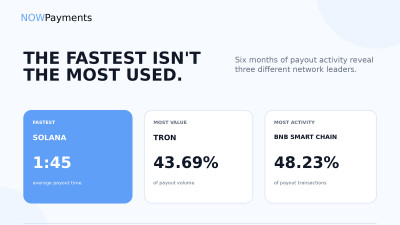 NOWPayments Releases Cross-Chain Payout Data Revealing Key Performance Benchmarks Across TRON, BNB Chain, and Solana

 British Museum bans photos of Bayeux Tapestry as crowds linger
 COP31 host says AI climate footprint to be a summit priority

 Berlin's far-left vote winners reject anti-semitism charges

 Mancini eager for 'new adventure' on Italy return

 Mbappe says having Zidane as France coach 'like a film'
 Palmer, Rice out of England Nations League squad
The tech industry is playing down fears of widespread raw materials shortages as a result of the war in Ukraine, after reports that chipmakers would face a severe crunch.
Russia and Ukraine are key suppliers of neon, a gas used in the lasers that etch microscopic patterns on to tiny slivers of silicon.
Russia also supplies palladium, which has several uses in electronic components.
The sector has already been hit hard by a shortage of components for chipmaking, blamed on a boom in global demand for electronic products and disruption to supply chains caused by the pandemic.
But at the Mobile World Congress in Barcelona, one of the sector's biggest get-togethers, industry figures were bullish.
"We only use a small amount of neon gas. And less than 20 percent of that small amount is sourced from Ukraine and Russia by our supplier," said Monique Mols of Dutch firm ASML, adding that they were looking into alternative sources.
While automakers and some parts of the IT sector have been hard hit by pandemic-induced shortages, smartphone makers have weathered the storm a little better.
Research group IDC said phone sales fell by 3.2 percent in the fourth quarter last year, and big brands have been forced to delay product launches.
But the likes of Apple and Samsung are still posting massive profits.
"The situation remains very complicated for the entire sector -- we will have to be patient," said Ariane Bucaille, a specialist in the semiconductor market at Deloitte.
- 'There will be an impact' -
Should the supply chain be further disrupted, analysts believe more products could be delayed and prices could rise, affecting the entire sector.
"Ukraine is a major supplier of raw material gases for semiconductors including neon, argon, krypton and xenon," said Taiwanese research firm TrendForce.
"Although the proportion of neon gas used in semiconductor processes is not as high as in other industries, it is still a necessary resource. If the supply of materials is cut off, there will be an impact on the industry."
Marina Koytcheva of CCS Insight agreed that the tech industry was "unlikely to remain sheltered from the impact of the crisis in Ukraine".
Whatever the impact of the Ukrainian crisis, a quick return to normal is unlikely.
Even before the war broke out, US bank JP Morgan reckoned the shortage of semiconductors was likely to continue through 2022, and Deloitte expected no improvement until 2024.
- 'Complex technologies' -
But the industry is more sanguine about the immediate effects of the war on their supply lines.
US chipmaker Intel has already said it did not expect the war to cause any disruption, and computer memory firm Micron said it sourced its noble gases and other minerals from across the EU, US and Asia.
Semiconductor industry group SIA stressed that there was "a diverse set of suppliers of key materials and gases".
"So we do not believe there are immediate supply disruption risks related to Russia and Ukraine," it said in a statement.
Of the longer-term prospects, actions speak louder than words, and several big firms -- Samsung and TSMC among them -- have announced huge investments in new factories to diversify production.
But Ariane Bucaille warns that these investments are likely to take two or three years to bear fruit.
They involve "complex technologies", she warned, meaning the firms will need to find "an extremely skilled workforce".
M.Furrer--BTB