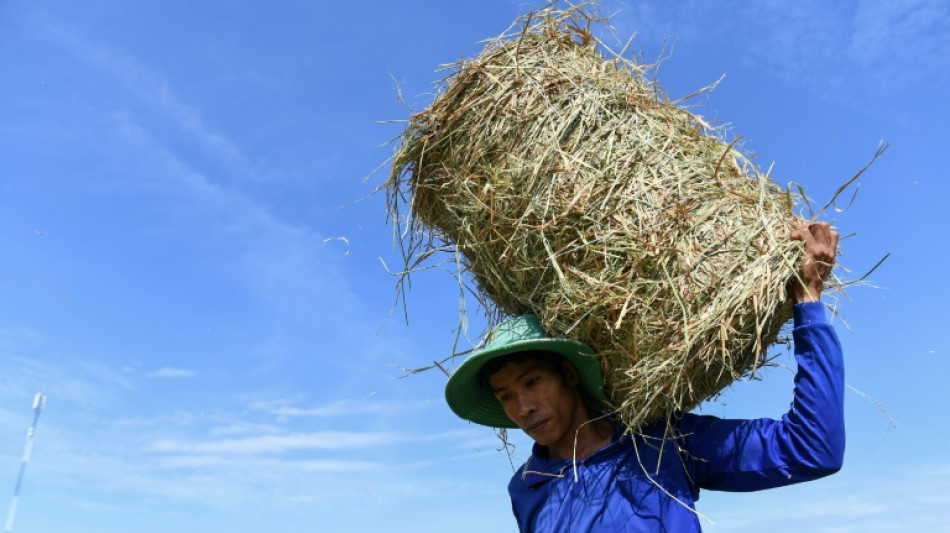
How Vietnam is trying to stop rice warming the planet / Photo: © AFP

 Calgary Chef Launches App to Connect Food Businesses with Non-Profits

 Palestinian Artist Masada Sabat Uses Oil Paint to Carry Homeland’s Story

 Niraj Kumar earns Los Angeles Olympic quota with 50m rifle bronze

 Delhi gold loses Rs 800 while silver falls Rs 5,000
 Pradeep Antony, Smeha Manimegalai portray secret spouses in Mr & Mrs Office

 Woman barred from every Greggs outlet after series of offences

 Ketchup packets link suspect to break-in at Eddie Rocket’s restaurant
 China's Singles' Day Exposes Persistent Consumer Caution
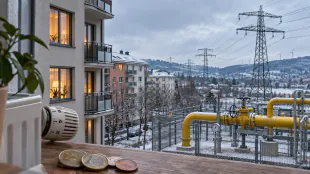 Euro-Area Inflation Reaches 4% as Energy Prices Jump
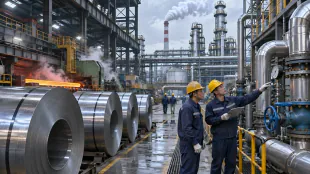
 US Adds 165,000 Jobs as Unemployment Falls to 4.1%
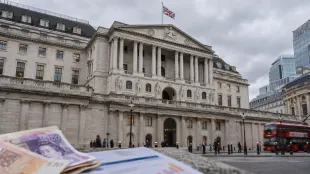
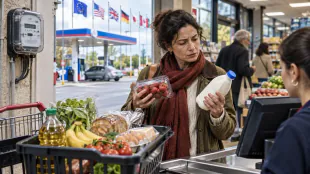 Energy Costs Push OECD Inflation Up to 4.5%
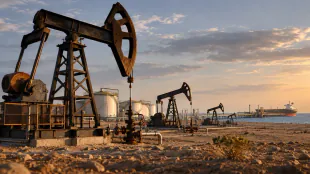
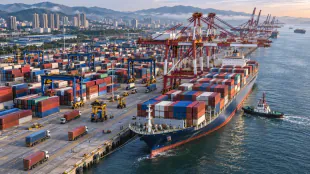 China's Trade Surplus Passes $1 Trillion as Technology Exports Surge
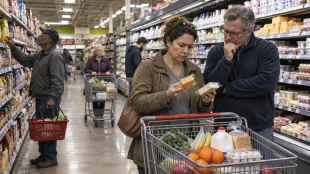
 Irish police prepare for further hoax bomb threats after hundreds of schools targeted
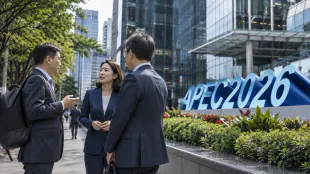
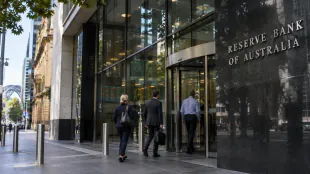 RBA Inflation Target Origins: Why Australia Chose a Range Over Zero

 Sister recounts fatal machete attack as Irish murder trial continues
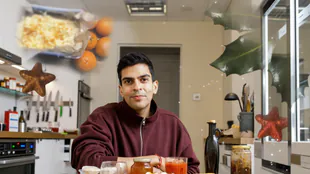
 Georgia refrigeration company sues EPA after five-year HFC reprieve

 HoloCoder technology promises brighter smartphone images and 3D depth data

 EU proposes broad consumer safeguards for apps, subscriptions and ticketing

 Belgium Approves Controversial Immigration Law Allowing Police Home Entries

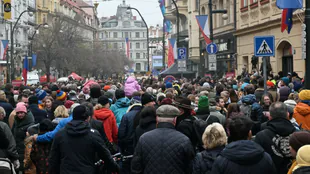 Czech PM Babiš Faces Backlash for Israel Trip During Velvet Revolution Anniversary
 IBTM World 2026 to Host 12,000 Professionals in Barcelona with Focus on AI and Innovation

 Four firms compete to design Chennai’s model mobility corridors

 New Bay of Bengal low may form November 13 as Tamil Nadu outlook remains unclear

 ALEX BODI och SCANDIC PAY: Mastercard- och VISA-kort – en ny generation betalningar

 알렉스 보디와 SCANDIC PAY: Mastercard·VISA 카드를 통한 차세대 결제

As a child, Dong Van Canh watched while the rice fields of Vietnam's Mekong Delta were set alight to make way for the next crop, blackening the sky and flooding the air with potent greenhouse gases.
Rice -- Asia's principal staple -- is to blame for around 10 percent of global emissions of methane, a gas that over two decades traps about 80 times as much heat as carbon dioxide.
Usually associated with cows burping, high levels of methane are also generated by bacteria that grow in flooded rice paddies and thrive if leftover straw rots in the fields after harvest.
The message from scientists is: rice cannot be ignored in the battle to cut emissions.
In the Mekong Delta, Canh, now a 39-year-old rice farmer, does not leave straw out to decay on the paddies -- nor does he burn it, as his parents did before him.
Motivated by the memory of being forced inside his home on days the smoke was thick -- sometimes so acrid it made him choke or faint -- he joined an initiative that removes straw from the fields and turns it into mushrooms and organic fertiliser, earning a small income on the side.
"If we can collect the straw and make money, all of us benefit," he told AFP, running his fingers through a large, soft mound of straw, cow dung and rice husks that will soon become nutritious food for Mekong crops.
- Shrinking emissions -
The programme -- organised by the International Rice Research Institute (IRRI) -- is one of a handful across Vietnam and the region trying to steadily shrink methane emissions from rice production.
Many of the initiatives are not new but have been spotlighted since around 100 countries signed the Global Methane Pledge two years ago, agreeing to reduce emissions by 30 percent from 2020 levels by 2030.
Several of the world's biggest rice producers, including Indonesia, Bangladesh and Vietnam, are on board -- although the two largest, China and India, failed to sign.
In Vietnam, as the harvesting season draws to a close, farmers push carts overflowing with straw bales that will later be soaked and laid out to grow straw mushrooms.
Once the fungi are ready they will be sold before the farmers take back the straw and funnel it into a composting machine. Two months later it will be ready -- and can be sold for around 15 cents a kilogram (2.2 pounds).
"In the past a few farmers did this manually but it took too much manpower and the cost was high. Now we've cut costs by half and we will expand to meet the demands of the market," said Le Dinh Du, a rice farmer who also heads the local district's plant protection department.
"The rice goes on a nice journey. We don't waste anything."
- Methane-producing bacteria -
Vietnam's environment ministry says irrigated rice accounted for almost half of methane emissions in 2019.
Climate-friendly straw management has been introduced and spread "widely to farmers and local agricultural officials" throughout the country, according to CGIAR, an international agricultural research centre.
How many practise what they have learned is unclear. Last year the World Bank said that more than 80 percent of rice straw in the Mekong Delta is still burned in the fields after harvest.
The need to find solutions is pressing.
Unlike other crops, rice paddies have a layer of standing water, so there is no exchange of air between the soil and the atmosphere, explained Bjoern Ole Sander, a senior scientist at the IRRI in Hanoi.
These conditions mean different bacteria are active in rice, compared to wheat or maize fields.
"And these bacteria eat organic matter and produce methane," he said.
As well as straw management, IRRI says another scheme called Alternate Wetting and Drying (AWD), which involves breaking up standing water to replenish oxygen and reduce methane-producing bacteria, could also help cut emissions.
Practised on more than 200,000 hectares (494,210 acres) of rice-growing land in the Mekong delta's An Giang province, CGIAR says it has made a significant difference.
For Mekong farmers that have taken the leap, there is pride in contributing to more sustainable farming while getting the most out of their crops.
"We lived hard lives," said Canh. "But once we realised how to take advantage of the straw, things have gotten easier."
K.Thomson--BTB