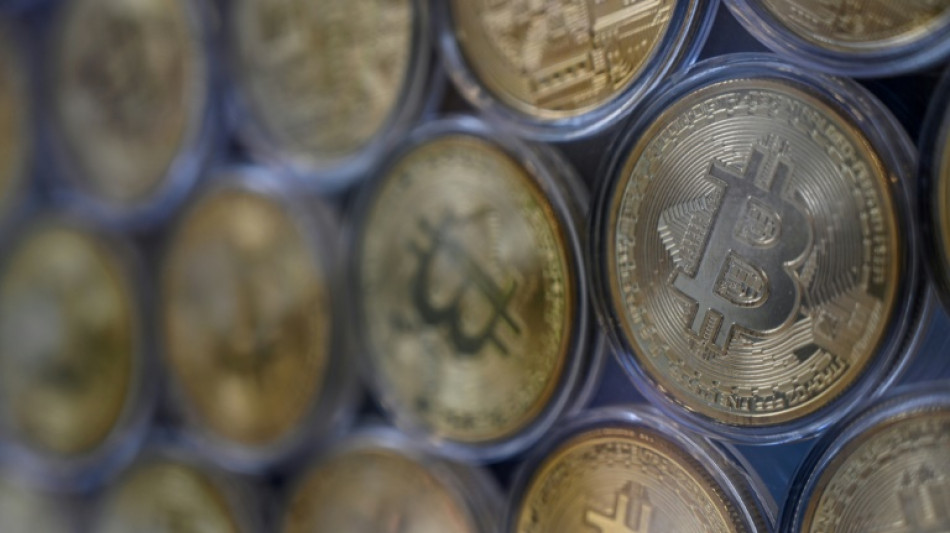
Cryptocurrencies enter Ukraine conflict / Photo: ©

 Google data centre sparks protests in Austria

 Shin Ohashi: Junk food-loving teen and Japan's next big swimming hope

 Stocks rise on AI buzz, drop in oil prices

 China's robot dancers limber up for America's Got Talent final

 Despite military might, Saudi struggles to crush the Houthis

 Trump to tout deals, defend Iran war in UN speech

 Sri Lanka to issue verdict in landmark Easter attack trial

 Macron says talks with Trump on Red Sea, Ukraine 'constructive'

 Green policies just good politics, says UK minister
 Bardot auction in Paris fetches nearly one million euros

 No timeline on Daniels injury return, says Commanders coach

 British Columbia sues OpenAI in US court over Canada school shooting

 French star Batum retires after 18-year NBA career

 Zidane leads first France training session

 Man shot by ICE agent in Texas detained with bullet inside him: lawyer

 California declares state of emergency ahead of El Nino

 South Africa arrests three more suspects, after nine women murdered

 Carse needs time away from England, says captain Brook

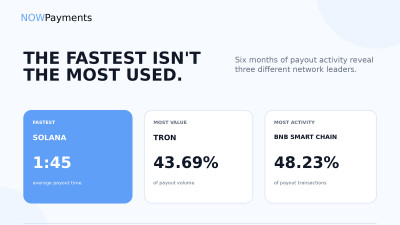 NOWPayments Releases Cross-Chain Payout Data Revealing Key Performance Benchmarks Across TRON, BNB Chain, and Solana

 British Museum bans photos of Bayeux Tapestry as crowds linger

 COP31 host says AI climate footprint to be a summit priority

 Berlin's far-left vote winners reject anti-semitism charges

 Mancini eager for 'new adventure' on Italy return

 Mbappe says having Zidane as France coach 'like a film'

 Palmer, Rice out of England Nations League squad
Having evacuated part of his team from Kyiv, Mike Chobanian, boss of cryptocurrency exchange Kuna, is watching the effects of Russia's invasion on his flourishing industry with a weary eye.
"Business is running, but we're in survival mode over here," the 37-year-old boss said during a video call from his current refuge after leaving the Ukraine capital.
Russia's military build-up led many Ukrainians to turn to cryptocurrencies, before the invasion seized up the sector.
But it is still facilitating global fundraising efforts, albeit through an opaque decentralised system that Russia could also exploit to circumvent sanctions.
The Ukrainian government on Friday imposed sanctions against the rouble, forcing Chobanian to halt cryptocurrency swaps with the Russian currency.
"But who cares when it's war?" said Chobanian.
His platform saw a steady rise in business from Ukrainian accounts in recent weeks.
Worried about rising tensions, locals were buying up stablecoins, the dollar-backed electronic currencies often criticised by Western regulators for their opacity.
"Bitcoin, you engage yourself in gambling, you don't know if it's going to go up or down," he explained.
"But here you're trying to preserve what you have and people perceive the US dollar as a safe heaven. Cash is useless, you can't do much with it, it can be easily taken away with a gun. USDT (stablecoin) is a safe haven."
But trading has become increasingly difficult since the invasion.
Several cryptocurrency users have, however, launched fundraisers that they say are dedicated to aiding the Ukrainian military and relief efforts.
More than $4 million in cryptocurrencies arrived in two days on a single fundraising wallet for the "Come Back Alive" organisation, cryptocurrency research firm Elliptic said Friday.
- Sanction busting -
"There's no limit, it can be raised from around the world, it's not dependent on the banking system, it's more transparent because it's a blockchain. It's a better option," said Chobanian.
This enthusiasm is not completely shared by the Ukrainian government.
On the communication site UkraineNOW, the Ministry of Defence calls for donations via bank transfers, but specifies that "national legislation does not allow the Ministry of Defence of Ukraine to use other payment systems ('Webmoney', 'Bitcoin', 'PayPal', etc.)."
And the same decentralised network that makes cryptocurrencies attractive to Ukrainian fundraisers could also benefit Russia.
Among the sanctions being considered against Moscow is exclusion from the Swift system, which allows interbank settlements between financial institutions around the world.
Some fear that cryptocurrencies could allow Russia to bypass such sanctions.
"North Korea has conducted robust hacking efforts with the intention of stealing cryptocurrency from exchanges and DeFi platforms," explained Caroline Malcolm, from the analysis firm Chainalysis.
"They've been able to bring in billions of dollars worth of funds to the country, evading sanctions."
Iran has also used cryptocurrency to bring money into the country, but mined it rather than hacking it, she added.
But as with the traditional financial system, "the cryptocurrency ecosystem can put measures in place to identify transactions from identified sanctioned entities," she said.
This could mainly be achieved by analysing data from blockchains -- the registers where all cryptocurrency transactions are recorded.
L.Dubois--BTB