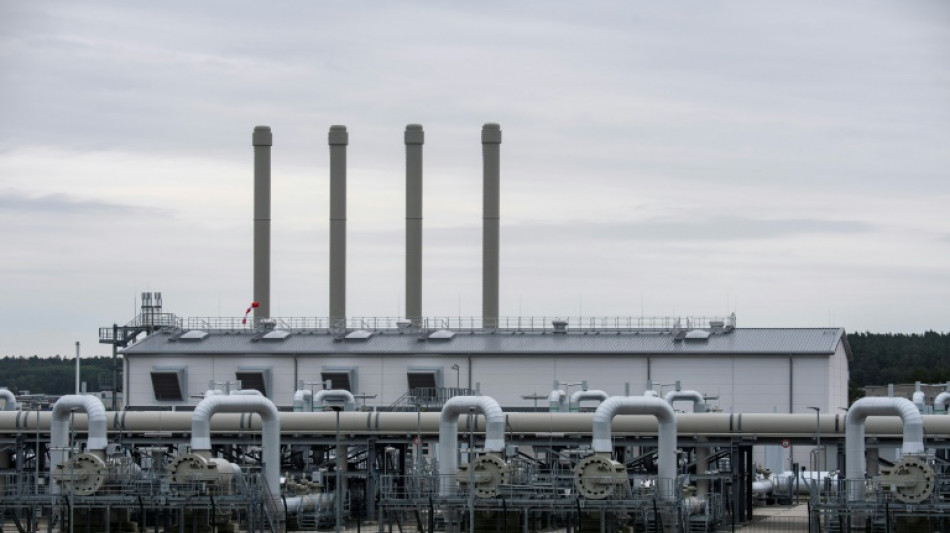
Not so SWIFT: EU energy concerns spark Russia sanctions rift / Photo: ©

 Google data centre sparks protests in Austria

 Shin Ohashi: Junk food-loving teen and Japan's next big swimming hope

 Stocks rise on AI buzz, drop in oil prices
 China's robot dancers limber up for America's Got Talent final

 Despite military might, Saudi struggles to crush the Houthis
 Trump to tout deals, defend Iran war in UN speech
 Sri Lanka to issue verdict in landmark Easter attack trial
 Macron says talks with Trump on Red Sea, Ukraine 'constructive'

 Green policies just good politics, says UK minister
 Bardot auction in Paris fetches nearly one million euros
 No timeline on Daniels injury return, says Commanders coach
 British Columbia sues OpenAI in US court over Canada school shooting

 French star Batum retires after 18-year NBA career
 Zidane leads first France training session
 Man shot by ICE agent in Texas detained with bullet inside him: lawyer
 California declares state of emergency ahead of El Nino
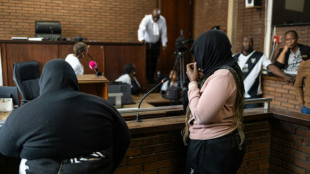 South Africa arrests three more suspects, after nine women murdered
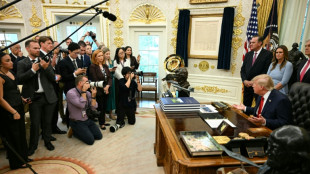
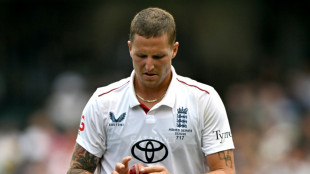 Carse needs time away from England, says captain Brook

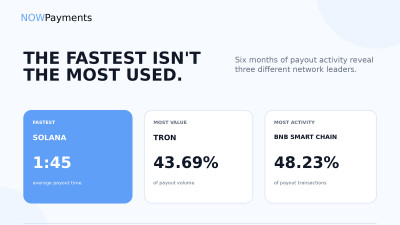 NOWPayments Releases Cross-Chain Payout Data Revealing Key Performance Benchmarks Across TRON, BNB Chain, and Solana
 British Museum bans photos of Bayeux Tapestry as crowds linger
 COP31 host says AI climate footprint to be a summit priority

 Berlin's far-left vote winners reject anti-semitism charges

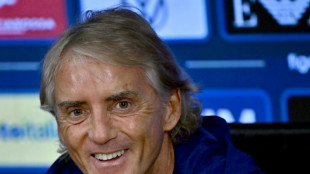 Mancini eager for 'new adventure' on Italy return

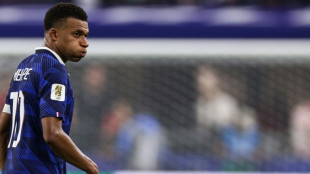 Mbappe says having Zidane as France coach 'like a film'
 Palmer, Rice out of England Nations League squad
The West has agreed an onslaught of sanctions over Russia's invasion of Ukraine, but resistance from key EU nations fearful of severing their power sources has resulted in them holding off on banishing Moscow from the SWIFT banking transfer system.
Ukraine has expressly called on Western allies to expel Moscow from the system that banks rely on to transfer money.
But US President Joe Biden revealed this week that while it remains an option, "right now that's not the position that the rest of Europe wishes to take."
Former European Council President Donald Tusk lashed out at EU capitals over their failure to agree on the toughest sanctions such as cutting Russian banks off from SWIFT, exposing a rift within the bloc over its response.
"In this war, everything is real: Putin's madness and cruelty, Ukrainian victims, bombs falling on Kyiv. Only your sanctions are pretended (sic)," Tusk tweeted.
"Those EU governments, which blocked tough decisions (i.e. Germany, Hungary, Italy) have disgraced themselves."
But German Finance Minister Christian Lindner laid out starkly the preoccupation of Europe's biggest economy: suspension of SWIFT "would mean that there is a high risk that Germany will no longer receive gas, raw material supplies from Russia".
Lindner told public television he was "open" to including SWIFT "in the course of possible further toughening of sanctions" while adding that allies would "have to be aware of the consequences."
With 40 percent of gas consumed in Europe arriving from Russia, Germany's fears about the possibility of severe disruptions are well founded.
Austria, Hungary and Italy are also reluctant, pitting them against Poland, the Baltic states and non-EU member Britain.
Hungarian Prime Minister Viktor Orban alluded to his key concern -- energy prices -- as he announced sanctions agreed by the EU late Thursday.
"These sanctions do not extend to energy; so, despite the sanctions, energy supplies to Hungary and the other member states of the EU are guaranteed," he said.
- Not Iran -
Founded in 1973, the Society for Worldwide Interbank Financial Telecommunication, or SWIFT, does not actually handle any transfers of funds itself.
But the system is used by banks to send standardised messages about transfers of sums between themselves, transfers of sums for clients, and buy and sell orders for assets.
A country that is shut out of the system could still arrange for settlements of payments or transfers on a case-by-case basis.
But it would be severely crippled in its ability to trade with others, as Iran had seen when it was disconnected from the system between 2012 and 2016 over its nuclear programme.
Yet Lindner said the jury was out on whether the sanction would indeed hurt Moscow as much as it did Tehran.
"I fear that Putin has already built up an alternative to this SWIFT system," he said.
Calls for Russia to be excluded from SWIFT had already been made in 2014 when Russia annexed Crimea from Ukraine and Moscow has since sought to build up its own system.
The Russian System for Transfer of Financial Messages connects 400 Russian banks and being booted out of SWIFT could well accelerate its development.
Austrian Chancellor Karl Nehammer also cited experts' estimates that exclusion from SWIFT "won't bring the necessary success" as opposed to the EU package agreed on Thursday, which he said directly hits 70 percent of Russian banks.
For now, the option remains on the table, although French Finance Minister Bruno Le Maire has said that removing Moscow from SWIFT is a "last resort".
Asked what kind of further aggression must come from Russia against Ukraine before the EU would cut it off from SWIFT, German Chancellor Olaf Scholz's spokesman suggested that not including it in Thursday's package partly came down to the question of the expediency of implementation.
Such a move would be "technically complex to prepare" and have "severe consequences on the transactions traffic in Germany and for German companies doing business with Russia, but also for energy delivery payments, and all that must be well prepared," said Steffen Hebestreit.
Meanwhile the Baltic countries, which directly border Russia, said they had not given up hope on the adoption of the measure.
"We will try and try again to persuade our partners to switch Russia off from SWIFT... if not in this sanctions package, maybe in the next one. We don't have to wait until there are gunfights in the streets of Kyiv and dead bodies lying around," Latvian Foreign Minister Edgars Rinkevics told reporters Friday.
L.Janezki--BTB