
Saudi light festival tries to sell public on arts push / Photo: © AFP

 South African voters report smoother local election but declining IEC trust

 Dolly Parton museum and Nashville hotel open after singer’s death

 George and Amal Clooney attend New York political-comedy reading

 British buyers pay substantial premiums for period-home appearance

 Thomas Markle released to house arrest after child-abuse-image charge

 Dawn of War 4 developers chose Adeptus Mechanicus for tactical variety

 Italy face unbeaten South Africa in Turin Nations Championship match

 ChatGPT interactive interface feature tested across six custom tools

 Freshways milk-price cut deepens pressure on UK dairy farms

 Labour and National remain virtually tied as New Zealand vote count advances

 The Good Daughter adapts Karin Slaughter thriller with Rose Byrne and Meghann Fahy

 Heavy-lift drone evacuates wounded Ukrainian soldier from frontline kill zone

 Morrison says West Brom recovered after pressure from successive derby losses

 Britain considers 2027 state visit for Ukraine’s Zelensky

 Arizona Democrats Secure Historic Trifecta with New Legislative Leadership

 Carney Welcomes U.S. Trade Reversal After Democratic Midterm Victory

 Armenian FM Discusses EU Accountability for Palestinian Rights in Madrid

 Trump and Vance Pursue Secret Diplomacy with Iran Amid Military Pressure

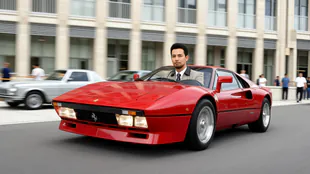 Classic Car Values Surge: De Tomaso Vallelunga Leads 190% Gain
 Microsoft Ends Oracle AI Computing Rental Deal Amid Cloud Strategy Shift
Dazzling installations have been lighting up the Saudi capital, bringing a taste of the kingdom's push to become a global arts destination to ordinary Saudis -- not just habitual museum-goers.
A massive red orb glowing outside the national library, illuminated rods dotting the riverside at a popular picnic spot, and Arabesque designs projected onto the mud-brick walls of a 130-year-old fort -- these are all part of Noor Riyadh, a city-wide festival.
Saudi curator Jumana Ghouth said she found it "amazing" to see Saudis from different socio-economic backgrounds "interact with the work", given that "we're not really a nation that grew up with art".
Saudi Arabia has generated buzz, and some controversy, in recent years for luring major names in the contemporary art world to shows like Desert X, situated amid the dramatic sandstone mountains of Al-Ula in the thinly populated north.
Noor Riyadh, by contrast, brings light installations to more than 40 locations in a fast-growing city of more than seven million people, many of whom may never consider dropping in on a gallery.
"Specifically those that cannot even afford to travel -– we're bringing art to them," Ghouth said.
The focus on well-trafficked public spaces means "these art pieces just popped up in their comfort zone", said Gaida Almogren, another Saudi curator involved in the festival which opened last week.
"I think that's the role of art: to come and poke, and see how you're reacting."
Launch events for Noor Riyadh included a light show in a park involving 2,000 drones and a rave in the desert outside the city, with the DJ set up underneath a large, glowing inverted pyramid.
Most encounters with the light installations, however, are much more subdued.
One recent night, Adel Shuker wandered with his wife and sister-in-law through a Noor Riyadh installation by Puerto Rican artist Gisela Colon, marvelling at how the light glimmered off a manmade lake nearby.
"The light, how they put it there, how they distribute the light -- it's just like art, really," Shuker said.
It was a novel experience for the 52-year-old retired navy analyst, who described himself as unfamiliar with Riyadh's art museums and galleries.
"I want to be honest with you: I don't go there," he said.
"We don't have time -- Riyadh now, it's very crowded, you cannot move easily. It's rush hour anywhere, at any time. So we have to find time for ourselves."
- Avoiding politics -
More than 130 artists from 40 countries participated in Noor Riyadh, which runs until November 19.
As with other exhibitions in the kingdom, the festival raises questions about "artwashing", or using the arts to launder the image of a country notorious for silencing dissidents, most notably slain journalist Jamal Khashoggi.
In recent months, Saudi Arabia has come under fire for decades-long prison terms handed down to two women who tweeted and retweeted posts critical of the government.
The negative headlines resulting from such cases undermine a central goal of Crown Prince Mohammed bin Salman's Vision 2030 reform agenda: to soften the kingdom's harsh image.
The Noor Riyadh installations generally steer clear of political messaging, though several highlight the ravages of climate change.
The festival's co-curator Herve Mikaeloff, who worked with international artists, allowed that some of them may have been apprehensive about coming to Saudi Arabia but said none received pressure from local authorities about content.
"For sure, if you accept work here, you have to accept the rules and you have to accept the juridical and political situation of it," Mikaeloff told AFP.
"I think most of the artists that I was talking with wanted to underline that a festival like this (is) also a political gesture, to open the country to the world."
O.Bulka--BTB