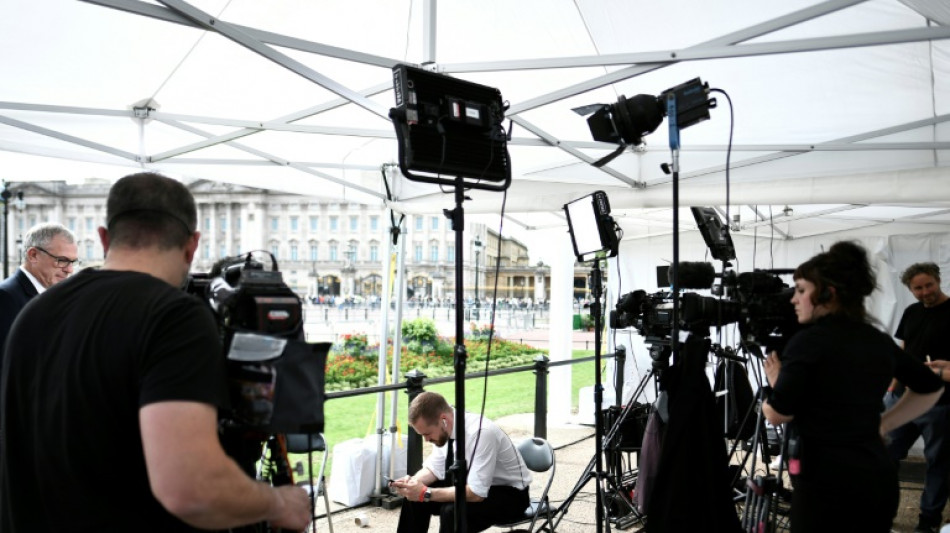
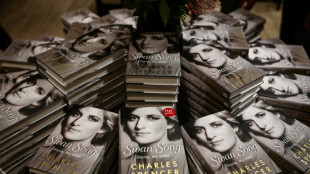
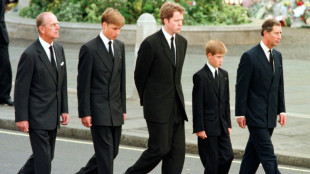
'Infobesity': How queen coverage could fuel 'news fatigue' / Photo: © AFP/File

 Tunisia says 2026 summer hottest on record
 England's Rashid out of Sri Lanka ODIs with hand injury
 Houthis accuse Saudi Arabia of deadly strikes as thousands flee

 Stocks climb as oil slides, AI buzz returns
 India cricketers win in style as Afghan savours 'special' Games silver
 La Liga president hits out at Real Madrid refereeing 'conspiracy' claims

 MEXC Launches “Real Stocks, Real Friends” with Rewards for Bringing Friends to Wall Street

 Mbappe continues media push for Ballon d'Or recognition
 Stocks rise on AI buzz, oil prices cool
 India narrowly survive huge scare against minnows Japan
 Missing F-35 fighter parts 'not sensitive', says Australia minister
 Cambodia showcases scams crackdown with global conference
 Afghan cyclist who disguised herself as man wins Asian Games silver

 Typhoon Dujuan leaves four dead in Japan, 45,000 houses without power
 G7 leaders condemn Houthi strikes on Saudi Arabia
 Google data centre sparks protests in Austria

 Shin Ohashi: Junk food-loving teen and Japan's next big swimming hope

 Stocks rise on AI buzz, drop in oil prices
 China's robot dancers limber up for America's Got Talent final
 Despite military might, Saudi struggles to crush the Houthis
 Trump to tout deals, defend Iran war in UN speech
 Sri Lanka to issue verdict in landmark Easter attack trial
 Macron says talks with Trump on Red Sea, Ukraine 'constructive'
 Green policies just good politics, says UK minister
 Bardot auction in Paris fetches nearly one million euros
Endless live TV feeds, analysts breathlessly picking apart each gesture, newspapers bursting with commentary: Queen Elizabeth II's death has been covered from every angle by the world's media.
But experts have told AFP that blanket coverage like this may only encourage more people to turn off the news entirely -- deepening the malaise surrounding the industry.
"We're already seeing criticism of the... blanket coverage," said Nic Newman of the Reuters Institute for the Study of Journalism at Oxford University.
This is even more true outside the UK.
"We've all been surprised (by) the extent to which the international media has been interested in a sustained way about the story," he said.
TV stations around the world reported strong viewing figures when the queen's death was announced.
On Twitter, an unprecedented 46.1 million messages on the subject were posted between Thursday and Tuesday, according to the specialist platform Visibrain.
But dissenting voices are growing louder as the coverage continues.
Many social media users complained that the story had in effect pushed every other issue off the agenda.
Paul Barry of Media Watch, a TV show on Australia's ABC public broadcaster, told his viewers that the queen was clearly well liked, before asking: "But did the Australian media really need to go so crazy with the coverage?"
- 'Information fatigue' -
French journalist David Medioni, of the Media Observatory of the Jean-Jaures Foundation in Paris, said the story perfectly illustrated the dilemmas of the modern news industry.
"You can't not cover it, but all the media cover it in the same way," he said.
When the media has exhausted all the angles "you can end up feeling that you haven't heard anything useful or interesting".
Medioni co-led a survey published in early September that investigated "information fatigue", where consumers feel stress and exhaustion at being bombarded by news on multiple platforms.
Some 53 percent of French respondents said they suffered from it.
The Reuters Institute polled people in 40 countries earlier this year and came to a similar conclusion.
Almost four out of 10 respondents said they sometimes deliberately avoided the news when it was depressing, up from 29 percent in 2017.
Almost half (43 percent) said they were put off by the repetitive nature of the news.
Newman, lead author of the report, said it was tricky for the media to keep a story going for days once the initial emotion has passed.
- 'Addictive relationship' -
Medioni is broadly unimpressed with the media's lack of self-reflection when it comes to coverage of events like the queen's death.
But he also suggested the public had an "addictive relationship" with the news, which he labelled "infobesity".
"We have supersized Big Mac meals of news," he said.
"We know it's bad because we feel a form of exhaustion, but we continue to feed on it without knowing how to stop."
He said escaping from this exhaustion was "not just a matter for the media and democracy, it's a matter of public health".
Even those involved in the production of news are not immune.
US journalist Amanda Ripley wrote in a July opinion piece in The Washington Post that she had a "vaguely shameful" secret.
"I've been actively avoiding the news for years," she wrote.
She suggested the media should move away from "outrage, fear and doom" and start "systematically creating news for humans".
M.Ouellet--BTB