Students embrace new rhythms at Saudi music schools / Photo: © AFP

 Marchand 'stressed' about racing Japanese rivals at LA Olympics
 Mobile boat clinics bring healthcare to India's remote islands
 Former India paceman Zaheer Khan named Chennai coach in IPL

 Six-year-old Chinese girl sets world record with Rubik's Cube
 Swimming prodigy Yu, 13, says 'interviews way harder than racing'
 Star coaches make their bows as Nations League returns
 Rams bounce back as Giants reel from Dart injury
 In Bangladesh, Pakistan's Jinnah photo stirs anger

 Two New Zealand naval ships transit Taiwan Strait

 Zidane gets down to work as France start new era
 Inside the Venezuelan prison meant to 'drive you insane'
 UK king braces as memoir by Diana's brother goes on sale
 No green light to lift EU sanctions on Russian oligarchs, talks to resume
 UK agrees support for Saudi in struggle with Houthis: reports
 EU foreign policy chief calls for continued sanctions on Russia
 Flights scrapped, evacuations urged as Typhoon Dujuan wallops Japan
 Fonseca to take break from tennis
 A Cuban zoo, and its animals, in epic battle for survival

 Infantino proposes consulting federations to reform FIFA
 El Nino weather pattern enters record territory: scientist
 OpenAI calls for US to lead global effort on AI standards

 South African ostriches plucked alive for luxury fashion: report
 US networks halt Trump coverage in revolt over White House ban
 Paramount settles with US states to clear Warner Bros. mega-merger

 Climate crisis a job for world leaders, not just activists: UK FM
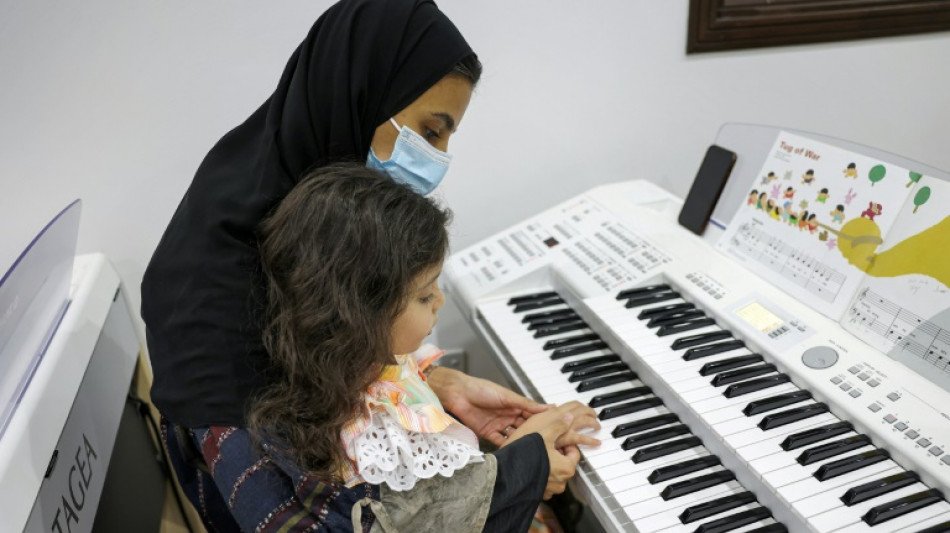
Saudi businessman Ahmed Abdullah watches intently as his seven-year-old daughter Yasmine practises keyboard scales at a Riyadh music school, an opportunity he could only dream about when he was young.
Saudi Arabia's rulers have recently relaxed some social restrictions after decades of adhering to a rigid interpretation of Islam, enforced by the kingdom's religious police and placing severe limits on social activities including group musical lesson.
"Now we are thinking about the next generation and investing in it," Ahmed said.
Previously those who could afford it hired musical tutors to come to their homes, while the rest struggled to find any instruction at all.
At least five such schools have opened over the past few years in the capital Riyadh and Jeddah, the kingdom's second city on the Red Sea coast, serving an enthusiastic clientele of children and some adults.
Yasmine's class, at the Yamaha Music Centre, meets every Saturday for half an hour, with their Egyptian instructor running students through keyboard drills under a sign reading "Music for All".
The session is bittersweet for Abdullah, who thrills at his daughter's enthusiasm even as it reminds him of "things I had no chance of achieving in my childhood".
- Notes of change -
Music has been a feature of the dramatic social reforms ushered in by Crown Prince Mohammed bin Salman, the country's de facto ruler who became first in line to the throne five years ago.
For decades the country was decidedly off the beaten path of most touring artists but in recent years some of the world's biggest stars, including Justin Bieber and K-pop juggernaut BTS, have performed in the kingdom.
These marquee events have spurred allegations of complicity in a transparent bid to whitewash the kingdom's grim human rights record.
But there is little question that many young, entertainment-starved Saudis are grateful for the shows.
Last December more than 700,000 revellers flocked to the MDLBeast Soundstorm music festival in Riyadh, officials said, for four days of performances including a set by superstar French DJ David Guetta.
Daily life, too, has become more melodious, with restaurants and cafes staging live acts or blasting recordings through speakers -- some even during prayer time, when in the past they would have been forced to close.
Several Saudis who are now trying to develop their own musical chops described the transformation as a boon to their mental health.
Wejdan Hajji, a 28-year-old employee at a firm selling medical supplies, said she once struggled to teach herself guitar by watching YouTube videos, lamenting that "if I made a mistake, there was no one to correct me".
Now she pays 940 Saudi riyals (around $250) each month for classes with a Ukrainian teacher at the Yamaha Music Centre.
"I didn't know anything, but now I've learned the basics," she said.
"The one-hour session clears my mind... My personality has changed, and I'm calmer."
- A growing market -
Such benefits could soon extend to many more young Saudis.
In 2020 the kingdom established a "Music Authority" under its culture ministry which grants licenses to music schools and provides backing to young talents eager to pursue careers in the music industry.
Some 100 private schools nationwide have included a music component in their curricula during the current academic year, according to an official tally.
In May, the authority launched a "Music Culture Programme" to develop the skills of public school students as well.
As those initiatives get off the ground, the specialised music schools continue to do brisk business.
One recent afternoon at the "House of Music" school in northern Riyadh, an instructor supervised five toddlers as they swayed to the sound of lullabies playing on a speaker.
The school opened in 2019 and has 300 students of all ages who come for lessons in rooms adorned with posters of performers like Bob Marley and Lebanese singer Fairuz.
"There is a good acceptance of the services we provide so far," said the school's Venezuelan director, Cesar Mora, adding that the school has a second branch in the works.
"There is a growing music-loving community and market."
Walid Mahmoud, a 37-year-old Sudanese resident of Riyadh, began coming to the school so his young daughters could take lessons on the oud, a stringed instrument popular in the region.
Before long, he signed up for lessons himself.
"Saudi Arabia has changed a lot," he said with a laugh as his daughters, aged five and three, looked on.
"Maybe we will form a band one day. Why not?"
D.Schneider--BTB