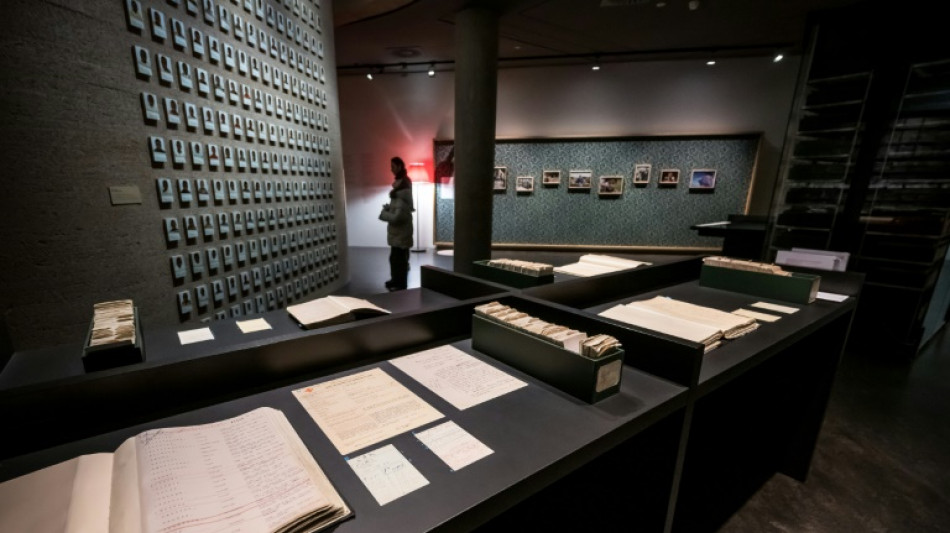
'Incomprehensible': Red Cross museum fears closure amid Swiss funding cuts / Photo: © AFP

 Funerals in Nepal for missing, a week after deadly floods

 US aircraft carrier arrives in Thailand after months at sea
 US aircraft carrier approaches Thai port after months at sea
 Nepal's young PM faces gravest test after flood catastrophe

 What rainbow? LGBTQ Indonesians on edge as hostility mounts
 O'Connor eyes Wallabies World Cup swansong after Force return

 Syria UXO causing death, injury every six hours: charity
 Tiger Woods set to change not guilty plea in DUI case: court documents
 Zelensky warns airlines Russian skies not safe due to Ukraine drones

 UK vows anti-settler measures as Israel warns of retaliation

 New pro Koivun among US Presidents Cup picks

 G20 finance leaders close talks marked by US welcoming Russia

 From Hollywood to big time tennis: teen makes US Open debut

 Man City secure Premier League record deal to sign Fernandez

 Kaepernick says NFL 'blackballing me' decade after protest

 Atletico loan David from Juve, send Lemar to Elche

 Chelsea 'keeper Sanchez makes deadline-day move to Como
 Kroenke to buy baseball's Los Angeles Angels: statement

 US defends Trump's Venezuela oil deal

 OpenAI to launch new model with 'stronger safeguards' after hack

 Fans mourn 'bittersweet' final Ariana Grande gig in London
 Norway's King Haakon VIII swears allegiance to constitution
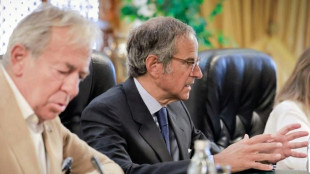 Syria site infrastructure 'consistent with nuclear reactor': IAEA

 Juventus sign Woltemade, Sarr on loan from Premier League

 US strikes Iran in latest tit-for-tat attacks
The Red Cross museum in Geneva is warning that it risks closure after its funding was axed in a broad government cost-cutting plan, with some suggesting it could be moved to Abu Dhabi.
The International Red Cross and Red Crescent Museum has been a national institution in Switzerland for nearly four decades, playing a key role in promoting and explaining international humanitarian law and principles in the birthplace of the Geneva Conventions.
Museum director Pascal Hufschmid said he was shocked to learn last September that the fate of the museum was, apparently inadvertently, being threatened by a small administrative measure in a government savings drive.
"It jeopardises the very existence of the museum," the Swiss historian, who took the helm of the institution in 2019, told AFP in a recent interview.
The museum, built adjacent to the International Committee of the Red Cross (ICRC) headquarters, opened in 1988. It welcomes around 120,000 people annually, ranging from elementary school classes to visiting dignitaries.
It keeps a collection of around 30,000 objects, including the first Nobel Peace Prize medal, given in 1901 to Red Cross founder Henry Dunant, an award shared with the French pacifist Frederic Passy.
It also houses the archives of the ICRC's International Prisoners of War Agency, established to restore contact between people separated during World War I, which have been listed on UNESCO's Memory of the World Register.
- 'Incredible heritage' -
"Through this incredible heritage," Hufschmid said, the aim is to create "a dialogue on what humanitarian action means on a daily basis".
He said the Swiss government had long recognised the value of the museum, and its role in telling "the story of an idea born in Switzerland, of major figures of Swiss history", like Dunant.
Since 1991, the private museum has received an annual subsidy from the Swiss foreign ministry of 1.1 million francs ($1.2 million), accounting for about a quarter of its overall budget.
But a general cost-cutting measure, proposed by a group of experts and approved by the government last September, included the decision to transfer responsibility for subsidising the museum to the culture ministry.
At first, Hufschmid said he was not too concerned at what appeared to be merely an administrative change, until he realised "the transfer actually meant a major reduction of the subsidy".
This was because the culture ministry requires museums seeking its funding to take part in a competition, facing off against hundreds of other museums.
When successful, Hufschmid said, museums typically obtain a subsidy of "between five and seven percent of their expenses, (which) in our case would mean approximately 300,000 francs".
- 'Structural deficit' -
"Suddenly, I understood that we would be facing a structural deficit starting 2027, (and) that we would have to close," he said, calling the situation "totally incomprehensible".
He said the government decision was taken as Switzerland marked the 75th anniversary of the adoption of the Geneva Conventions, and amid warnings of dwindling respect for international humanitarian law.
Hufschmid has since been lobbying parliamentarians and decision-makers with ideas to save the museum.
The Geneva canton has stepped up its support, and parliamentarians both at the regional and national levels have voiced support for the institution -- but so far the threat of closure remains.
Hufschmid has proposed nationalisation among other possible solutions.
Others have raised the possibility of moving the museum, with suggestions that Abu Dhabi, which hosts other museums including an outpost of the Louvre, could house its collection.
But Hufschmid said such a move "doesn't make any sense".
"We were shocked when we heard that, because we are so deeply connected to Swiss identity, to Swiss heritage, to ideas born in Switzerland... (as) the depository state of the Geneva Conventions," he said.
"We are a Swiss museum and we will stay in Switzerland."
M.Schneider--VB