Top Africa orchestra began with brake cables for strings / Photo: © AFP

 Leftwing opposition seen leading Sweden election, far-right losing ground
 Senegal goalkeeper Mendy retires from international football
 Carrick 'worried' by decision to award Man City winner
 Lobotka eases pressure on Allegri with Napoli winner
 Trump watches as Lowry wins Irish Open in record-breaking style
 Poland, Ukraine slam Russian strikes near border as 'escalation'
 Haaland fires 10-man Man City to memorable win over Man Utd
 I miss the adrenaline, but it's not my moment - Bolt
 Championship leader Antonelli to 'keep pushing' for title
 Yamal double helps Barca edge Levante thriller
 Brighton run rampant against 10-man Coventry
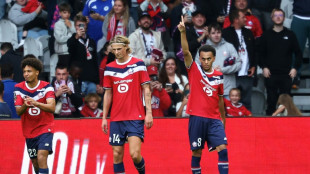 Late Mbappe goal sends Lille top of Ligue 1

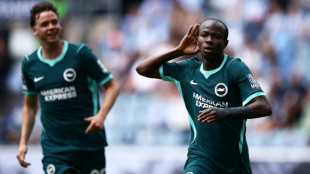 Five-star Brighton crush 10-man Coventry
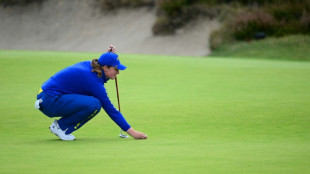 Team Europe beat United States to reclaim Solheim Cup
 US House Speaker warns curbing AI too sharply could leave China ahead
 張國榮70歲誕辰音樂會西九舉行 唐鶴德錄音致意
 Iran's economic ties to Dubai hard to break despite war
 iPhone 18預購後出現可疑扣款 四間銀行調查未授權交易
 《浪花男女》辦特別謝票場 馮志強談票房與導演客串拍攝
 Former captain De Villiers hails 'fantastic' Springboks
 Galaxy Tab S12系列效果圖曝光 Ultra擬配雙鏡頭及瀏海螢幕
 فليك يضم حمزة عبد الكريم إلى قائمة برشلونة بعد أربعة أهداف في الإعداد

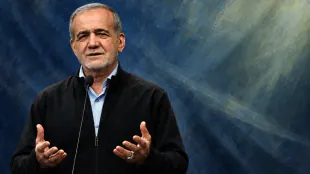 بزشكيان يؤكد رفض الاستسلام وسلطات إيران تعلن مقتل شخص في استهداف سفينة

 Altman tells Fortune OpenAI will not go public in 2026
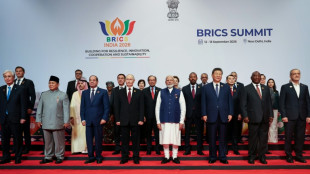 China, Russia, India seek economic cooperation at BRICS
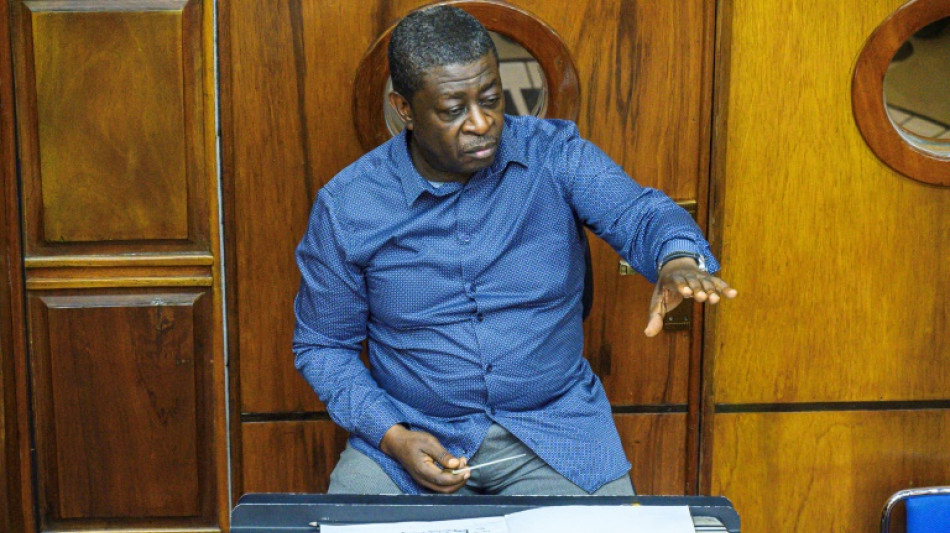
When Armand Diangienda founded the Kimbanguist Symphony Orchestra -- one of the most famous in Africa -- in 1994, they had so few instruments that musicians had to share.
They got to play them for only 15 minutes before handing them on to the next person.
"When a string broke, we would replace it with bicycle (brake) cables," he told AFP.
With the Democratic Republic of Congo at war and in chaos for most of the orchestra's first decade, they had to mend and make do with the poor quality instruments they could find.
"We didn't know how to buy a violin, we didn't know how to buy a string," Diangienda said. "So when a violin broke we had to repair it."
But "we were motivated".
The orchestra, which began with a ragtag band of around a dozen string musicians, has since gone on to become a trailblazer for classical music in Africa, with fans all over the world.
"At the beginning it was really just a dream," Diangienda told AFP from a studio in its Kinshasa headquarters as musicians tuned up outside.
The orchestra now boasts 200 highly accomplished members, including a choir.
- 'Real learning curve' -
But at the beginning not everyone knew how to read music and the group had just a few instruments between them.
"It was a real learning curve," Diangienda said.
The instruments they had were in poor condition -- not helped by the hot and humid climate -- and there was little money.
But by 1999 everyone had their own instrument picked up here and there.
The idea for the orchestra was born in 1985 when Diangienda's father, Joseph, asked him to gather up different musical groups from within the Kimbanguist church.
The religious movement -- which is said to have millions of members in the DRC -- was founded in 1921 by Diangienda's grandfather, a visionary whose followers believe he was Jesus Christ's special envoy on Earth.
The orchestra gave its first concert almost exactly 30 years ago in December 1994.
Since its humble beginnings it has played in countries across the world including Germany and the United States and has met celebrities including Angelina Jolie and Lionel Richie.
It has also collaborated with other groups including Germany's Tuebingen Chamber Orchestra and regularly has international soloists play with it.
Its conservatory of music in Kinshasa is now home to a school for young people to learn to read and play music.
- Persistence pays -
But teaching musicians was not always so seamless, and many joined with absolutely no musical knowledge.
Pauleth Masamba, 43, joined up the year the orchestra was founded wanting to play the cello, but accidentally mixed up its name with the violin -- two very similar words in French.
But as the orchestra grew, so did her love for her instrument.
"I bring it everywhere, even if I go on a personal errand I go with my violin. It's my loyal friend," she said, holding the instrument as she talked.
Two years after the orchestra began, the DRC was plunged into the First Congo War, which saw dictator Mobutu Sese Seko ousted, and then the longer and even more bloody Second Congo War from 1998 to 2003.
But it has still managed to become one of the continent's leading classical music institutions.
Dauphine Mata, a 33-year-old violinist who joined at 19, hailed it for introducing classical music to the country and continent.
"Before (becoming famous) we had a small fan base, people weren't really interested in the music," she said.
"Now we are on the stage more people appreciate it," she added.
But no one is more proud of their work than Diangienda.
"We were patient and we persevered, we alway fought for our dreams," he said.
S.Gantenbein--VB