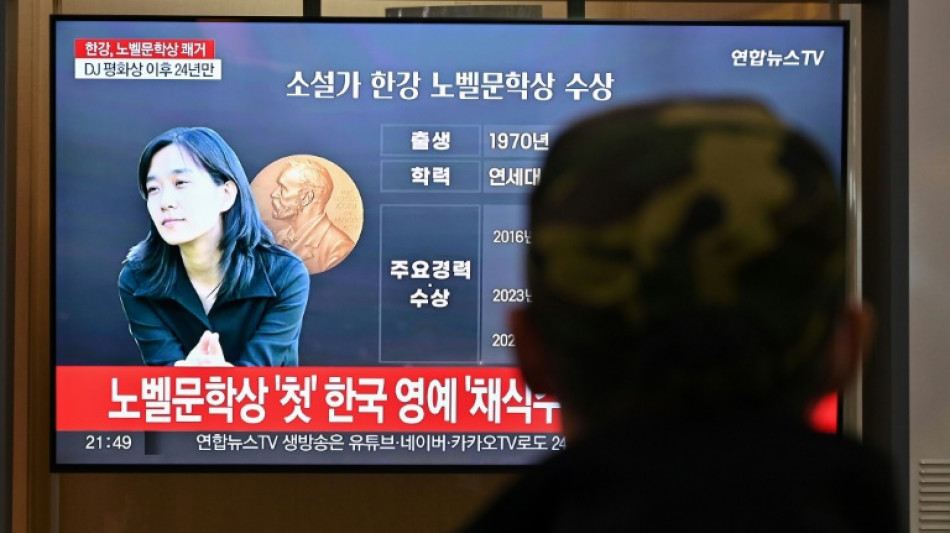
S. Korea's Nobel winner Han Kang a modest, thought-provoking writer / Photo: © AFP

 Carrick confident Man Utd can 'work through' tough time

 Mbappe ends Nike partnership to join Swiss brand On

 Liverpool boss Iraola puts Bournemouth love affair on hold
 'A disaster' if Man City do not win says Maresca after flawless start
 Kerry James Marshall: American 'blackness' painter celebrated in Europe

 Spain coach De la Fuente offers 'full support' to people of Ceuta

 Russia seizes assets of Nestle, French firms over West's Ukraine support
 England can build on World Cup 'spirit', says Tuchel

 UNESCO can be 'moderator' in AI debate: chief to AFP

 Infantino 'must go', says German FA vice-president

 Russia seizes assets of Nestle, French firms

 Japan's busiest rail station tests robot bins
 Anthropic says AI systems moving towards building themselves

 Asian stocks boosted by falling oil, yen weakens after BoJ rate hike
 Pakistan court blocks expulsion of Afghan medical college students
 Athletes 'can't take it any more' as Asian Games issues mount
 Allen lights up Bills' new stadium with 41-31 win over Lions

 Afghan medical students in Pakistan hope court stops college expulsions
 AI doomsday warnings unlikely to slow IPOs but questions linger

 ICC eyes China in bid to expand cricket
 Nkunku craving freedom and fun on RB Leipzig return

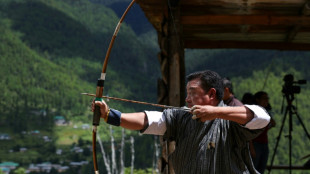 Bhutan's traditional archers lose ground to development

 Asian stocks track Wall St rally as oil prices drop

 South Korea makes Asian Games complaint over Japan warlord ceremony
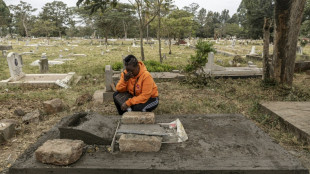 US aid cuts are killing Kenyan sex workers

South Korean author Han Kang, who won the Nobel Prize in Literature Thursday, has vowed after receiving other top literary awards that she would continue writing "as if nothing had happened".
The 53-year-old is the first South Korean to receive the honour, the Swedish Academy hailing "her intense poetic prose that confronts historical traumas and exposes the fragility of human life".
Han's "The Vegetarian", which tells the story of an ordinary woman's rejection of convention from three different perspectives, also won the Booker prize in 2016.
She said after that award, which caused a spike in international sales on top of her more familiar South Korean market, that she hoped to stay out of the limelight.
"I took the subway here," she told reporters at the time. "I want to continue living as if nothing had happened."
She is only the second South Korean to receive a Nobel prize, after former president Kim Dae-jung received the Peace Prize in 2000 for his efforts to end tensions with North Korea.
Han's works are known for their profound and thought-provoking narratives, often exploring themes of violence and trauma.
Her 2014 novel "Human Acts" was inspired by the 1980 massacre in her home city of Gwangju, when pro-democracy protests were brutally suppressed by the military.
And 2016's "The White Book" is set in Warsaw and covers the turmoil, death and cruelty of war.
"I believe that writing a novel based on a historical event is not just about recounting past events, but about exploring human nature," Han said in an interview with the Yonhap news service last year.
She also said in a 2023 lecture in Gwangju that "the violent scenes depicted in the novels are not intended to reveal violence, but to stand on the other side of it".
- 'Inherited literature DNA'? -
Han's father was also a renowned novelist and, when "The Vegetarian" became 2007's most-read book in South Korea, local media praised her "inherited literature DNA".
Her father responded that she had "surpassed him a long time ago".
Han has said that writing is her way of making sense of the world.
"For me, to write is to endlessly question what is life, what is death, who am I," she said in a 2015 interview with the Literature Translation Institute of Korea.
"When I write, especially when I'm writing novels, I'm exchanging one, two, three, sometimes four years for that book," she said.
Many in South Korea expressed shock and delight at her win after other potential winners, including poet Ko Un, failed to attract the Nobel Academy's attention.
"I think many writers like me had given up, thinking that there is a limit to how Korean literature can be perceived to international audiences," Bae Yoon-eum, a novelist, told AFP.
"I was just stunned when I saw the news, my heart stopped but I am so happy. I am so proud that South Korean literature is finally being recognised."
- Translated fiction -
Literary merits aside, the success of "The Vegetarian", her first book to appear in English, was helped by coinciding with South Korea's emergence as a prominent player on the global cultural stage.
Han is from a new wave of younger writers eager to move away from the traditional Korean reverence for intellectualism that is often dominated by older male critics with tastes firmly rooted in the 1970s.
The author shared the 50,000 pounds ($72,000) Booker Prize cheque with her British translator Deborah Smith.
A dearth of capable translators, coupled with an equally limited number of works suitable for foreign readers, had long stymied efforts to find a wider audience for Korea's literary output.
That changed when the Literature Translation Institute of Korea (LTI), which was set up in 1996 and has championed new writers in recent years, allowed translators to choose the books on which they would like to work.
Translated fiction is still a very small genre, representing just 1.5 percent of fiction and 3.5 percent of literary fiction, but it provided five percent of fiction sales and seven percent of literary fiction sales last year.
Growth in translated Korean fiction has been particularly strong in markets such as Britain.
S.Leonhard--VB