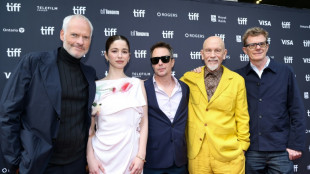
Hollywood star Idris Elba champions African cinema in Ghana / Photo: © AFP

 Hushing and hedging: US companies retreat on climate
 Springboks to face Fiji before 2027 Rugby World Cup
 Nigeria miners struggled to breathe in cell before 37 died: survivors

 McIlroy on the charge at PGA Championship as Reed withdraws
 McIlroy on the charge at PGA Championship

 Crisis-wracked Volkswagen warns of 10-bn-euro hit to profits
 Costa Rica's Grynspan tops third informal poll for UN chief: diplomat
 Stock markets retreat after central bank rate hikes
 Russia labels director of Cannes Grand Prix winner a 'foreign agent'

 Macron warns of Russian 'hybrid' threat after meeting presidential hopefuls
 UN holds third informal poll for new chief
 Kulusevski return can spark Spurs: De Zerbi

 Shakira to cap off world tour with Madrid 12-gig run

 Isolated Syrian-Druze city blames Damascus for shortages
 Isolated Syrian-Druze city shortages
 Dutch drop Depay for Germany match in Xavi's first pick
 Ronaldo named in Portugal squad for Nations League

 Stock markets diverge after central bank rate hikes
 Anti-Assad music star makes triumphant return to Syria
 In-form Fernandez included in Spain Nations League squad
 Arteta buries hatchet with Hurzeler ahead of Brighton clash

 Alexander-Arnold and Palmer return to England squad for Nations League

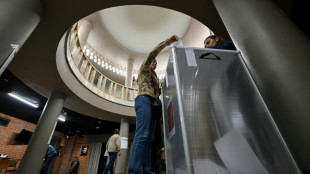 Russians vote as Ukraine war drags on for fifth year

 Backpackers fret over Australian visa crackdown

 Most Asian stocks track Wall St rally, yen drops after BoJ rate hike

As Idris Elba strode the halls of the Africa Cinema Summit in Ghana's capital Accra, it was clear the Golden Globe-winning British actor was not just a guest.
Born and raised in London to a father from Sierra Leone and a Ghanaian mother, the star of both television and the silver screen was at the continent's premier film industry event as a passionate advocate for the future of African cinema.
Elba, who has starred in Africa-focused films such as "Mandela: Long Walk to Freedom" and the shot-in-Ghana "Beasts of No Nation", has long been vocal about his deep-rooted connection to the continent.
At this year's summit, which brings together stakeholders in the industry, Elba took on the role of ambassador for the importance of African stories and how best to tell them to the world.
- African cinema's future -
"African cinema is not young. We've been around for a long time," the 52-year-old pointed out, noting the rich film heritage of French-speaking Africa.
"But our stories have yet to springboard on that wider landscape."
The African continent has the world's youngest population but only around 1,700 cinemas, compared with around 44,000 in the United States and 75,500 in China, according to the National Film Authority of Ghana.
Elba's belief in African cinema's untapped potential was palpable as he spoke. For him, the key is raising its profile through better infrastructure, distribution channels, and connecting filmmakers with audiences on the continent and globally.
"We need bums on seats," Elba said. "The future relies on us... our own distribution. We must fill the cinemas with our people first."
This Africa-first focus distinguishes Elba's vision from other industry luminaries who often focus solely on international recognition.
Elba said he wanted African cinema to succeed domestically as much as it does abroad.
He drew parallels with Hollywood, where success is measured both by domestic box-office numbers and international sales.
But instead of merely cheering it on from the sidelines, Elba has been working to shape African cinema's future.
He has already taken steps to invest in the continent's creative industries, nurturing African talent through his production companies IE7 and The Akuna Group.
- Passion and optimism -
Where others might see the challenges of financing, education, or infrastructure as barriers to progress, Elba said he was optimistic -- he saw "opportunities in the waiting".
"A lot of young filmmakers are making films on their phones," he told AFP, excitedly describing the innovative, grassroots approach emerging from Africa's youth.
"But we still need to amplify those films. We still need distribution methods."
He argued that African filmmakers must not rely solely on global streaming giants like Netflix or Amazon Prime Video.
Though he acknowledged the value of these platforms in showcasing African content to international audiences, he insisted true success lay in building local capacity and infrastructure.
He said he wanted a robust African film ecosystem that can sustain itself, with distribution pipelines independent of Western platforms.
"We want to penetrate international markets," he said. "But we need to penetrate into African markets as well."
- A legacy in the making -
Elba stressed the need for African filmmakers to take charge of their creative destinies.
"Just do it," he advised aspiring filmmakers. "The barrier between making your film and dreaming about it is much shorter now."
Driven by his love for storytelling, Elba developed an early passion for acting during his London childhood, working various jobs while pursuing his craft.
His breakthrough came with his role as drug kingpin Russell "Stringer" Bell in the critically acclaimed US series "The Wire," and he later cemented his star power with the British crime series "Luther", which earned him a Golden Globe.
Over the years, Elba's versatile filmography, ranging from Hollywood blockbusters to indie projects, has made him one of the most respected and influential actors on the global stage.
And as one of the most visible African-heritage actors in Hollywood, he said he felt a responsibility to ensure African stories reach the widest audience possible.
"We have a long way to go," Elba acknowledged.
But as the lights dimmed on this year's Africa Cinema Summit, the vision Elba painted was not just one of awards or accolades but of a flourishing film industry that resonates deeply with African viewers while continuing to capture the world's attention.
S.Gantenbein--VB