
Telegram: The global rise of libertarian chat app / Photo: © AFP/File

 Trump welcomes Xi to White House, touting agreement on AI
 Stocks fall, oil prices rise as global bonds back under pressure
 UK man died putting women, children first in Mozambique jihadist siege: coroner

 Russell leads Mercedes 1-2 at Azerbaijan GP practice
 Alcaraz shrugs off pressure of packed calendar at 'joyful' Laver Cup

 Fury to face British rival Joshua in Cardiff on December 11

 Streamex Converts Interest Into Capital as GLDY Investment Strategy Secures $1M+ Institutional Allocation

 STARTRADER Named Best Fintech Forex Broker at Forex Expo Dubai 2026
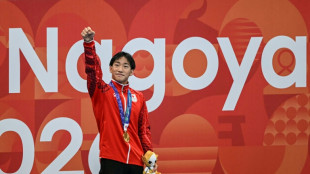 Japan swimmer Ohashi, 17, shrugs off Covid to smash world record
 Shin Ohashi: Junk food-loving teen and new world record-holder

 Greek PM urges 'courage' in talks with UK over Parthenon Marbles
 'I was drowning': Iran Nobel winner exposes pain of separation from children

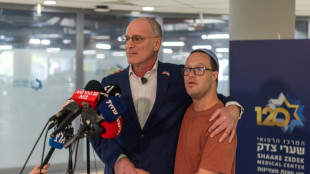 Israel's US envoy says son fighting for life

 Olympic champion Yulo completes gymnastics gold collection at Asian Games

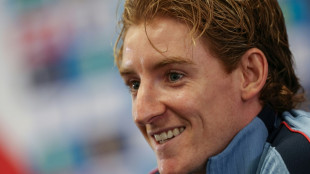 England cannot imitate Spain's success, says Gordon
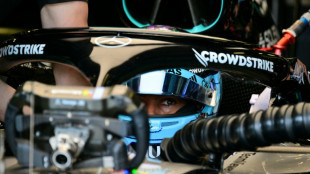
 Hungary detects invasive spotted lanternfly for first time in EU

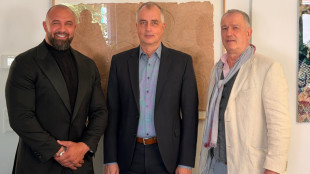 Ο Alex Bodi και ο καθηγητής Δρ. Stefan Haupt συμφωνούν σε συνεργασία για μια θρυλική συλλογή έργων τέχνης στη Ρουμανία
 France's top-selling newspaper to slash jobs
 Tigray rebels in 'full-blown' war with govt

 Alex Bodi och prof. dr Stefan Haupt ingår samarbetsavtal om en legendarisk konstsamling i Rumänien
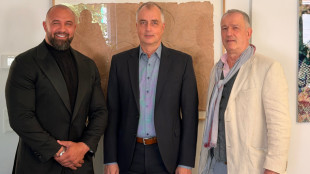
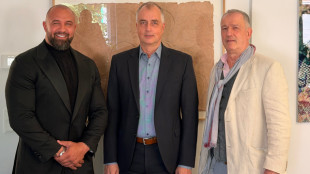 อเล็กซ์ โบดี และศาสตราจารย์ ดร. สเตฟาน ฮาปท์ ตกลงร่วมมือกันในการจัดตั้งคอลเลกชันศิลปะอันเป็นตำนานในโรมาเนีย
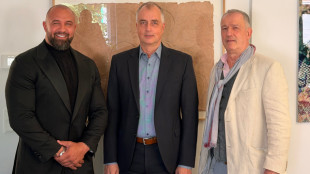
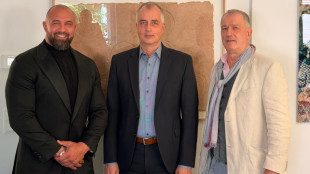 Alex Bodi a prof. dr. Stefan Haupt se dohodli na spolupráci na legendární umělecké sbírce v Rumunsku
 알렉스 보디와 슈테판 하우프트 교수, 루마니아의 전설적인 미술품 컬렉션을 위한 협력 합의

 BaazEX Enters the Asian Trading Market With a New Approach to Online Forex Trading.
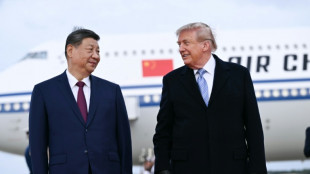 Asian markets fall on US-China jitters as leaders meet

The boss of social media platform Telegram has been arrested in France, accused of allowing the sharing of illegal content.
The Russia-founded messaging platform has stayed out of the limelight in the West but has hundreds of millions of users across the world, and plays a key role in the Ukraine war.
- Libertarian leanings -
Pavel Durov, arrested after landing on his private jet in Paris on Saturday, launched the platform in 2013 with his brother Nikolai.
It claims to have 950 million users -- up from 550 million in 2022.
Durov told right-wing American journalist Tucker Carlson in April that users "love the privacy, the freedom" of the platform.
Telegram has made great play out of refusing to hand over or sell user data, distinguishing itself from the business models of US rivals like Meta or Google.
In Russia and Ukraine, some of its news channels are more popular than traditional media.
But the platform has long been criticised for failing to moderate extreme content.
Durov, who has a net worth of $15.5 billion according to Forbes, told the Financial Times in March he planned to improve the moderation mechanisms.
But "unless they cross red lines, I don't think that we should be policing people in the way they express themselves," he said.
Howewer, he also said the firm only employs a few dozen people, which experts said may not be enough to provide a properly secure platform.
- Russian origins -
The 39-year-old made a name for himself in 2006 when he launched the social network VKontakte (VK) shortly after graduating from St Petersburg State University.
Millions joined up and it quickly became known as "Russia's Facebook", its popularity piquing the interest of the Kremlin.
He said he had to fend off demands from the Russian security services to hand over details of opposition groups using VK to organise.
And later he came under huge pressure to hand over the personal data of pro-European activists in Ukraine.
These experiences led to him forming Telegram, and eventually selling his stake in VK in 2014 and leaving Russia.
By 2017, he set up in Dubai, keeping at arm's length from tougher regulatory regimes in the European Union and the United States.
Durov has citizenship of the Caribbean island of Saint Kitts and Nevis as well as French nationality, which he picked up in 2021.
- Legal troubles -
French prosecutors accuse Telegram of failing to moderate content or collaborate with the authorities.
They have highlighted content involving fraud, drug trafficking, organised crime, glorification of terrorism and cyberbullying.
The firm has said it cannot be held responsible for what its users do -- a defence long used by big tech platforms.
Several countries have tried to block Telegram in the past.
In 2018, Iran accused it of hosting violent opposition groups.
In the same year, Russia said it had failed to hand over encryption keys.
Last year, Brazil blocked it briefly for failing to provide data on neo-Nazi groups and Spain acted over intellectual property violations.
- No profits yet -
Telegram was fully funded by Durov until 2018, when it raised $1.7 billion to launch its own cryptocurrency.
The crypto project collapsed after US regulators refused to approve it, and the company reimbursed most of the investment.
The messaging service began running ads in 2021 but insisted it would not use users' private data for targeting.
A premium subscription system followed in 2022.
Durov told the Financial Times his company was generating hundreds of millions in revenue and hoped to turn a profit soon.
He also did not rule out floating on the stock exchange.
Though he has repeatedly stated his mission is not about getting rich.
"For me everything in my life was about becoming free," he told Carlson, saying Telegram was about allowing others to express their liberty.
R.Flueckiger--VB