Fragile but unbroken, Afghan glassblowers refuse to quit / Photo: © AFP

 Trump welcomes Xi to White House, touting agreement on AI

 Stocks fall, oil prices rise as global bonds back under pressure

 UK man died putting women, children first in Mozambique jihadist siege: coroner

 Russell leads Mercedes 1-2 at Azerbaijan GP practice

 Alcaraz shrugs off pressure of packed calendar at 'joyful' Laver Cup

 Fury to face British rival Joshua in Cardiff on December 11

 Streamex Converts Interest Into Capital as GLDY Investment Strategy Secures $1M+ Institutional Allocation

 STARTRADER Named Best Fintech Forex Broker at Forex Expo Dubai 2026
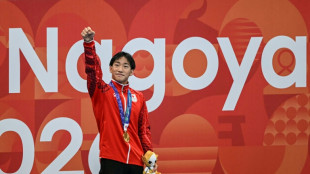 Japan swimmer Ohashi, 17, shrugs off Covid to smash world record

 Shin Ohashi: Junk food-loving teen and new world record-holder

 Greek PM urges 'courage' in talks with UK over Parthenon Marbles
 'I was drowning': Iran Nobel winner exposes pain of separation from children

 Israel's US envoy says son fighting for life
 Olympic champion Yulo completes gymnastics gold collection at Asian Games
 England cannot imitate Spain's success, says Gordon

 Hungary detects invasive spotted lanternfly for first time in EU

 Ο Alex Bodi και ο καθηγητής Δρ. Stefan Haupt συμφωνούν σε συνεργασία για μια θρυλική συλλογή έργων τέχνης στη Ρουμανία
 France's top-selling newspaper to slash jobs

 Tigray rebels in 'full-blown' war with govt

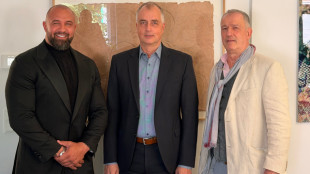 Alex Bodi och prof. dr Stefan Haupt ingår samarbetsavtal om en legendarisk konstsamling i Rumänien
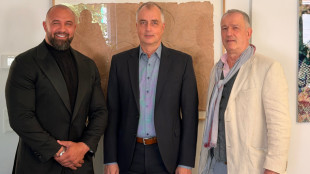
 อเล็กซ์ โบดี และศาสตราจารย์ ดร. สเตฟาน ฮาปท์ ตกลงร่วมมือกันในการจัดตั้งคอลเลกชันศิลปะอันเป็นตำนานในโรมาเนีย
 Alex Bodi a prof. dr. Stefan Haupt se dohodli na spolupráci na legendární umělecké sbírce v Rumunsku
 알렉스 보디와 슈테판 하우프트 교수, 루마니아의 전설적인 미술품 컬렉션을 위한 협력 합의

 BaazEX Enters the Asian Trading Market With a New Approach to Online Forex Trading.

 Asian markets fall on US-China jitters as leaders meet
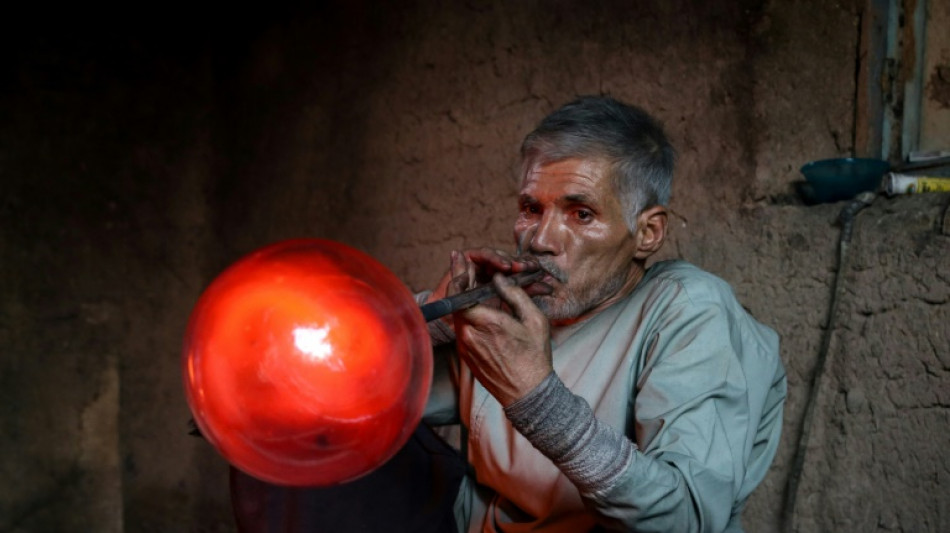
Seated in front of a searing furnace, Ghulam Sakhi Saifi teases forth sinews of molten blue glass -- the guardian of an Afghan glassblowing trade refusing to break with tradition.
"This is our art, our inheritance. It has fed us for a long time," he told AFP, resting from the work that has singed his knuckles and calloused his palms.
"We are trying to make sure it is not forgotten. If we do not pass it down, it will disappear from the whole world," said Saifi, who guesses his age is around 50.
Glassblowing in Afghanistan's western city of Herat is an ancient craft. Saifi says it has run in his family for about three centuries.
The last two furnaces in the windswept metropolis near the border with Iran are in his family home and a mud-and-straw shed with a holey roof in the shadow of Herat's citadel.
- 'Slow suffocation' -
Saifi now lights one of the furnaces only once a month -- eking out around $30 from his stock of cups, plates and candleholders after expensive wood for fuel, dyes and other raw materials are accounted for.
He attributes the dramatic downturn to the exodus of already low numbers of foreign customers during the Covid-19 pandemic followed by the 2021 Taliban takeover, which saw many diplomats and aid workers pack up and leave.
Cheaper Chinese-made imports have also dented demand.
"There have been times when we haven't worked for three months -- we sit at home forever," he said.
"Locals have no use for these products, for the price they would first think to buy two loaves of bread for their children."
But when the furnace is lit, Saifi is in his element.
With a crude kitchen knife and a blowpipe he pulls glowing globs of glass out of the mud furnace and inflates them into household wares.
Unlike in the past, when they used quartz, the glassblowers now use easier-to-findrecycled bottles shattered into shards and superheated back into their liquid state.
The green and blue pieces cool into charmingly imperfect shapes, shot through with air bubbles, and are sold from clattering piles in shops in Herat and the capital Kabul for around $3 each.
Outside the shed it is already 36 degrees Celsius (97 degrees Fahrenheit) but stepping over the threshold is like being gripped by a sudden fever.
"Sometimes we really feel the heat, I think I am being slowly suffocated," Saifi said. "But this is our inheritance, we are used to it.
"Today is a bad day, but maybe it will get better in the future. Maybe the day after tomorrow, we hope to God."
- 'Craft needs to endure' -
A gaggle of boys and teenagers assists Saifi in his work, but it is growing hard to tempt the younger generation into a trade they view as a dead end.
His eldest son became an expert in the craft only to abandon it for migrant labour over the border in Iran.
Two cousins who learned to blow glass also saw no future and downed their tools.
His middle son, 18-year-old Naqibullah, vows he will continue the trade, though it's not clear how.
Before the Taliban takeover there was still enough demand for three days of work a week -- a distant prospect for the young man who shares shifts with his father on the rare occasion they light the furnaces.
"We hope that there is a future and that day by day things will get better," Naqibullah said.
"Even if we're not making much money the craft needs to endure," he added. "The art of making things by hand needs to be preserved. We can't let this skill disappear."
R.Kloeti--VB