UNESCO adds apartheid massacre site to heritage protection list / Photo: © AFP

 ALIX LASERS shareholders remove Michael Sobitsch as managing director in view of the circumstances

 Progressive Vision Wins Irish Healthcare Awards 2026 Innovation Prize for Office-Based Cataract Surgery

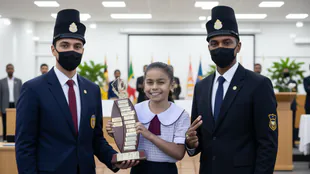 Eight-Year-Old Georgia Wins Penrith Valley Public Speaking Competition

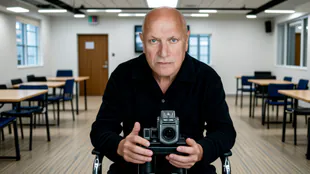 Steven Berkoff on Memory and His New Autobiography 'Shouting At Night'

 Jimmy Carr Confirms 25-Year Estrangement From Father Amid Podcast Reflections

 Arizona Superintendent Tom Horne to Leave Office, Plans Law Practice and Charter School

 Japan and Peru Mark 150 Years of Diplomatic Ties Amidst Trade and Investment Talks

UNESCO added Saturday the scene of an apartheid-era massacre and a village where Nelson Mandela lived as a boy to its World Heritage List, in an entry honouring South Africa's struggle that ended white-minority rule 30 years ago.
The new listing is made up of 14 locations across South Africa grouped by UNESCO as "Human Rights, Liberation and Reconciliation: Nelson Mandela Legacy Sites".
They include the scene of the 1960 Sharpeville massacre when police shot dead 69 black protestors, including children, in a turning point in the struggle that led the apartheid government to ban the African National Congress (ANC) that now governs.
Also on the list is the University of Fort Hare in the Eastern Cape province where anti-apartheid figurehead Mandela studied and the remote village of Mqhekezweni where he said in his autobiography, "Long Walk to Freedom", that his political activism was first stirred.
"I congratulate South Africa on the inscription of these sites of memory, which bear witness not only to the struggle against the apartheid state, but also to Nelson Mandela's contribution to freedom, human rights and peace on behalf of us all," UNESCO director-general Audrey Azoulay said.
Mandela, who died in 2013 aged 95, become South Africa's first democratically elected president in 1994, four years after the apartheid government released him from 27 years in jail, including on Robben Island off Cape Town.
"Twenty-five years after Robben Island was inscribed on UNESCO's World Heritage List, this new inscription ensures that the legacy of South Africa's liberation and the values it embodies will be transmitted to future generations," Azoulay said.
The addition of the sites to the World Heritage register was agreed at a UNESCO meeting in New Delhi which also approved the inscription of three locations in South Africa important in the understanding of the origins of modern humans.
Located in the Western Cape and KwaZulu-Natal provinces, the sites "provide the most varied and best-preserved record known of the development of modern human behaviour, reaching back as far as 162,000 years," the UNESCO entry says.
F.Fehr--VB