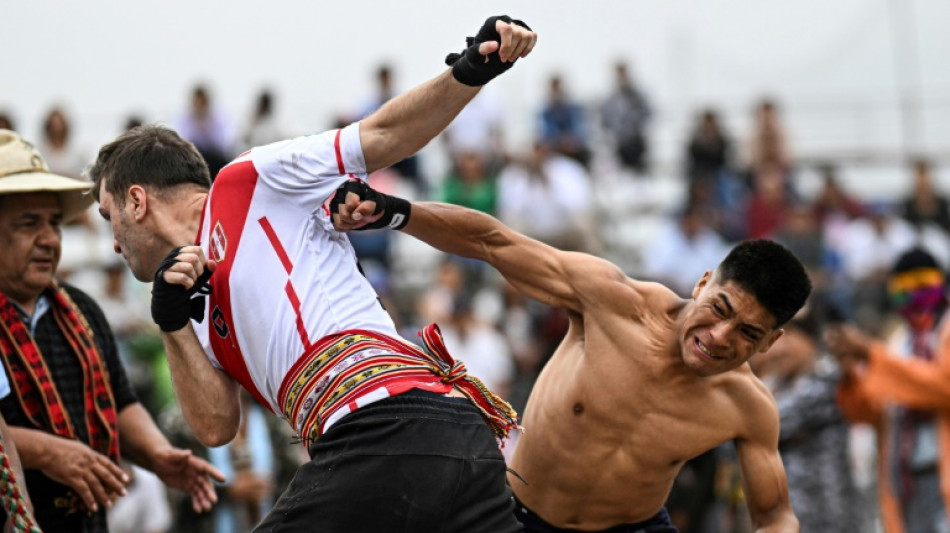
Takanakuy, the Andean 'fight club' that clears the air for a new year / Photo: © AFP/File

 Fury to face British rival Joshua in Cardiff on December 11

 Streamex Converts Interest Into Capital as GLDY Investment Strategy Secures $1M+ Institutional Allocation

 STARTRADER Named Best Fintech Forex Broker at Forex Expo Dubai 2026
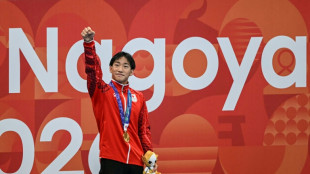 Japan swimmer Ohashi, 17, shrugs off Covid to smash world record
 Shin Ohashi: Junk food-loving teen and new world record-holder

 Greek PM urges 'courage' in talks with UK over Parthenon Marbles

 'I was drowning': Iran Nobel winner exposes pain of separation from children
 Israel's US envoy says son fighting for life

 Olympic champion Yulo completes gymnastics gold collection at Asian Games
 England cannot imitate Spain's success, says Gordon
 Hungary detects invasive spotted lanternfly for first time in EU
 Ο Alex Bodi και ο καθηγητής Δρ. Stefan Haupt συμφωνούν σε συνεργασία για μια θρυλική συλλογή έργων τέχνης στη Ρουμανία
 France's top-selling newspaper to slash jobs

 Tigray rebels in 'full-blown' war with govt
 Alex Bodi och prof. dr Stefan Haupt ingår samarbetsavtal om en legendarisk konstsamling i Rumänien

 อเล็กซ์ โบดี และศาสตราจารย์ ดร. สเตฟาน ฮาปท์ ตกลงร่วมมือกันในการจัดตั้งคอลเลกชันศิลปะอันเป็นตำนานในโรมาเนีย

 Alex Bodi a prof. dr. Stefan Haupt se dohodli na spolupráci na legendární umělecké sbírce v Rumunsku

 알렉스 보디와 슈테판 하우프트 교수, 루마니아의 전설적인 미술품 컬렉션을 위한 협력 합의

 BaazEX Enters the Asian Trading Market With a New Approach to Online Forex Trading.
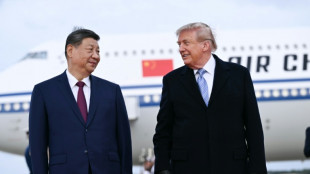
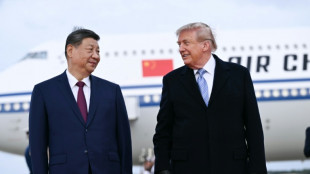 Asian markets fall on US-China jitters as leaders meet
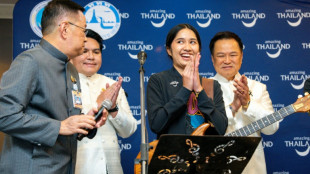 Thais hail teen rocker Nene for 'America's Got Talent' win
 Zverev, Agassi defend 'spectacular' Laver Cup
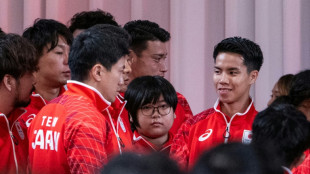 Eel-powered Japan whizz-kid, 11, dominates in historic Games debut
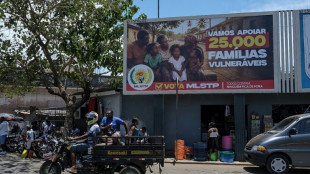
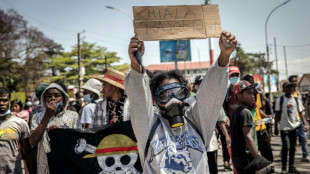 Madagascar's Gen Z 'betrayed' after ushering in new rule
 As Moscow steps up attacks, Kyiv residents brace for harsh winter

The fighting begins and ends with a hug, part of a singular ritual that has residents of the Peruvian Andes punching and kicking in a year-end fight competition known as Takanakuy.
Before the dueling starts in an open-air arena, male fighters remove their elaborate headgear -- stuffed birds, foxes or even goat heads worn as symbols of strength or to bring good luck.
Many participants in the holiday tradition come from the town of San Juan de Lurigancho in Chumbivilcas province, part of the Cusco department southeast of Peruvian capital Lima.
The atmosphere is more celebratory than grim. Wearing traditional costumes or leather jackets and boots, men and women join to do the Huaylia, a traditional Andean dance.
The party, however, will end in a fight.
- Settling neighborly disputes -
It's all part of the Takanakuy, a Quechua-language word that means "to hit each other."
The tradition, which dates to Spanish colonial times, evolved over the centuries to become a means of settling accounts between neighbors in areas where there was no authority.
Before, the fights were "about land disputes, and this was the way to resolve problems between families, between neighbors," 33-year-old hairdresser and fighter Froilan Rosas told AFP.
Some people fight to defend personal or family honor.
The Takanakuy takes place every December 25 in the Peruvian regions of Cusco, Apurimac, Huancavelica and Arequipa, as well as in the Bolivian Andes. Some regions stage a variation: the women-only Warmi Takanakuy.
The goal is to end the year in peace, residents say.
- 'Ends with a hug' -
The party pauses, and the fighting begins.
A fighter challenges another by calling out his or her first and last name. The person challenged is free to refuse, and may offer a substitute.
Before stepping into the ring, male fighters -- some shirtless -- bind their hands with cloth and swap their shoes for boots.
In this club, duels are brief, lasting no more than a minute, with only punching and kicking allowed.
A referee presides over the fight, and four judges decide the winner.
"This is a ritual," said Julio Boza, a burly 72-year-old and one of the organizers. "It starts with a fight and, after fighting, ends with a hug."
Above all, Boza added, "It is a way to resolve everything that we have had in the year. This is the time to resolve it."
On this day there were 10 fights before dozens of fans. Anyone, even foreigners, can join in.
Although Takanakuy once was based largely on existing rivalries, today it is more a sport for the young.
"We're boys, so we want to measure our strength, to know how we're doing," said Omar Huachaca, 30, a merchant from Cusco.
"More than anything, the blood in our veins brings us to the party."
O.Schlaepfer--VB