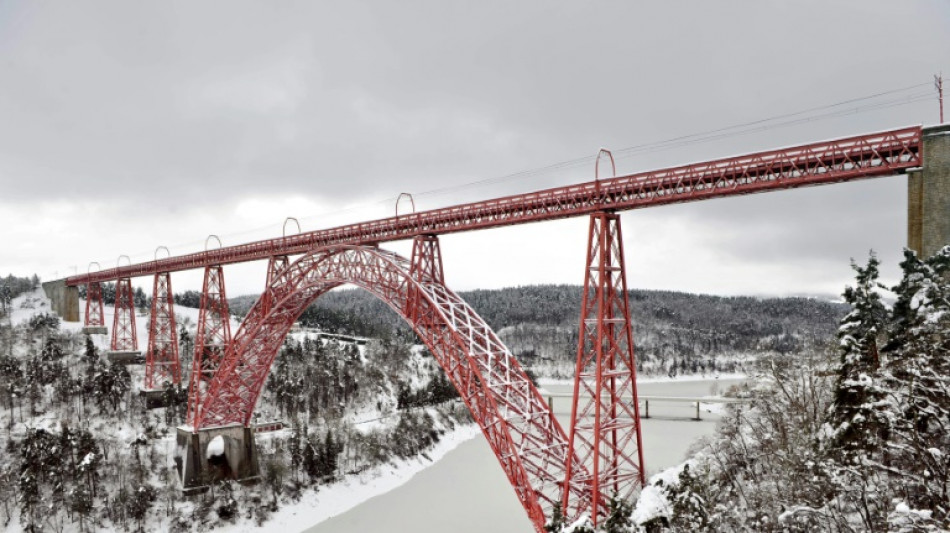
Gustave Eiffel: French tower builder who sparked skyscraper frenzy / Photo: © AFP/File

 Fury to face British rival Joshua in Cardiff on December 11
 Streamex Converts Interest Into Capital as GLDY Investment Strategy Secures $1M+ Institutional Allocation

 STARTRADER Named Best Fintech Forex Broker at Forex Expo Dubai 2026
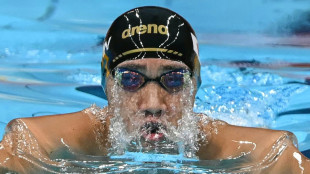
 Japan swimmer Ohashi, 17, shrugs off Covid to smash world record
 Shin Ohashi: Junk food-loving teen and new world record-holder
 Greek PM urges 'courage' in talks with UK over Parthenon Marbles
 'I was drowning': Iran Nobel winner exposes pain of separation from children
 Israel's US envoy says son fighting for life
 Olympic champion Yulo completes gymnastics gold collection at Asian Games
 England cannot imitate Spain's success, says Gordon
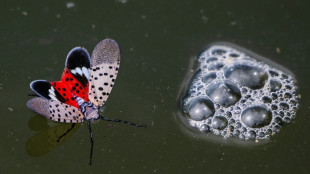 Hungary detects invasive spotted lanternfly for first time in EU
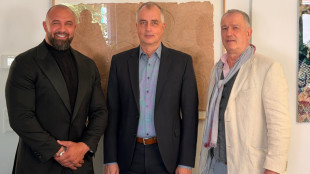 Ο Alex Bodi και ο καθηγητής Δρ. Stefan Haupt συμφωνούν σε συνεργασία για μια θρυλική συλλογή έργων τέχνης στη Ρουμανία
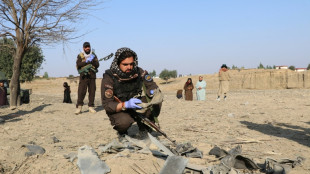
 France's top-selling newspaper to slash jobs
 Tigray rebels in 'full-blown' war with govt
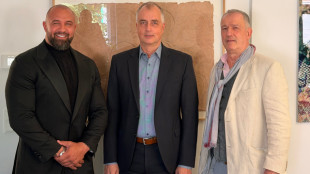 Alex Bodi och prof. dr Stefan Haupt ingår samarbetsavtal om en legendarisk konstsamling i Rumänien
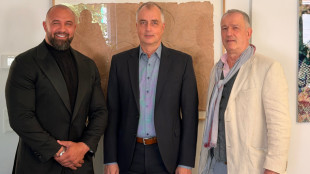
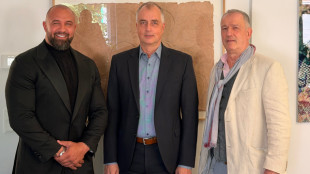 อเล็กซ์ โบดี และศาสตราจารย์ ดร. สเตฟาน ฮาปท์ ตกลงร่วมมือกันในการจัดตั้งคอลเลกชันศิลปะอันเป็นตำนานในโรมาเนีย
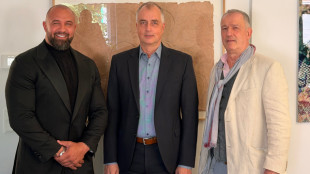
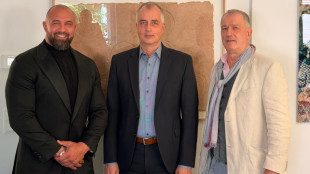 Alex Bodi a prof. dr. Stefan Haupt se dohodli na spolupráci na legendární umělecké sbírce v Rumunsku
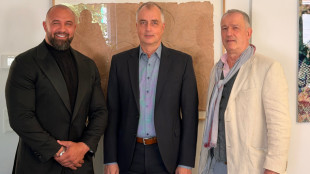
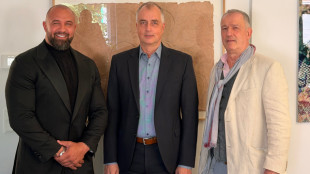 알렉스 보디와 슈테판 하우프트 교수, 루마니아의 전설적인 미술품 컬렉션을 위한 협력 합의
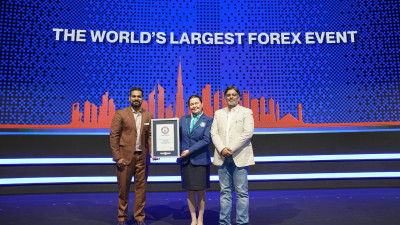
 BaazEX Enters the Asian Trading Market With a New Approach to Online Forex Trading.
 Asian markets fall on US-China jitters as leaders meet
 Thais hail teen rocker Nene for 'America's Got Talent' win
 Zverev, Agassi defend 'spectacular' Laver Cup
 Eel-powered Japan whizz-kid, 11, dominates in historic Games debut
 Madagascar's Gen Z 'betrayed' after ushering in new rule
 As Moscow steps up attacks, Kyiv residents brace for harsh winter

French engineer and entrepreneur Gustave Eiffel will forever be remembered for building the much-loved tower that has dominated the Paris skyline for over a century.
But the father of the Eiffel Tower also designed hundreds of other landmarks across the globe, and even patented a system of underwater "bridges" to run under the Channel.
Here are five things to know about the engineer and inventor, who died 100 years ago on December 27, 1923, at the age of 91.
- Bonickhausen Tower? -
Eiffel designed the tower that would bear his name for the World Fair in Paris in 1889.
But the tower, which came to symbolise France, could very easily have had a German name.
Eiffel, who had German roots, was born Alexandre Gustave Bonickhausen dit Eiffel in 1832 in Dijon but he dropped the German part of his surname after the 1870 Franco-Prussian war, fearing it could damage his career.
Erected in record time, the 7,000-tonne, 300-metre (1,052-foot) "Iron Lady" was the tallest human-made structure in the world for four decades.
Commenting on its place in history, the Bureau International d'Expositions, which organises World Expos, says it "marked the pinnacle of iron architecture, and set the pace for the skyscraper frenzy that would follow in the 20th century".
- Projects on five continents -
The Tower came towards the end of Eiffel's career, during which he built around 500 structures across five continents.
He built his reputation as a builder of railway bridges but also used his metal wizardry to build the Pest railway station in Hungary, lighthouses in Finland and Madagascar, the structure of the Saigon Central Post Office in Ho Chi Minh City and the iron framework of the Statue of Liberty in New York.
He also designed portable bridges, delivered around the world in kits.
- Channel tunnel 100 years early -
Never short of ideas, Eiffel proposed to build what he described as a bridge under the Channel to link France with Britain.
His 1890 design envisaged a system of concrete-coated metal tubes built on supports resting on the sea bed.
The project never saw the light of day, but 104 years later the Channel Tunnel linking Britain and France, which measures 169 Eiffel Towers placed end-to-end, was launched to great fanfare.
- Panama fiasco -
Eiffel was as much an entrepreneur as engineer. In 1887, his company won the contract to build locks for the Panama Canal -- the biggest deal of his career.
But poor management by Ferdinand de Lesseps, the Frenchman who had overseen the successful Suez Canal, caused the project to collapse, resulting in one of the biggest financial scandals of 19th century.
De Lesseps and Eiffel were both charged with fraud and sentenced to prison and hefty fines.
Although their convictions were later overturned, Eiffel's reputation had taken a battering and he retired from business.
- Radio Eiffel -
He devoted the last 30 years of his life to scientific research, with a particular focus on meteorology and aerodynamics.
The wind tunnel he built in a hangar at the foot of the Eiffel Tower was used to test more than 20 planes.
It is still used today by the construction, aviation, shipping and automotive industries to test the effects of wind and air.
He also used research to save his illustrious tower, which was commissioned on the understanding that it be dismantled after 20 years.
He installed a meteorology station on the third floor, but it was the addition of a giant radio antenna in 1921 that saved it from the wrecking ball.
F.Stadler--VB