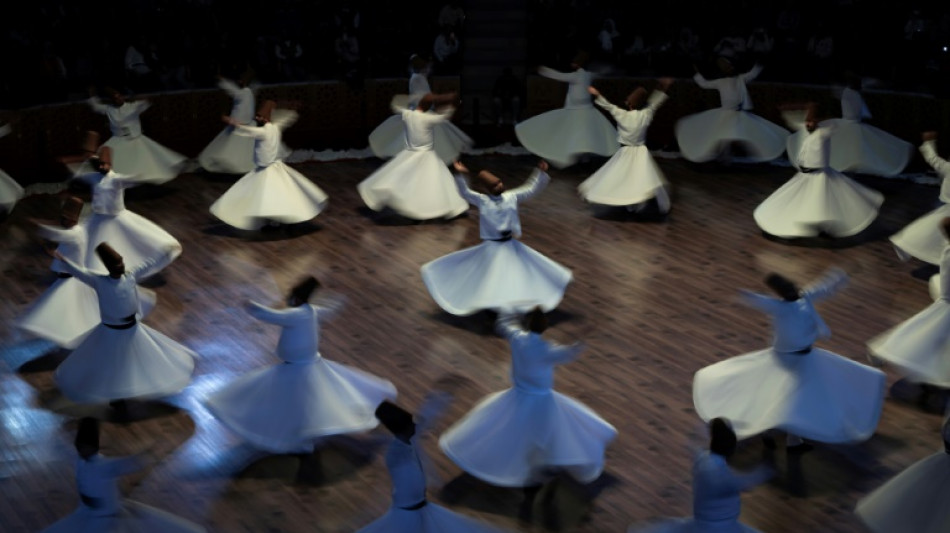
'Third way': Turkey's whirling dancers celebrate mystic Rumi's tolerance / Photo: © AFP

 Fury to face British rival Joshua in Cardiff on December 11

 Streamex Converts Interest Into Capital as GLDY Investment Strategy Secures $1M+ Institutional Allocation

 STARTRADER Named Best Fintech Forex Broker at Forex Expo Dubai 2026

 Japan swimmer Ohashi, 17, shrugs off Covid to smash world record

 Shin Ohashi: Junk food-loving teen and new world record-holder

 Greek PM urges 'courage' in talks with UK over Parthenon Marbles

 'I was drowning': Iran Nobel winner exposes pain of separation from children

 Israel's US envoy says son fighting for life

 Olympic champion Yulo completes gymnastics gold collection at Asian Games

 England cannot imitate Spain's success, says Gordon

 Hungary detects invasive spotted lanternfly for first time in EU

 Ο Alex Bodi και ο καθηγητής Δρ. Stefan Haupt συμφωνούν σε συνεργασία για μια θρυλική συλλογή έργων τέχνης στη Ρουμανία

 France's top-selling newspaper to slash jobs

 Tigray rebels in 'full-blown' war with govt

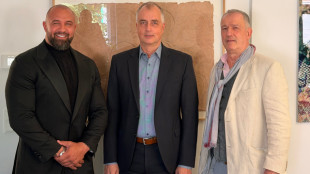 Alex Bodi och prof. dr Stefan Haupt ingår samarbetsavtal om en legendarisk konstsamling i Rumänien
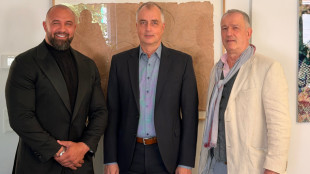
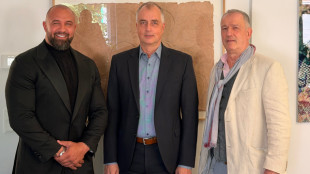 อเล็กซ์ โบดี และศาสตราจารย์ ดร. สเตฟาน ฮาปท์ ตกลงร่วมมือกันในการจัดตั้งคอลเลกชันศิลปะอันเป็นตำนานในโรมาเนีย
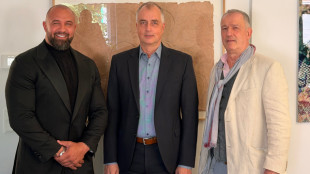
 Alex Bodi a prof. dr. Stefan Haupt se dohodli na spolupráci na legendární umělecké sbírce v Rumunsku
 알렉스 보디와 슈테판 하우프트 교수, 루마니아의 전설적인 미술품 컬렉션을 위한 협력 합의

 BaazEX Enters the Asian Trading Market With a New Approach to Online Forex Trading.

 Asian markets fall on US-China jitters as leaders meet

 Thais hail teen rocker Nene for 'America's Got Talent' win

 Zverev, Agassi defend 'spectacular' Laver Cup

 Eel-powered Japan whizz-kid, 11, dominates in historic Games debut

 Madagascar's Gen Z 'betrayed' after ushering in new rule

 As Moscow steps up attacks, Kyiv residents brace for harsh winter

The skirts of whirling dervishes twirl in a symphony of disco colours celebrating mystic Sufi poet Rumi at a cultural centre in central Turkey's Konya.
Every year, the "Seb-i Arus" ("Wedding Night") festival honouring Rumi's death on December 17, 1273, draws so many people that traditional venues are not large enough to contain the crowds.
Pilgrims, tourists, meditation enthusiasts and the curious flock to this vast Anatolian city, where Rumi -- or Mevlana as he is known in Turkey -- spent most of his life after being driven out of modern-day Afghanistan in the 12th century by Mongol invaders.
His writings have gradually spread well beyond central Asia and won acclaim in the West. Pop legend Madonna adapted one of Rumi's poems and Beyonce named her daughter after him.
"Rumi's works have been translated into almost every language, and in the United States alone more than 250 books are dedicated to him," said Nuri Simsekler, a specialist in Persian literature at Konya's Selcuk University.
"Rumi speaks to all humans, telling us about ourselves," Simsekler said of Rumi's enduring popularity seven centuries after his death.
- Dance ritual -
The "sema" rituals -- which honour Rumi's legacy -- are performed by whirling dervishes who don a tall light brown hat, with their arms elegantly spread.
The order was established after Rumi's death by his son and descendants.
To the sounds of reed flutes and tambourines, the dervish takes off his long black cloak to dance, but keeps his cylindrical felt hat on. The "sikke" represents the tombstone which will one day stand at the head of his grave.
Then the dance begins. Extending his right hand toward the sky and his left towards the ground, the whirling dervish forms a link between the two.
"Rumi is the first person on Earth whose death is not mourned but celebrated," Simsekler said.
From her office window, Esin Celebi Bayru has a clear view of the turquoise dome that tops the mausoleum of her illustrious ancestor.
Large crowds from Turkey and Iran -- where the poet is also a national icon -- but also Britain and Singapore are expected to celebrate Rumi's 750th "Wedding Night" with God at his tomb.
Such a major anniversary of his death was "an opportunity to make him even better known," said Celebi Bayru, a 22nd generation descendant of the Sufi poet.
She and her brother co-chair the Mevlana International Foundation, created in 1996 in Konya to perpetuate Rumi's legacy.
"In these times of war, Mevlana's word is like a light for us," she said of his many appeals for tolerance and peace. "People come here from all over the world."
- Prayer or meditation-
Celebi Bayru said she has recently been invited to lecture in places as distant as Hawaii, Australia, India and Pakistan.
Every year, she also receives film scripts, and hopes one day to see a biopic of Rumi brought to the screen.
Everywhere in Konya, souvenirs bearing the image of Rumi and dervishes fill stalls.
Ironically, the most famous master of Sufism -- who taught tolerance with the words "come, come, whoever you are, wanderer, worshipper, lover of leaving" -- is honoured in a city with one of Turkey's most staunchly conservative Sunni traditions.
In front of his immense green and gold tomb, a grumpy Sunni pilgrim curses as Rumi's followers sit on the ground, eyes closed, fingers pointing to the sky.
"This is not a place for meditation, it's for prayer," the Sunni pilgrim complained.
The incident only makes sheikh Mehmet Fatih Citlak smile.
Under a headdress lined with 20 metres of braided green ribbons, he presides over more spiritual "semas" at the Irfan Study and Research Centre in Konya, where prayers are interspersed with music and songs.
"We don't just twirl around all day," laughed the sheikh, who was recently invited to perform at Oxford University by its art history department.
"But as long as we stick to our discipline, we don't mind the public," he added, saying that "between art and love, Mevlana offered us a third way.
"Everyone interprets him in their own way," he said.
"But if he were better understood, would the world be in the state it is in today?"
D.Schlegel--VB