
-
 Freshways milk-price cut deepens pressure on UK dairy farms
-
India climbs green-transition ranking after first emissions decline in 25 years

-
 Labour and National remain virtually tied as New Zealand vote count advances
-
Trump names Stephen Miller as White House chief of staff after midterm losses

-
 The Good Daughter adapts Karin Slaughter thriller with Rose Byrne and Meghann Fahy
-
Restored Albanian tower houses anchor new rural tourism trail

-
 Heavy-lift drone evacuates wounded Ukrainian soldier from frontline kill zone
-
Sonia Gandhi reflects on family tragedy and reluctant political career

-
 Morrison says West Brom recovered after pressure from successive derby losses
-
Pope Leo begins three-country South American tour in Uruguay

-
 Britain considers 2027 state visit for Ukraine’s Zelensky
-
Khawaja says entire Australia camp knew of 2018 ball-tampering plan

-
 Arizona Democrats Secure Historic Trifecta with New Legislative Leadership
-
Anna Miltina Confronted with Racism Allegations on ProSieben Show

-
 Carney Welcomes U.S. Trade Reversal After Democratic Midterm Victory
-
Microsoft Xbox App Update for PC Promises 60% Faster Startup

-
 Armenian FM Discusses EU Accountability for Palestinian Rights in Madrid
-
California Humanities Honors Valdez and Burroughs for Courageous Leadership

-
 Trump and Vance Pursue Secret Diplomacy with Iran Amid Military Pressure
-
Friedmann and Kühner Analyze Bundesliga's Best Shot and Frankfurt's Goalkeeper Crisis

-
 Classic Car Values Surge: De Tomaso Vallelunga Leads 190% Gain
-
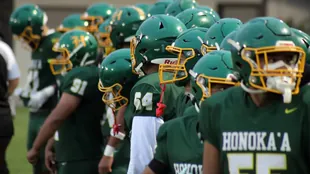
Honoka‘a Dragons Face Hawaii Prep in BIIF Division II Championship
-
 Microsoft Ends Oracle AI Computing Rental Deal Amid Cloud Strategy Shift
-
Pakistan Demands Grant-Based Climate Finance at COP31 to Avoid Debt Trap
Virtuoso keeps Afghan music alive despite Taliban ban
Homayoun Sakhi closes his eyes and runs his fingers along the long neck of his wooden instrument encrusted with mother-of-pearl.
"I feel like I have my Afghanistan in my hand," says Sakhi, one of the world's most renowned performers on the country's national instrument, the rubab.
He is jet-lagged after flying in from California to perform at London's Barbican concert hall to raise funds for emergency medicine and education in his homeland.
Along with the growing humanitarian crisis, Afghanistan's rich musical culture is under threat as the Taliban have banned music since their return to power last year.
Widely shared videos have shown them smashing and burning instruments. Musicians have fled the country.
"Right now we don't have music in Afghanistan," says Sakhi.
"It's really difficult because there's no concerts, there's no music, and (for musicians) it's very difficult to be without any money and without a job.
"That's why they're trying to go somewhere to play."
The Taliban clampdown is a repeat of the hardliners' previous time in power between 1996 and 2001, when they banned music as sinful, under a strict interpretation of Islamic law.
The rubab dates back thousands of years and has enjoyed a revival thanks to Sakhi, who is known as a musical innovator and has developed a more modern playing style.
BBC Music Magazine called him "one of the greatest performers" on the instrument.
Born in Kabul, he left Afghanistan with his family in 1992, in the chaotic aftermath of the Soviet withdrawal, moving to Pakistan.
He later settled in Fremont, California, which is known for its large Afghan community, and has launched an academy teaching the rubab.
"Each time I'm playing, I'm home, I feel like I'm in Afghanistan", he says.
- 'Cannot ban this' -
Music including pop was allowed a free rein during the past two decades in Afghanistan, with local television even showing a "Pop Idol" talent contest equivalent.
But following the Taliban's return to power, traditional Afghan music now relies on devotees overseas.
The "Songs of Hope" concert at the Barbican last Saturday was organised by Afghanistan International TV.
The London-based channel was set up by Volant media company, which also runs a Persian-language channel for Iranians.
It will screen a documentary about the concert in March.
In the first half, Sakhi plays classical Afghan pieces, followed by folk music that gets the audience clapping along.
He performs with UK-based virtuoso Shahbaz Hussain on tabla and Iranian musician Adib Rostami on the kamancheh, a bowed string instrument.
"I had the idea to do the concert -- that was the only thing I can do as a musician", said Rostami, one of the event's organisers.
"As we know, now the music is banned in Afghanistan -- they cannot ban this from the people around the world."
"We have to try as musicians, as music lovers, to find a way to keep this cultural heritage for the future".
The current situation for musicians under the Taliban is "back in the 1990s", he says.
"Again, you cannot be a musician in Afghanistan.
"As far as I know, most of the musicians... are trying to get out of the country."
A group of students and teachers from a national music school in Kabul arrived as refugees in Portugal in December, after the Taliban's takeover earlier last year.
Afghanistan's first all-female orchestra, Zohra, set up in 2016 and named after a Persian goddess of music, has moved to Qatar.
F.Müller--BTB