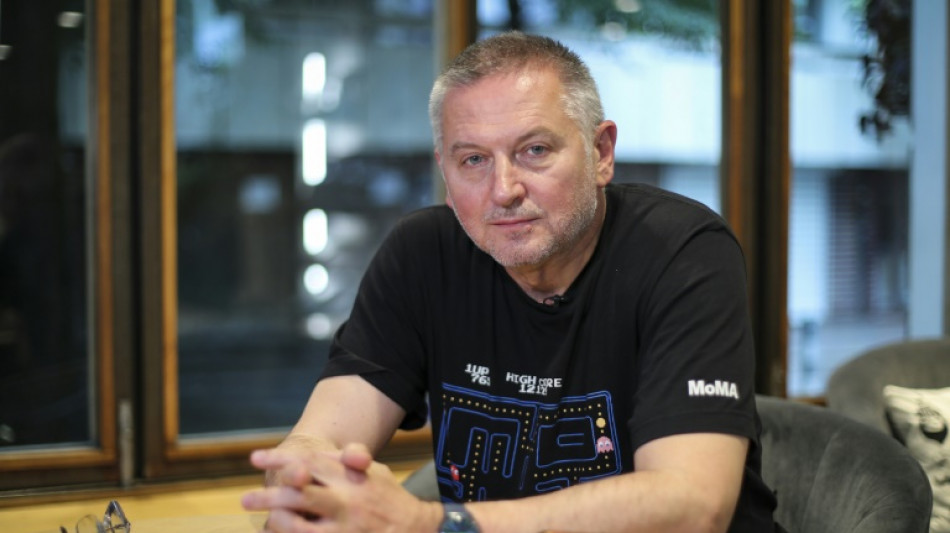
'Wars bring back the past': Booker Prize winner Georgi Gospodinov / Photo: © AFP

 Klopp calls on Germany to 'rise above ourselves' as new era begins

 Russian strikes kill seven in Ukraine as Russia vows no 'pause' to war

 ArcPoint Expands Globally with Institutional Intelligence Platform for Modern Investors

 Ronaldo focussing on 'present' ahead of Wales test

 Outgoing UN chief makes final climate push at New York summit

 Grief and pain flow at hearing for Canadian suicide poison vendor

 Ireland boss Hallgrimsson says timing of Israel remarks 'not clever'

 Weinstein resentenced to 15 years in prison for 2006 sex assault

 Fendi brings disco bling, Italian style, to Milan Fashion Week

 French court confirms rape trial for PSG and Morocco star Hakimi

 President tells Trump that Iran will never 'bend at the knee'

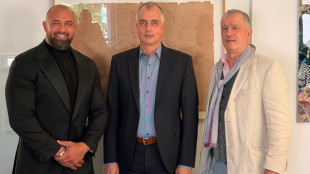 أليكس بودي والبروفيسور الدكتور شتيفان هاوبت يتفقان على التعاون من أجل مجموعة فنية أسطورية في رومانيا
 U2 at 50: Irish rockers reveal anniversary album
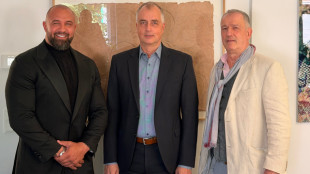
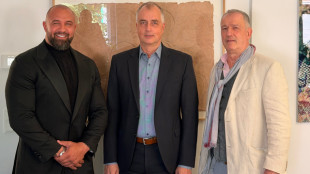 Алекс Боді та проф. д-р Стефан Гаупт домовилися про співпрацю щодо легендарної колекції мистецтва в Румунії
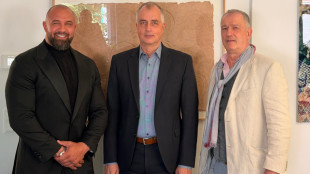
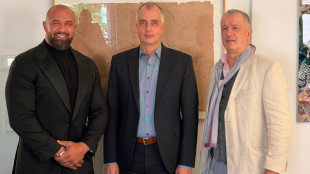 Alex Bodi și prof. dr. Stefan Haupt încheie un acord de cooperare pentru o colecție de artă legendară în România
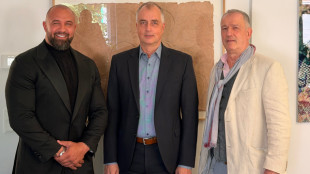 Alex Bodi and Prof. Dr Stefan Haupt agree to collaborate on a legendary art collection in Romania
 Stocks dip, oil rises as traders eye chances of Iran deal

 Israel squeezing UN Palestinian refugee agency ahead of polls: chief

 Dutch to resume Eurovision with new broadcaster
 Man Utd losses jump despite record revenues

 Ethiopia's Tigray rebels seize airports, clash with govt forces
 China prodigy wins third Games gold as North Korea weightlifters roar

 China's Yu, 13, wins third Asian Games gold but has 'some regrets'

 Oil falls, stocks steady as Trump hails 'good' Iran talks

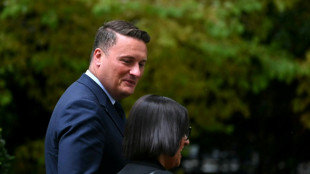 UK sets up unit to combat disinformation from Russia, AI

Bulgarian writer Georgi Gospodinov doesn't view himself as a predictor of the future. But he said his International Booker Prize-winning dystopian novel "Time Shelter" has become reality.
"When you live in dystopian times, dystopian books become reality or turn into some kind of documentary," he told AFP in an interview.
He said he hadn't foreseen Russia's invasion of Ukraine, though.
"These things were in the air. (But) I'm not a prophet, nor did I think it would come to this. I did not foresee the war."
"Wars bring back the past," he continued, describing Russian President Vladimir Putin as "a dictator" who "wanted to take his country back to the time of World War II".
"Time Shelter" -- which brought Gospodinov and translator Angela Rodel the prestigious British Booker Prize last month -- focuses on a "clinic for the past" that offers experimental Alzheimer's treatment.
To trigger patients' memories, it recreates the atmosphere of past decades down to the smallest detail.
But, with time, healthy people start coming to the clinic, seeking an escape from modern life.
- Return to the past -
Such is the success that the past invades the present.
Across Europe, governments organise "referendums for the past" to choose their own "happy decade" -- which ends up in a re-enactment of World War II.
Gospodinov said he came up with the idea for his third novel -- published in 2020 in Bulgarian and 2022 in English -- after witnessing societies' glorification of the past.
"The past is what nationalism and populism thrive on," the 55-year-old said, giving as examples former US president Donald Trump's "Make America Great Again" slogan, as well as Brexit.
Born in 1968 in the town of Yambol in southeastern Bulgaria, Gospodinov said people who had lived through Communism, like him, "have more experience to recognise the danger... of populist abstractions".
"Because we had already lived in a promised future, in a promised time," he said.
He urged "everyday work with memory" so people remembered that peace cannot be taken for granted.
When Gospodinov -- who describes literature as "an antidote to propaganda" -- began his novel back in 2016, he thought he would need to explain his title "Time Shelter" as a play on words in reference to "bomb shelter".
But the war in Ukraine has "disastrously" revived the word, the poet and playwright said.
- Euphoria at home -
Despite the book's sinister themes, Bulgarians celebrated the Booker Prize win.
Local media in the European Union's poorest member state compared the euphoria to when the national football team came fourth in the 1994 World Cup.
"I didn't expect that this joy could bring people together like that," Gospodinov said, remembering the 1994 "feeling that now you can move mountains".
"Now I realise how much Bulgarian society actually needs good news."
When he returned from the Booker ceremony in London, Gospodinov attended the spring book fair in Sofia.
As usual, he exchanged greetings with each of the hundreds of people who queued for hours in the rain to meet him.
He said he drew the "empathy" needed for his writing from his childhood, when his family lived on the "ground floors" -- literally and metaphorically.
Writers -- just like everyone else -- "have а right to be fragile, vulnerable, sad, insecure; to be hurt, to be lonely; to be on the weak, losing side", he said.
"Otherwise you can't experience, you can't tell stories about people who are on the losing side if you're not on their side. It doesn't work," he added.
J.Bergmann--BTB