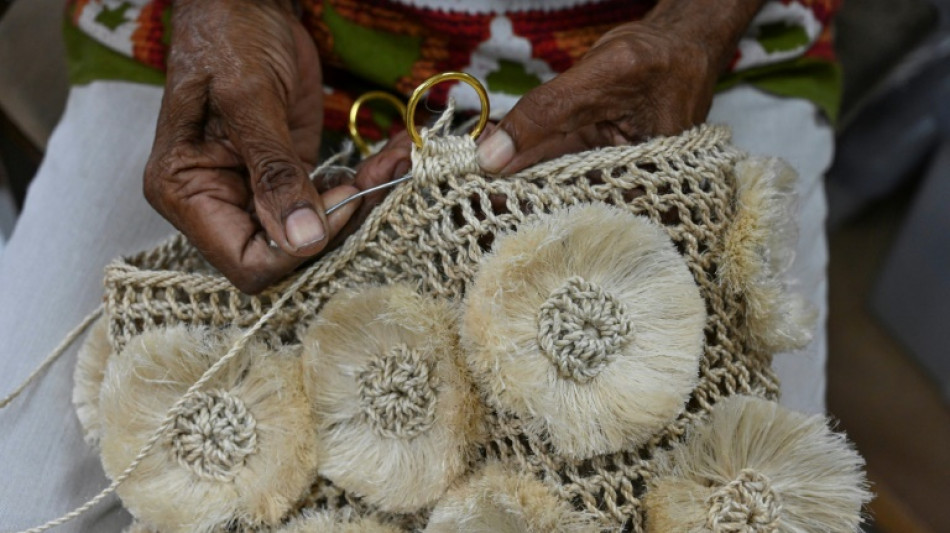
Papua New Guinea women weave their way to a living / Photo: © AFP

 Klopp calls on Germany to 'rise above ourselves' as new era begins

 Russian strikes kill seven in Ukraine as Russia vows no 'pause' to war

 ArcPoint Expands Globally with Institutional Intelligence Platform for Modern Investors

 Ronaldo focussing on 'present' ahead of Wales test

 Outgoing UN chief makes final climate push at New York summit

 Grief and pain flow at hearing for Canadian suicide poison vendor

 Ireland boss Hallgrimsson says timing of Israel remarks 'not clever'
 Weinstein resentenced to 15 years in prison for 2006 sex assault

 Fendi brings disco bling, Italian style, to Milan Fashion Week

 French court confirms rape trial for PSG and Morocco star Hakimi

 President tells Trump that Iran will never 'bend at the knee'

 أليكس بودي والبروفيسور الدكتور شتيفان هاوبت يتفقان على التعاون من أجل مجموعة فنية أسطورية في رومانيا
 U2 at 50: Irish rockers reveal anniversary album
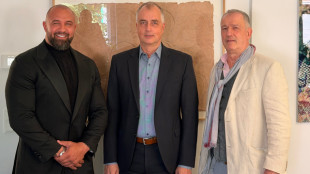
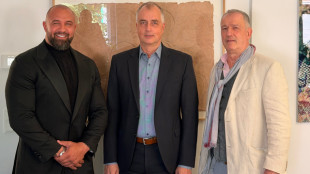 Алекс Боді та проф. д-р Стефан Гаупт домовилися про співпрацю щодо легендарної колекції мистецтва в Румунії
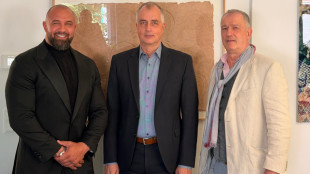
 Alex Bodi și prof. dr. Stefan Haupt încheie un acord de cooperare pentru o colecție de artă legendară în România

 Alex Bodi and Prof. Dr Stefan Haupt agree to collaborate on a legendary art collection in Romania

 Stocks dip, oil rises as traders eye chances of Iran deal

 Israel squeezing UN Palestinian refugee agency ahead of polls: chief

 Dutch to resume Eurovision with new broadcaster
 Man Utd losses jump despite record revenues

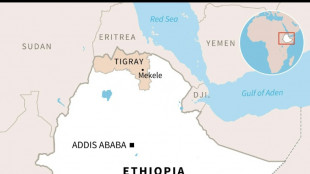 Ethiopia's Tigray rebels seize airports, clash with govt forces

 China prodigy wins third Games gold as North Korea weightlifters roar

 China's Yu, 13, wins third Asian Games gold but has 'some regrets'
 Oil falls, stocks steady as Trump hails 'good' Iran talks

 UK sets up unit to combat disinformation from Russia, AI

Inside a compound in Papua New Guinea's capital, Betty Nabi is putting six decades of expertise to work, weaving traditional bags that can last a lifetime.
The boutique workshop in Port Moresby hosts a group of women who specialise in intricately lacing plant fibres together to make the roomy pouches known as bilums, a symbol of Indigenous pride.
The word bilum means "womb" in the local Tok Pisin language, and the women are giving the functional handwoven bags new life -- bringing them to an international audience in return for a steady wage in a country where about 40 percent live below the poverty line.
"You can put everything inside," said Nabi, a 70-year-old weaver at Bilum & Bilas, who earns a monthly paycheck of 1,000 Kina ($285), around 50 percent more than the country's minimum wage.
"Go to the store, put the kaikai (food) inside. The big one, you can put the baby."
Bilums can take weeks to make, and are dyed using colours unique to the maker's heritage.
Nabi and the three other weavers each craft up to five bilums a month, attracting customers as far away as Iceland.
- 'Makes us proud' -
Demand is growing, with international customers in North America, Europe and neighbouring Australia increasingly looking for authentic bilums, says supervisor Maureen Charlie, 34.
The bags have also drawn attention from the fashion world, with coverage of the patterned pouches and the techniques used to make them landing in top magazines such as Grazia, Harper's Bazaar and Vogue Australia.
Some are concerned the bag that serves as a pillar of Papua New Guinea culture is being misappropriated by Westerners for fashion and profit.
But the weavers say they have little issue with its export.
"It makes us proud, like, 'Oh yeah, there's something from PNG there'," said Charlie.
"It's special. It's part of who we are and it's part of our culture. We are still doing it, and my children will be doing it."
Bilums are often given to friends and family, or used in welcome rituals, sometimes being laid on the floor in front of guests.
But the women are capitalising on their increasing popularity to stitch together a living for their families and other weavers.
"In villages, women don't have any source of income. Sometimes they don't have time to come to the markets, or road access, so they just weave and store their bilums," said Charlie.
- 'Anytime, forever' -
At the lower end of the market, women in Port Moresby take their wares to stalls in shanty towns, risking the theft of stock in high-crime areas.
"It's a good income for my family. I make bilum and get income to sustain my daily living," said independent weaver Cathy Wariapa, 35, who sells her bags every weekend at a safer spot inside the grounds of a hotel.
"Sometimes we don't sell. When there are no buyers, we just take them back."
The bags are usually made and worn by women like Charlie, but Papua New Guinean men are increasingly donning them as pouches around their neck.
"If a woman doesn't wear a bilum... they say you're not a woman," said Charlie.
"When I carry a bilum, I feel like I'm a woman and I'm from Papua New Guinea."
So weaving the bags handed down to them by their mothers and grandmothers is about more than money.
"We can make bilum anytime, forever," said Betty Nabi.
"We will not stop."
W.Lapointe--BTB