Exiled cartoonists give voice to Iran's silenced millions / Photo: © AFP

 EU fines Google 890 mn euros, risking US fury

 France evacuates thousands of tourists as fire rages in pine forest
 French Jewish DJ sues after activists disrupt stage show: lawyer

 Nokia says AI, cloud boosted sales in second quarter
 Repsol says profit more than triples on higher oil prices

 TotalEnergies says profit doubled on Mideast war

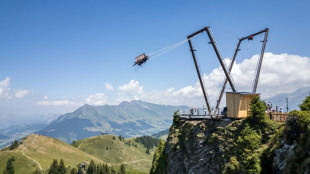 Giant swing on Swiss peak aims to boost summer tourism as Alps warm
 ASEAN to call for open straits as US-Iran war casts shadow
 AI catches up with humans to score 100% at top maths contest
 South Korea election office raided in fake turnout figures probe: investigators
 Killer whales: orcas blow fish to bits 'for fun', study finds
 Deadly wildfires force thousands from homes in parts of Europe
 Tech bounce lifts Asia stocks, oil extends gains on US-Iran fears

 Surrounded by militias, Sudanese fear endless cycle of war

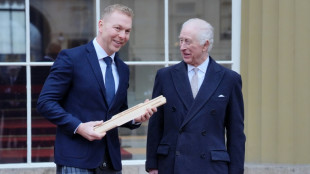 Commonwealth Games 'where champions are made' despite slimmed down model, argues president
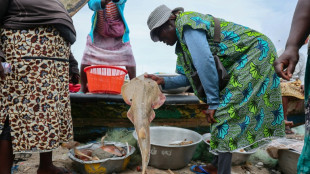
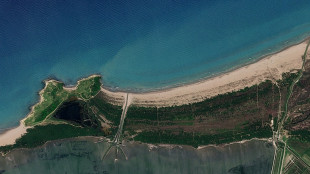 Trump family project in Albania has already caused 'irreparable' damage: NGOs
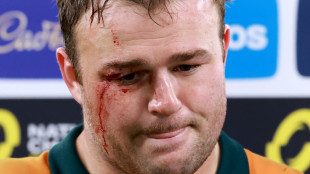
 Bollywood blast master keeps it real with fire and fury

 Tearful fights, edible offerings: A glimpse into the Maradona trial
 What's the deal with peptides? The hyped market under US review
 Tesla shares fall as Musk touts ambitious -- and costly -- plans
 Houthis claim Red Sea tanker strikes as US hits Iran again

 Wildfires ravage parts of southern France, Italy and Spain
 Alphabet beats expectations in second quarter, cloud revenue nearly doubles
 Trump threatens Iran infrastructure, Tehran vows 'eye for eye'
 US teen withdraws lawsuit against Meta over social media addiction
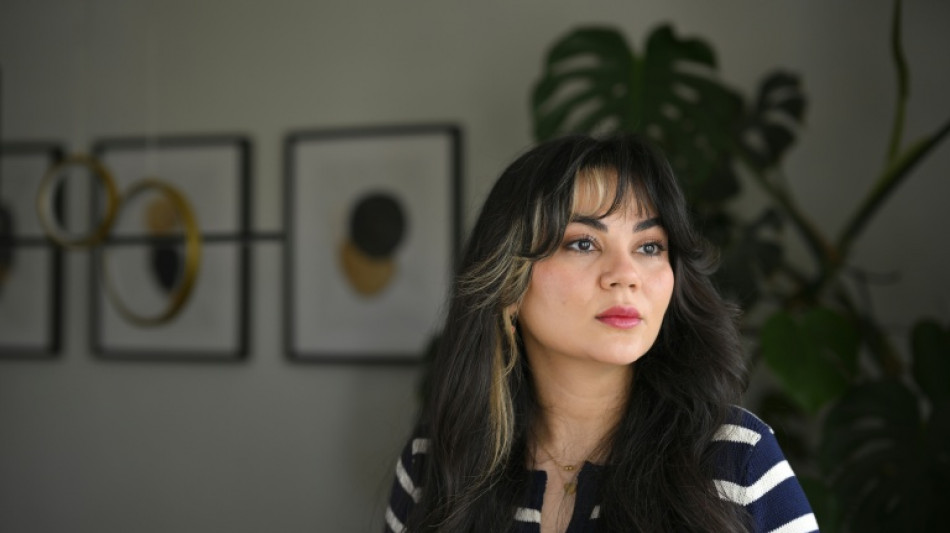
Exiled Iranian cartoonist Mana Neyestani has a huge following back home for his biting humour.
And one of his recent sketches sums up the "dilemma created by the regime" over the US-Israel bombing of his homeland and how it divides Iranians.
Two men hold a banner with the words "No to war". But one is in a balaclava and is also holding a gallows with a man hanging from it.
"It's difficult to work right now," said the Paris-based artist. "You either get labelled as a lover of the war or of the Islamic Republic."
Three exiled Iranian cartoonists who talked to AFP said they were walking the same thin line, with Sanaz Bagheri -- who has been working from Amsterdam for the last seven years -- insisting that they "are doing everything we can to be the voice" of those who cannot speak back home.
Artists have used satire throughout Iran's turbulent history to circumvent the threat of persecution.
- Khamenei and women -
Another of Neyestani's drawings -- taking a dig at Tehran's internet ban -- shows Iranian Foreign Minister Abbas Araghchi sitting on the head of a man tied up below a no WIFI sign while declaring, "I am the voice of Iranians."
"Social media is the only way I can communicate with my audience," said the 52-year-old cartoonist, who has close to a million followers on Instagram alone.
"It's one of the only ways people inside Iran can stay informed. All official news sources inside Iran only present the government's narrative."
But that audience is now effectively cut-off by a near total internet shutdown since the start of the war in February, keeping roughly 90 million Iranians in digital darkness.
In a central Paris gallery a selection of Neyestani's works currently hangs alongside another award-winning Iranian cartoonist, Kianoush Ramezani, who works from exile in Helsinki.
Supreme Leader Ayatollah Khamenei, killed on February 28 at the start of the US-Israel bombing, is a frequent target of their satire.
Women feature prominently, inspired by the "Women, Life, Freedom" demonstrators sparked by the death of Mahsa Amini in state custody in 2022.
Sketches include a woman with long flowing hair standing on Khamenei's burning turban, while another shows hijab-less schoolgirls ripping his portrait from their classroom wall.
"This system is built on sanctifying the supreme leader and other figures within it. They have invested enormous effort and resources to construct this sense of sanctity, and a simple cartoon can undermine it," Ramezani said.
- 'Dangerous' -
"Iranians are sarcastic and are good with humour, but they take political cartoons extremely seriously and that is a problem for us because when they take it too seriously," he said. "Then it becomes dangerous for us."
After periods of repression under the Shah's feared Savvak intelligence services in the 1970s, and the "sacred defence" era declared by the Islamic authorities during the Iran-Iraq war in the 1980s, satire enjoyed a brief respite with a proliferation of reformist newspapers in the 1990s.
But the election of hardliner Mahmoud Ahmadinejad in 2005 turned the tide, with a wave of cartoonists leaving the country after mass protests against Ahmadinejad in 2009, and again with the crackdown on the Women, Life, Freedom Movement.
- Nightmare -
In a tale of Kafkaesque irony, it was a cockroach that drove Neyestani into exile in 2006.
An award-winning author of eight works, he told the story of his nightmarish fall from grace in a graphic novel, "An Iranian Metamorphosis", including his time in Tehran's notorious Evin prison over a cartoon of a young boy talking to a cockroach.
Interpreted as a slur to the Iranian Azeri community, from which Neyestani ironically hails, the drawing sparked massive riots and forced him to leave the country.
Picking up a pen has gotten no less riskier since.
Ramezani feels the threat of Tehran's long arm 4,000 kilometres (2,500 miles) away from his hometown of Rasht on the Caspian Sea.
"They spend a lot of money to make this kind of cyber army and they systematically attack you, harass you," he said, reporting cartoonists to social media platforms, claiming their content was insulting or inappropriate.
It is designed to put you in "a shadow ban to decrease your visibility," he said.
ja/dp/fg
M.Vogt--VB