Pope calls Canada Indigenous abuse 'genocide', warns he must slow down / Photo: © AFP

 Rescuers search for missing in China storms after 100,000 flee

 OpenAI to launch new model after US freeze
 UK museums at 'sharp end' of climate change challenge
 In Mauritania, Imraguen people's desert-ocean paradise under threat
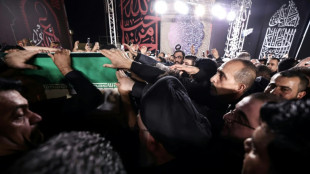 Iraq's holy cities host funeral processions for Khamenei
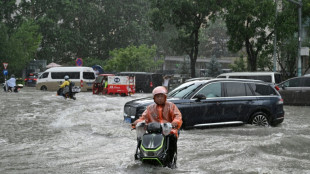 Rescuers search for missing in China storms after 100,000 evacuated
 Ex-Australia cricketer MacGill loses appeal against cocaine conviction
 Oil prices extend rally as US strikes on Iran revive geopolitical fears
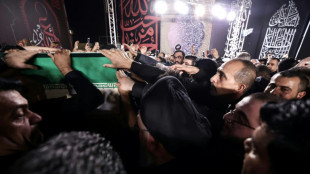 Iraq's holy cities to host funeral processions for Khamenei
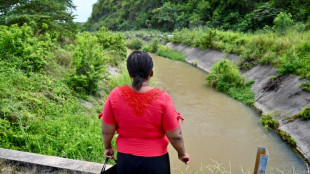
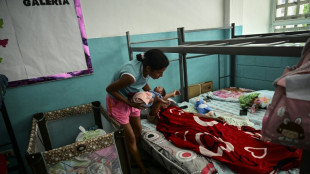 In Venezuela's quake ruins, a baby is born
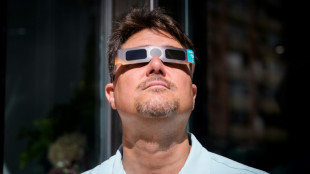
 What to know about the total solar eclipse due in August
 Trump, NATO allies to begin key talks at Turkey summit
 Former Real Madrid coach Arbeloa named Fulham manager

 Messi inspires Argentina great escape over Egypt, Swiss advance
 US strikes Iran after Hormuz attacks, Tehran threatens response
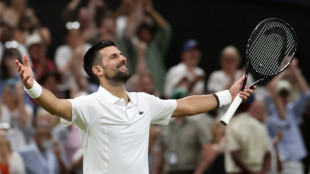
 Djokovic wins five-hour epic to earn Sinner showdown at Wimbledon

 US strikes Iran after Hormuz tanker attacks: military

 Messi 'didn't want to go home' as Argentina comeback stuns Egypt
 Netflix strikes deals in short-form video push
 The height factor: how a small building survived Venezuela's quakes
 Egypt 'cheated' in controversial World Cup exit to Messi's Argentina, says Hassan
 Global AI industry falls short on safety, think tank warns

 'History made': Egyptian pride despite World Cup heartbreak
 How rescuers carried out 180-hour 'miracle' amid Venezuela's ruins
 Victorious Belgian footballers troll Trump with YMCA dance
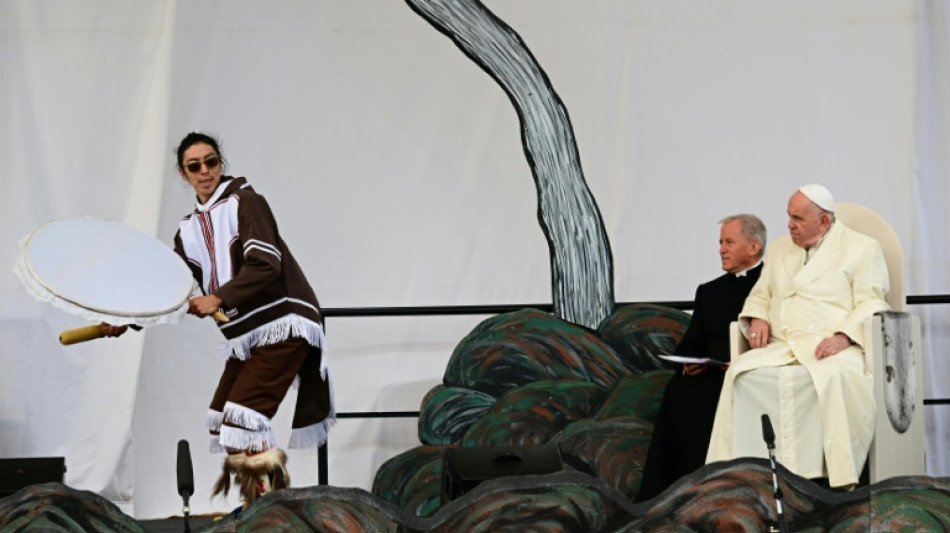
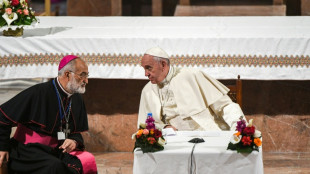
Pope Francis said Saturday the decades-long abuse of Indigenous schoolchildren across Canada amounted to "genocide", as he warned upon his return to Rome that he needed to slow down his travel pace -- or resign.
During his six-day "penitential pilgrimage" across Canada this week, the 85-year-old pope offered a historic apology to the First Nations, Metis and Inuit people, who have been waiting for years for such an acknowledgement from the head of the world's 1.3 billion Catholics.
Aboard the papal plane, he used the word "genocide" to describe the decades of maltreatment and sexual abuse against Canada's Indigenous children, who were wrenched from their families and cultures to attend state schools run by the Church.
"I didn't say the word (in Canada) because it didn't come to my mind, but I did describe the genocide. And I asked for forgiveness for this process which was genocide," he told reporters.
Although Francis's unprecedented apology was mostly welcomed across Canada, from western Alberta to Quebec and the far north, many survivors said much more needed to be done for reconciliation.
The pope, who spent much of the trip in a wheelchair due to knee pain, told reporters his international trips were numbered.
"I don't think I can go at the same pace as I used to travel," Francis said.
"I think that at my age and with this (knee) limitation, I have to save myself a little bit to be able to serve the Church. Or, alternatively, to think about the possibility of stepping aside."
It was not the first time Francis has said that -- should his health require it -- he could take a page from his predecessor Benedict XVI, who made history in 2013 by stepping down due to declining physical and mental health.
- 'Evil perpetrated' -
Francis wrapped up his journey Friday in the capital of the vast northern territory of Nunavut, Iqaluit, which means "the place of many fish".
There, he asked for forgiveness for "the evil perpetrated" by Catholics in the 139 residential schools across Canada run by the Catholic Church, where about 150,000 Indigenous children were sent from the late 1800s to the 1990s.
"I want to tell you how very sorry I am and to ask for forgiveness for the evil perpetrated by not a few Catholics who contributed to the policies of cultural assimilation," he said.
Many were physically and sexually abused at the schools, and thousands are believed to have died of disease, malnutrition or neglect, in what a truth and reconciliation commission later called a "cultural genocide".
Residents in Iqaluit, a community of just over 7,000 people and where small houses line the rocky ocean shore, have listened closely to the pope's words throughout his trip.
"He did apologise, and a lot of people don't seem to be happy with it, but he took that step to come to Nunavut... and I think that's big," lifelong Iqaluit resident Evie Kunuk, 47, told AFP.
- No surgery -
Regarding his ailing knee, Francis said surgery was not an option.
"Technicians say yes but there is the whole problem of anaesthesia... You don't play around, you don't joke with anaesthesia," he said.
"But I'm going to try to continue to take trips and be close to people, because I believe it's a way to serve, to be close."
The trip to Canada was Francis's 37th international voyage since becoming pope in 2013.
But travelling has become increasingly difficult for the pope, who has appeared fragile in recent months, and he has cancelled public appearances and even a trip to Africa that had been scheduled for earlier this month.
- 'Brilliant light' -
Throughout the trip, Indigenous people have spoken of a "release of emotion" at hearing the pope's words, while warning it was only the beginning.
Some have called for Francis to rescind the Doctrine of Discovery, the 15th-century papal bulls that allowed European powers to colonise any non-Christian lands and people.
"This doctrine of colonisation, it's true, it's bad, it's unfair, and even today it's used," he told reporters on Saturday, adding that "there has always been a danger, a mentality of 'we are superior and these indigenous people don't matter', and that is serious".
He said it was necessary to "go back and clean up everything that was done wrong, but with the awareness that today there is the same colonialism", he said, citing the case of the Rohingyas in Myanmar.
Demands were also made in Canada for access to records documenting what happened in the schools, and for the Vatican museums to return Indigenous artefacts.
Many have observed that the pope did not specifically mention or apologise for the sexual abuse committed at the schools.
Inuit leaders had been expected to again ask the pope to intervene in the case of 93-year-old Joannes Rivoire, a fugitive French priest accused of sexually abusing Inuit children in Nunavut decades ago.
Earlier this year, Canadian police issued a new arrest warrant for Rivoire, and an Inuit delegation asked Francis to personally intervene to see him extradited.
Francis did not publicly mention Rivoire.
He said that "it too is strong and resilient, and responds with brilliant light to the darkness that enshrouds it for most of the year."
M.Odermatt--BTB