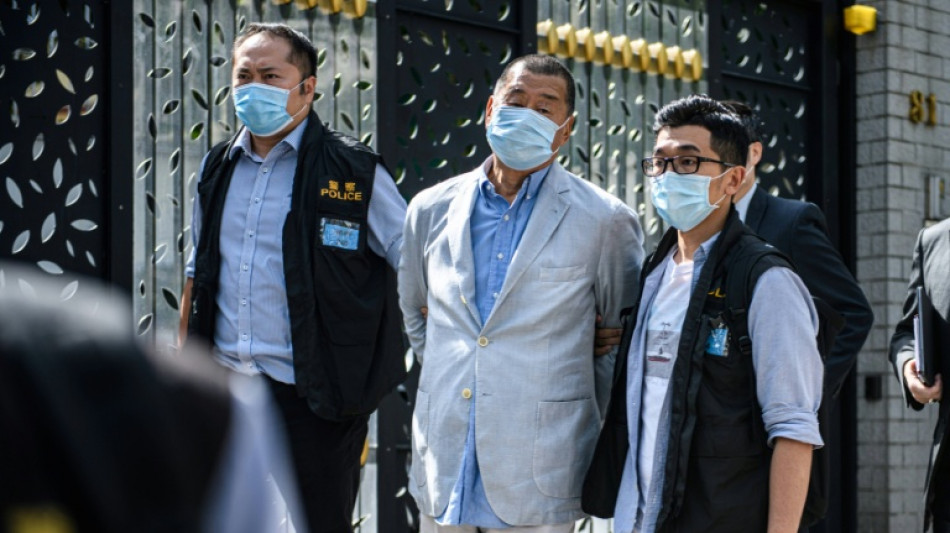
Hong Kong journalists face 'precarious' future after Jimmy Lai jailed / Photo: © AFP/File

 Six candidates to lead UN take stage for televised debate
 King Charles opens slimmed down Commonwealth Games in Glasgow
 US unveils new tariffs on 60 partners as Trump rebuilds trade agenda

 WNBA viral star Cunningham wades into trans athletes row
 Hearn dismisses Fury talk of Joshua no-show for super fight

 'Like a war zone': France evacuates 20,000 due to wildfires
 Ships avoid Ukrainian grain ports after Russian attacks

 Oil passes $100 a barrel again: why it's more serious this time

 Who are the six candidates vying to lead the UN?
 Hamilton proud of recovery after hitting rock bottom a year ago

 Carapaz eyes polkadot mountains jersey after stage win
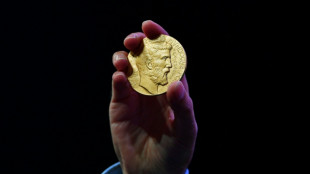 Fields medal awarded to four young mathematicians

 Carapaz claims Tour de France stage as Pogacar loses key team-mate

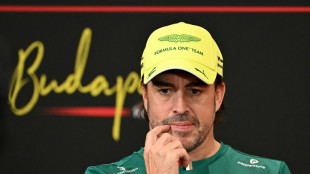 Alonso welcomes Aston Martin upgrade, warns against unreal expectations
 Anderson declares Man City 'kings of Manchester' after £116 mn move
 Relieved Russell says Mercedes have solved his power problems mystery
 Oil soars above $100 as Middle East fears grow

 Venezuelans turn to scrap collecting in quake-hit beach 'paradise'

 Heptathlon champion Johnson-Thompson joins list of Commonwealth Games absentees
 Nigeria's Dangote raises $2.5bn to expand Africa's largest refinery
 Oil soars to $100 on fresh Mideast attacks
 Coal-fired power generation rising globally on Mideast war: IEA
 Premier League champions Arsenal sign Greece winger Tzolis from Brugge

 French Jewish DJ sues after activists disrupt gig: lawyer
 Venice film festival promises Pattinson, Oasis and Musk doc
For Hong Kong journalists, this week's sentencing of pro-democracy newspaper boss Jimmy Lai cements a climate of fear and self-censorship in the years since Beijing imposed a sweeping national security law.
"There will not be another Apple Daily, nobody dares to copy what it did," journalist and former press union chief Ronson Chan said of Lai's defunct tabloid, which exposed government scandals and ran scathing political commentary.
On Monday, a court handed the 78-year-old tycoon a 20-year prison term and issued sentences against six other former Apple Daily executives, all convicted under the national security law imposed in 2020 after huge pro-democracy protests.
Lai's punishment has been condemned by countries such as the United States and Britain, and rights groups have called it a de facto death sentence and a reflection of Hong Kong's dwindling press freedoms.
Journalists in the Chinese finance hub told AFP they were already operating within political "red lines" since the demise of outlets like Apple Daily.
Just a day after Lai's sentencing, China published a white paper that described safeguarding national security as a "long-term and enduring task" for Hong Kong -- seen by some as a sign of Beijing doubling down.
Selina Cheng, chairperson of the Hong Kong Journalists Association, told AFP that media bosses "increasingly see themselves as an extension of the government propaganda arm" and fear embarrassing those in power.
"The biggest impact is really the pervasiveness of self-censorship and the sense that if you write the wrong thing... that might land you in jail," Cheng said.
- 'Hard to accept' -
While much international attention centred on Lai, some local journalists said they were also shocked by the fates of the six former executives sentenced as co-conspirators.
They received jail terms ranging from six years and nine months to 10 years.
Their arrests as well as asset freezes and newsroom raids were the final nails in the coffin for Apple Daily, which closed its doors in June 2021.
When Chan, the former press union chief, heard that the Fung Wai-kong, the managing director of the publication's English edition, "got 10 years, my jaw dropped", he said.
"It was hard to accept."
Chan, who knew the defendants professionally, said some of them got their start as beat reporters and developed strong reputations.
"They made contributions to society and to the industry, but that didn't count," he said.
In late 2021, prominent online outlet Stand News also shut down, and its former editor-in-chief Chung Pui-kuen eventually received a 21-month jail sentence for sedition.
The maximum penalty for sedition, which began as a colonial-era offence, was increased by a 2024 law from three to seven years in prison.
In both Apple Daily and Stand News trials, prosecutors cited articles -- including opinion pieces -- as evidence of journalists bringing others "into hatred, contempt or disaffection" of the authorities.
"These two cases cited articles that, before the national security law, would be considered ordinary," said a veteran journalist, who requested anonymity to speak freely onthe sensitive subject.
"Even today, I think the media and even legal professionals still cannot say clearly how these articles crossed the line," the journalist added.
- 'Coercion' -
That uncertainty was reflected in Hong Kong media's recent coverage of the purge at the top of China's People Liberation Army, according to Chan.
"There was no analysis, follow-up, background" normally warranted for such as story, he said.
Multiple interviewees told AFP that, compared to the early years of the national security law, Hong Kong authorities have made fewer high-profile moves against journalists in recent months.
The city's press still retains a much larger degree of freedom compared to their counterparts in mainland China.
Some small-scale, independent news sites founded in the past five years have built audiences via a crowdfunding model, though they still face political and financial pressures.
Cheng, the press association chief, said these outlets are in a "precarious" spot, with some of them struggling with day-to-day issues such as accessing government events.
In December, China's national security arm in Hong Kong summoned foreign media representatives to a meeting, where an official condemned "distorted" news reporting of a deadly housing estate fire.
It was the first known meeting of its kind in Hong Kong.
"There are no signs for us to be optimistic that the era of national security law crackdown will (be reversed)," Cheng said.
"It won't be surprising to me if more small media close because of coercion or because of threats."
T.Germann--VB