
From predator to plate: Japan bear crisis sparks culinary craze / Photo: © AFP

 Bugatti CEO to stop leaving keys inside cars after Chiron theft

 Starc, Lyon leave South Africa reeling

 Arsenal lose appeal against Dowman red card in shock Fleetwood defeat

 French court rules Meta must negotiate over rights payments

 Spain demands answers as rail disaster toll rises

 Garcia bids for Ryder Cup return as he confirms LIV exit

 England outlast Sri Lanka despite Rathnayake's hundred in dead rubber

 Starc strikes twice as Australia push for victory

 Does White House ask AI to shape policy? Democrats want the receipts

 Trump tees up Alaska election challenge over same-name candidate 'fraud'
 IMF says engaging with Iraq on preparing new bailout program

 Two dead in rock spire collapse at Turkey's touristic Cappadocia

 No surprise to Carrick he's still Man Utd manager

 Two dead in rock spire collapse at tourist site in Turkey's Cappadocia

 ECB holds rates steady after Lagarde says to quit early

 US economy posts strong growth, inflation stubbornly high in challenge to Trump

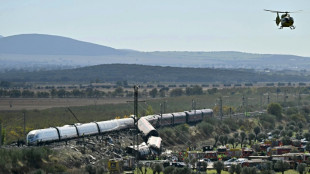 What we know about Spain's deadly train crash

 ECB chief Lagarde to step down early, triggering succession race

 'Horrific' Russian drone strike kills 14 at Ukraine train station: Kyiv

 VW says 'no time to lose' to slash costs after 5.8 billion euro loss

 Australia lead by 100 after Inglis century

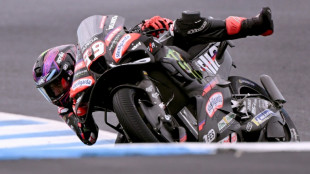 Martin to ride with broken wrist in Malaysian MotoGP practice

 England forward Toney to stand trial for alleged assault in June 2028

 Warrican's five-wicket haul leads West Indies fightback in Bangladesh Test

 Oil majors reap bumper profits as Mideast war drives prices

Since Japan recorded a spike in deadly bear attacks, Koji Suzuki has struggled to keep up with booming demand for grilled cuts of the animal at his restaurant.
Cooked on a stone slate -- or in a hot pot with vegetables -- the meat comes from bears culled to curb maulings that have killed a record 13 people this year.
Suzuki's eatery in the hilly city of Chichibu near Tokyo also serves deer and wild boar, but bear has surged in popularity after months of headlines about the animals breaking into homes, wandering near schools and rampaging through supermarkets.
"With news about bears growing, the number of customers who want to eat their meat has increased a lot," Suzuki, 71, told AFP.
As a show of respect for the bear's life, "it's better to use the meat at a restaurant like this, rather than burying it", said Suzuki, who is also a hunter.
His wife Chieko, 64, who runs the restaurant, said she now frequently turns away customers, but declined to say exactly how much business has grown.
One diner who nabbed a seat, 28-year-old composer Takaaki Kimura, was trying bear for the first time.
"It's so juicy, and the more you chew, the tastier it gets," he said, grinning as he and his friends sat around the grilling stone and bubbling pot.
By culling the bears -- which can weigh up to half a ton and outrun a human -- officials hope to stem the threat across parts of northern Japan.
The 13 people killed in bear encounters this year doubles the previous record, with four months of the fiscal year still to go.
According to scientists, the crisis is being driven by a fast-growing bear population, combined with a falling human population and poor acorn harvest pushing bears to seek food elsewhere.
Scrambling to respond, the government has deployed troops to provide logistical help for trapping and hunting the animals.
Riot police have also been tasked with shooting them, and the total culled in the first half of this fiscal year has surpassed the 9,100 killed across the whole of 2023-2024.
- Sold out -
Although far from an everyday dish, bear has long been eaten in mountainous villages across Japan.
The government hopes the meat can become a source of income for rural communities.
"It is important to turn the nuisance wildlife into something positive," the farm ministry said earlier this month.
Local authorities will receive $118 million (18.4 billion yen) in subsidies to control bear populations and promote sustainable consumption.
Some restaurants need no convincing.
Katsuhiko Kakuta, 50, who runs a village-owned restaurant in Aomori, one of the regions hardest hit by bear attacks, said he sold out of the meat earlier this month.
"It has been popular since we started serving it in 2021, but this year, our facility has got a lot of attention, especially after an influencer posted about us," he said.
In a dimly lit French restaurant in Sapporo, the biggest city on the main northern island of Hokkaido, chef Kiyoshi Fujimoto sears rolled up meat from a brown bear, before popping it into a pot of red wine sauce.
"I feel it's good to use a locally sourced ingredient," he told AFP from the chic fine-dining spot, where a multi-course meal including a consomme made from bear costs around $70.
"I think there are more people wanting to eat it now than before, and I've been stocking up to capitalise on this," he said.
"Most people who eat it say it's delicious."
Brown bears are found only in Hokkaido, where their population has doubled over three decades to more than 11,500 as of 2023. Japanese black bears, meanwhile, are common across large parts of the country.
Last year, the government added bears to the list of animals subject to population control, reversing protection that had helped the mammals thrive.
Hokkaido plans to cull 1,200 bears annually over the next decade.
Much of the bear meat, however, still goes to waste, partly due to a shortage of government-approved processing facilities.
Japan has 826 game factories nationwide, but only a handful in northern prefectures hit hardest by attacks.
Kakuta's restaurant has its own butchery, supplying bear meat dishes to a nearby hotel.
"Bear meat is a tourism resource for us," he said. "And we use something that would otherwise be buried as garbage."
A.Zbinden--VB