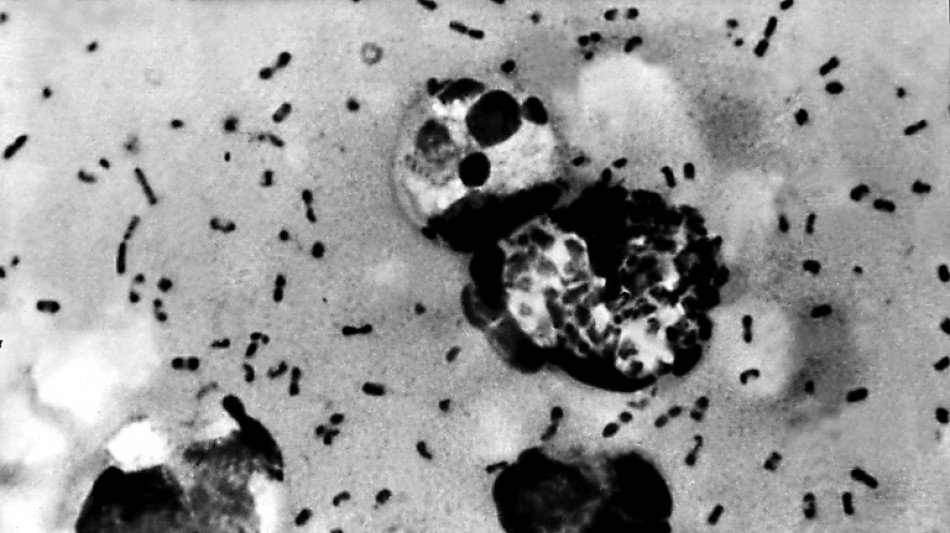
Volcanic eruptions may have brought Black Death to Europe / Photo: © CDC/AFP/File

 'No hope': Indian crew stranded off Turkey for months

 From Siberia to French Open final, Andreeva living 'dream'

 Leclerc beats Hamilton as Ferrari shine in Monaco F1 practice

 Lawsuit seeks to stop US 'third-country' deportations to Eq.Guinea

 Celtic fans oppose potential Keane move over Israel stay

 Feared global hunger crisis 'coming to pass' as Mideast war lingers: UN

 Macron blasts 'unacceptable' lapses over girl's suspected murder

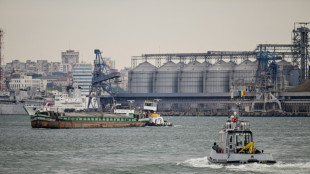 Sea drone explodes in the Romanian port of Constanta, no casualties

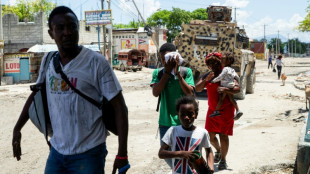 Nearly 1.5 million displaced in Haiti: UN

 Former France rugby coach Saint-Andre eyes making history with Aix

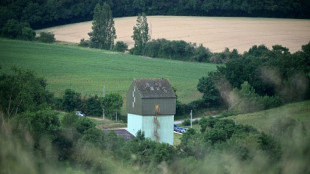 France probes judicial 'dysfunction' after girl's suspected murder

 Serena Williams' comeback to continue in Berlin

 Norway crown princess put on waitlist for lung transplant

 US Senate approves $70 billion for Trump immigration crackdown

 France questions judicial system after girl's suspected murder

 Israel strikes Lebanese village after warning to several areas

 UN doubles appeal for Lebanon aid to nearly $640 mn amid Israel war
 Sooryavanshi, 15, in line for maiden India call-up: report

 Rescued orphaned elephant highlights Nigeria's conservation fight

 Turkmenistan's 'heavenly' horses at the heart of fervent state cult

 'Extremely intelligent' bear at large in Japan after hurting four

 Uzbekistan's debut World Cup crowns surge in football popularity
 Kupcho seizes slim lead in US Women's Open at Riviera

 Game on: Trump set to attend game 3 of NBA Finals in New York

 Political blows fly ahead of Trump's White House UFC fight

Previously unknown volcanic eruptions may have kicked off an unlikely series of events that brought the Black Death -- the most devastating pandemic in human history -- to the shores of mediaeval Europe, new research has revealed.
The outbreak of bubonic plague known as the Black Death killed tens of millions and wiped out up to 60 percent of the population in parts of Europe during the mid-14th century.
How it came to Europe -- and why it spread so quickly on such a massive scale -- have long been debated by historians and scientists.
Now two researchers studying tree rings have suggested that a volcanic eruption may have been the first domino to fall.
By analysing the tree rings from the Pyrenees mountain range in Spain, the pair established that southern Europe had unusually cold and wet summers from 1345 to 1347.
Comparing climate data with written accounts from the time, the researchers demonstrated that temperatures likely dropped because there was less sunlight following one or more volcanic eruptions in 1345.
The change in climate ruined harvests, leading to failed crops and the beginnings of famine.
Fortunately -- or so it seemed -- "powerful Italian city states had established long-distance trade routes across the Mediterranean and the Black Sea, allowing them to activate a highly efficient system to prevent starvation," said Martin Bauch, a historian at Germany's Leibniz Institute for the History and Culture of Eastern Europe.
"But ultimately, these would inadvertently lead to a far bigger catastrophe," he said in a statement.
- Deadly stowaways -
The city states of Venice, Genoa and Pisa had ships bring grain from the Mongols of the Golden Horde in central Asia, which is where the plague is thought to have first emerged.
Previous research has suggested that these grain ships brought along unwelcome passengers: rats carrying fleas infected with Yersinia pestis, the bacterium that causes plague.
Between 25 and 50 million people are estimated to have died over the next six years.
While the story encompasses natural, demographic, economic and political events in the area, it was ultimately the previously unidentified volcanic eruption that paved the way for one of history's greatest disasters, the researchers argued.
"Although the coincidence of factors that contributed to the Black Death seems rare, the probability of zoonotic diseases emerging under climate change and translating into pandemics is likely to increase in a globalised world," study co-author Ulf Buentgen of Cambridge University in the UK said in a statement.
"This is especially relevant given our recent experiences with Covid-19."
The study was published in the journal Communications Earth & Environment on Thursday.
S.Leonhard--VB