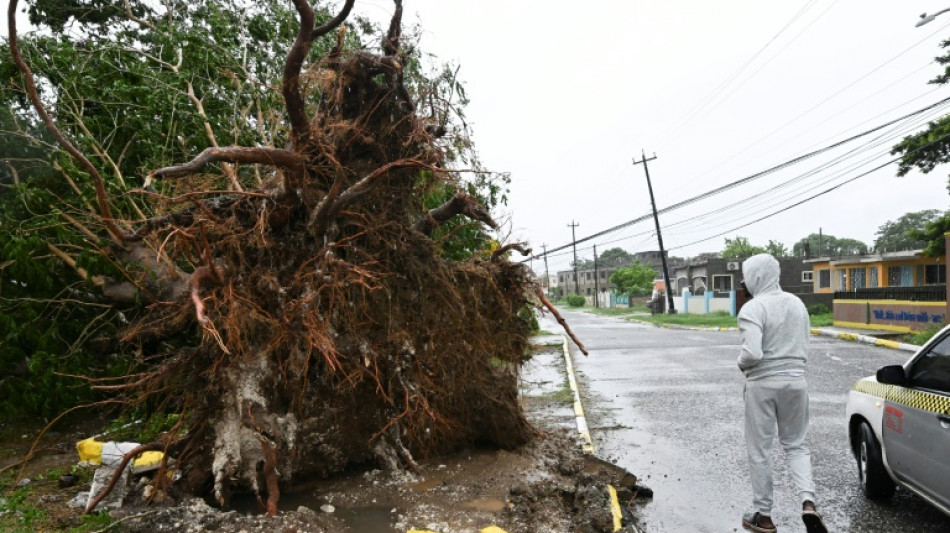
'Catastrophic' hurricane slams Jamaica with fierce winds and rain / Photo: © AFP

 Malawi's fuel shortages, record prices deepen economic crisis

 Rubio hosts G20 ministers as Iran, Ukraine wars divide members

 From minerals to AI, EU and Canada to forge new alliance

 Fire pollution killed 3,560 people in Indonesia in September: report

 Ian Wright and Jamie Carragher split on Liverpool-Arsenal prediction

 The Duskbloods delayed as Nintendo Switch 2 release moves to 2027

 Russia turns to NATO countries for prosthetics amid war-related shortages

 Researchers on island encounter giant spider legs emerging from a burrow

 Britain's King Charles lands in ex-colony Guyana

 Arsenal assess Bukayo Saka fitness concerns before Liverpool meeting
 £10,000 garden project transforms a UK home into a miniature Greece

 Forest destruction tests Armenia-Azerbaijan peace push
 Deal still eludes nations on final day of UN nature talks
 Teen rallies take to the streets across Italy
 Netanyahu bloc finishes ahead in Israel vote, but well short of majority

 Rural US hospitals, collateral victims of Trump politics
 How Trump could interfere in US midterm elections

 As Republicans downplay abortion for midterms, four US states to vote

 No. 4 Indiana looks to revive offense against improving Minnesota

 Police close investigation into Hayden Panettiere death after coroner ruling
 Australian mushroom killer loses appeal, has sentence extended

 Lethbridge students learn how city transit and transportation systems work
 India highlights defence ties with Japan and Australia at Cebu meetings

 Horoscope for October 30, 2026: communication and patience shape the day

 Amazon cloud business accelerates but shares drop on profit miss

Hurricane Melissa ripped up trees and knocked out power after making landfall in Jamaica on Tuesday as one of the most powerful hurricanes on record, inundating the island nation with rains that threaten flash floods and landslides.
The destructive storm struck Jamaica with ferocious sustained winds clocking 185 miles (300 kilometers) per hour on its deadly march across the Caribbean.
"This is an extremely dangerous and life-threatening situation!" warned the US National Hurricane Center, urging residents to stay sheltered and as far from windows as possible, including during the brief calm offered by the storm's eye.
Even as wind speeds dipped to 150 miles per hour, Melissa drenched communities and wreaked damage that may take days to assess as communication links remained largely down.
Surges in seawater combined with rainfall -- which will likely be measured in feet, not inches -- could trigger massive floods and landslides on the island with a population of 2.8 million.
The hurricane was the worst to ever strike Jamaica and hit land with maximum wind speeds even more potent than most of recent history's most brutal storms, including 2005's Katrina, which ravaged the US city of New Orleans.
- 'Severely damaged infrastructure' -
Even before Melissa slammed into Jamaica, seven deaths -- three in Jamaica, three in Haiti and one in the Dominican Republic -- had been blamed on the deteriorating conditions.
Melissa, now downgraded from Category 4 to 5 as its center moved off Jamaica, was set to hit Cuba on Tuesday evening and then the Bahamas.
Jamaica's climate change minister told CNN that Hurricane Melissa's effect was "catastrophic," citing flooded homes and "severely damaged public infrastructure" and hospitals.
And as if that weren't enough: health authorities were urging vigilance against crocodiles displaced by the torrential storm.
"Rising water levels in rivers, gullies, and swamps could cause crocodiles to move into residential areas," posted the South East Regional Health Authority (SERHA) in a public service announcement on Instagram.
Mathue Tapper, 31, told AFP from Kingston that those in the capital were "lucky" but feared for fellow Jamaicans in the island's more rural areas.
"My heart goes out to the folks living on the Western end of the island," he said.
The mammoth storm could leave devastation on the scale of some of the worst hurricanes in recent memory like Katrina, Maria or Harvey.
- Climate change impact -
Broad scientific consensus says human-driven climate change is responsible for intensified storms like Melissa that are occurring with increased frequency and higher potential for destruction and deadly flooding.
Melissa had quickened slightly, but still lingered over the island enough that the rains were particularly dire.
"Human-caused climate change is making all of the worst aspects of Hurricane Melissa even worse," said climate scientist Daniel Gilford.
The Jamaican Red Cross, which was distributing drinking water and hygiene kits ahead of infrastructure disruptions, said Melissa's "slow nature" exacerbated the anxiety.
The UN is planning an airlift of some 2,000 relief kits to Jamaica from a relief supply station in Barbados once air travel is possible. Assistance is also planned to countries including Cuba and Haiti, UN spokesperson Stephane Dujarric said in a briefing.
Jamaican officials said some 25,000 tourists were in the country famed for its normally crystalline waters.
Olympian sprinter Usain Bolt, one of Jamaica's most famous figures, was posting regularly on social media with messages for his home country: "Pray for Jamaica."
P.Staeheli--VB