
Murder, kidnap, censorship: the 'new normal' of Tanzania politics / Photo: © AFP

 Malawi's fuel shortages, record prices deepen economic crisis

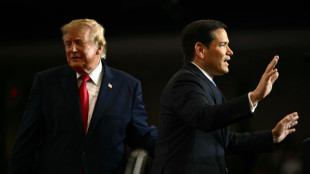 Rubio hosts G20 ministers as Iran, Ukraine wars divide members

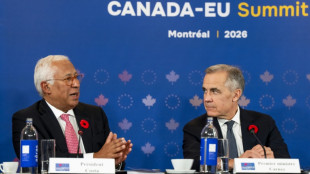 From minerals to AI, EU and Canada to forge new alliance

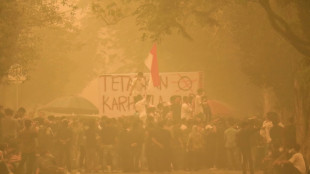 Fire pollution killed 3,560 people in Indonesia in September: report

 Ian Wright and Jamie Carragher split on Liverpool-Arsenal prediction

 The Duskbloods delayed as Nintendo Switch 2 release moves to 2027

 Russia turns to NATO countries for prosthetics amid war-related shortages

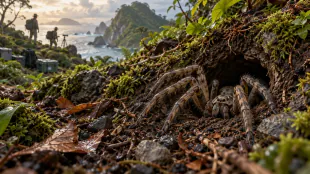 Researchers on island encounter giant spider legs emerging from a burrow

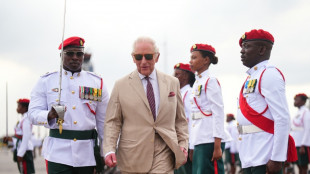 Britain's King Charles lands in ex-colony Guyana

 Arsenal assess Bukayo Saka fitness concerns before Liverpool meeting

 £10,000 garden project transforms a UK home into a miniature Greece

 Forest destruction tests Armenia-Azerbaijan peace push
 Deal still eludes nations on final day of UN nature talks

 Teen rallies take to the streets across Italy

 Netanyahu bloc finishes ahead in Israel vote, but well short of majority

 Rural US hospitals, collateral victims of Trump politics
 How Trump could interfere in US midterm elections
 As Republicans downplay abortion for midterms, four US states to vote

 No. 4 Indiana looks to revive offense against improving Minnesota
 Police close investigation into Hayden Panettiere death after coroner ruling

 Australian mushroom killer loses appeal, has sentence extended

 Lethbridge students learn how city transit and transportation systems work
 India highlights defence ties with Japan and Australia at Cebu meetings

 Horoscope for October 30, 2026: communication and patience shape the day

 Amazon cloud business accelerates but shares drop on profit miss

A priest attacked after a meeting about democracy with faith leaders, an opposition official's corpse found doused in acid, an ex-ambassador missing from his blood-stained home -- this is the "new normal" in Tanzania, say critics.
The grim assessment comes as the country readies to hold presidential and parliamentary elections on Wednesday, amid what Amnesty International has called a "wave of terror".
President Samia Suluhu Hassan, 65, is said to want nothing less than total victory, similar to the 99 percent her party Chama Cha Mapinduzi won in local polls last year.
Her main opponent, Tundu Lissu, is on trial for treason, facing a potential death penalty. His party, Chadema, is barred from running.
The only other serious candidate, Luhaga Mpina of ACT Wazalendo, was disqualified on technicalities.
"We see abductions, disappearances, killing of politicians but there is no condemnation from the government," said Father Charles Kitima, the priest attacked in April, who suffered severe head injuries.
"The police know who attacked me but there has been no report. Whoever criticises the ruling party is not safe," said Kitima, speaking by phone to AFP's bureau in Nairobi as foreign journalists have been largely barred from covering the elections in mainland Tanzania.
- 'Let them kill me' -
AFP also spoke by phone with Abdul Nondo, youth leader for ACT Wazalendo, who was abducted after an opposition rally last December.
"You talk so much -- we're going to kill you," was the threat he said he was told.
He was dumped on a beach after hours of beatings, with a warning to stop criticising the government -- an instruction he has ignored.
"If they want to kill me, let them kill me, but I cannot keep quiet. This is my country," he told AFP.
The Tanganyika Law Society says it has confirmed 83 abductions since Hassan came to power in 2021, with another 20 reported in recent weeks.
Some show up dead, like Chadema senior official Ali Mohamed Kibao whose body was found doused in acid in September 2024.
Humphrey Polepole, ex-ambassador to Cuba, went missing on October 6, a few months after resigning in a letter criticising Hassan's government.
His family found broken doors and blood over the floor of his home.
The government did not respond to multiple AFP requests for comment for this article. It has repeatedly stated its commitment to human rights, good governance and the rule of law.
- 'Like a coup' -
Tanzania has known repression in the past.
After independence in 1961, leader Julius Nyerere established a one-party state, whose authoritarianism lived on after democracy was introduced in 1992.
There were high hopes when Hassan took over in 2021 following the sudden death of her iron-fisted predecessor, John Magufuli, as she made early moves towards freeing the media and civil society.
They proved short-lived.
She has done nothing to remove the "thugs" with which Magufuli stacked the intelligence service, says an analyst in Dar es Salaam, requesting anonymity for fear of reprisals.
They are laser-focused on any sign of internal dissent and throttled the opposition ahead of the last election in 2020.
"We thought Magufuli was a blip and the 2020 elections were an abnormality. My worry is that this is the new normal," the analyst said.
"It's like a coup where the military have tasted power and now refuse to go back to the barracks."
- Progress -
Despite calls for protests on election day, few expect the sort of youth-led unrest seen lately in nearby Kenya or Madagascar.Surveys show Tanzanians care more about jobs than democracy.
Agriculture, mining and tourism have kept the economy ticking along, with 5.5-percent growth last year, the World Bank says.
On the campaign trail, Hassan has promised big infrastructure projects and universal health insurance.
"Citizens are still willing to bet on the ruling party as long as they keep delivering a level of progress," said the analyst.
Some sympathise with Hassan, who faced an "extremely patriarchal" establishment when she took over, possibly explaining her desire for an emphatic victory.
Boniface Mwabukusi, president of the law society, hopes such a win can lead to a truce with the opposition.
"They need to open the door and be ready to sit at the table to find an amicable solution," he said.
N.Schaad--VB