After deadly floods, Spaniards fight to save photos / Photo: © AFP

 French economy 'headed for a wall' as GDP shrinks

 South Korea to prosecute students cheating with smart glasses
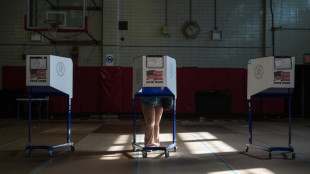
 Surging costs of living top US voter concerns

 Basic services, fading loyalties loom over South Africa's vote
 Shock, vindication, regret: Scientists react to AI roiling life's work

 Crypto platform Binance confirms $6.3 bn hack

 Boozer shines as Grizzlies top Blazers in battle of NBA unbeatens
 Jorge Martin confirmed to race at Malaysian MotoGP

 Bayern and Kane host Dortmund after week of 'extremes'

 Packers beat Panthers 27-19 as Watson returns from hospital

 Affordable supermarket fashion offers designer-inspired autumn alternatives
 Judge throws out Australian mushroom killer's appeal, imposes harsher sentence

 Pelicans down Kings for first win of NBA season

 Tech firms take fresh hit as earnings misses fan AI fears

 Worcestershire leaders back renewed two-unitary council reorganisation
 India's animal megacentre vows reset after criticism
 Dodging fuel price hikes, Damascus drivers turn to electric cars
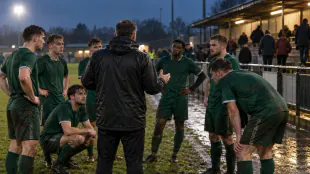 Alvechurch manager praises resilience but seeks improvement after Anstey draw

 Crypto platform Binance confirms major hack, more than $2.5bn frozen
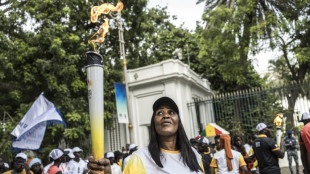 Sports chiefs face losing battle to keep sport separate from politics

 Nvidia's web of AI bets: smart strategy or bubble risk?
 Carrick fights for Man Utd job, Arsenal face Liverpool test

 Apple TV crime drama Nocturne brings a Scandinavian thriller to Pennsylvania

 Charity crowdfunds millions to buy historic English estate
 'Diabolical' Halloween festivities banned in Honduran towns
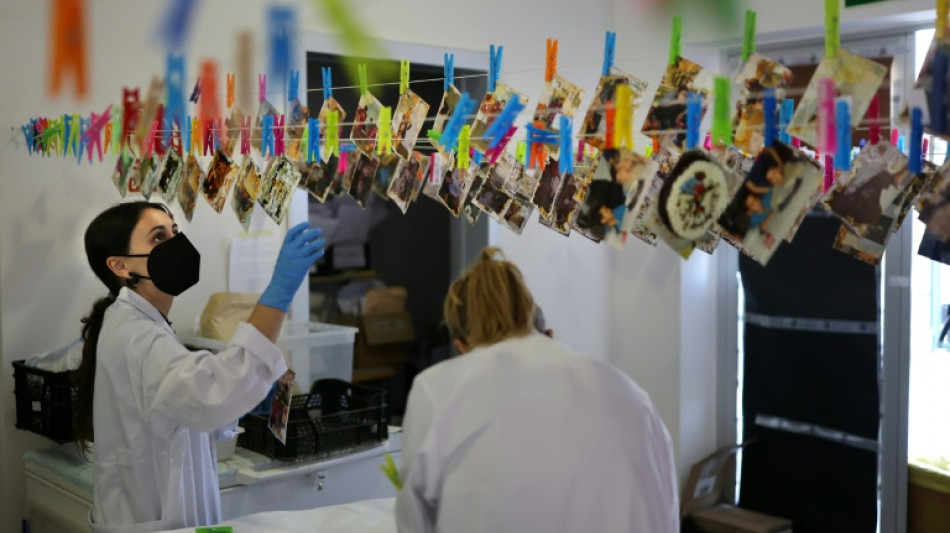
Hundreds of photographs hang to dry at a laboratory, fragile reminders of birthday celebrations and summer vacations nearly swept away by last year's deadly floods in Spain.
But thanks to a university-led initiative, many of these memories have been rescued from ruin.
Decked in white lab coats and masks to protect themselves from mould and other contaminants, a group of students at a laboratory at Valencia's Polytechnic University carefully clean and restore photos.
A sign next to a pile of mud-stained photo albums that sits by the entrance warns: "Do not touch. Contaminated material."
Nearby, a pile of empty photo albums still bears traces of the mud that swept through parts of the Mediterranean region of Valencia during the torrential rains of October 29, 2024, killing more than 200 people and destroying thousands of homes.
In the chaos that followed, a wave of volunteers rushed to help residents clean up the 800,000 tonnes of debris left by Spain's deadliest natural disaster in a generation and salvage what they could.
"We started getting calls from students who were helping in the affected areas and noticed that entire albums of photographs were being thrown away," said Esther Nebot, a professor at the university and the co-director of the project Salvem les fotos ("Let's Save the Photos").
"Those same students began collecting photographs in their backpacks," she added, pointing to the freezers where the damaged images were stored before being painstakingly restored.
- 'Incredibly satisfying' -
Since the project began, roughly 340,000 images have passed through the lab.
Volunteers, students, donors and professors have restored about 75 percent of them.
"The disaster caused enormous losses at the documentary and historical level, and above all at the social level," Nebot said.
"Many objects don't have economic value, or even historical significance, but they carry immense emotional weight."
Using a small brush and a bucket of increasingly murky water, doctoral student Ruth Acuna delicately cleans a black-and-white photograph, faintly showing the portrait of a woman.
The 25-year-old, who has been with the project since the beginning, said she was aware of the responsibility of handling the memories of families who have already lost so much.
"Sometimes you see a photo and think, 'this won't survive,' and suddenly it comes out perfect," she said. "It's incredibly satisfying."
- 'Cried a lot' -
At a nearby table, other students carefully dismantle warped albums or disinfect and clean faded photographs, which were then hung to dry.
The most delicate prints, mostly in black and white, are flattened between cardboard sheets to prevent curling.
Some images are so damaged that faces are nearly unrecognisable. Others, however, have begun to tell fragments of life once more.
"It's very rewarding to clean photos and, especially when they're badly damaged, see a face emerge," said student Andrea Baldwin, gently wiping a photo with cotton.
"It fulfils you to know families can see these memories again together."
In an adjacent room, two students digitise and categorise the images, preparing them to be returned to their owners in a format similar to their original albums.
Nebot, the co-director of the project, said the moment when restored photos are returned to families -- some still without homes -- are often very emotional.
"We have cried a lot," she said.
"We set aside time to show them how we handled their photos, and it's also a way to thank them for their trust."
T.Egger--VB