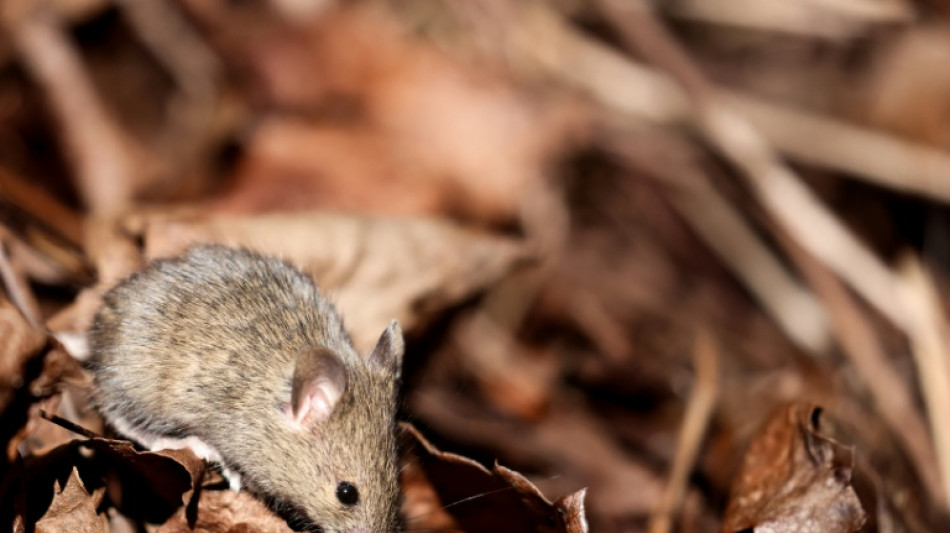
Covid virus changes sperm in mice, may raise anxiety in offspring: study / Photo: © AFP/File

 Dakar Rally moved to Portugal and Morocco following Houthi attacks in Gulf

 German economy logs 0.2% growth, faster than expected
 Crypto platform Binance confirms 'complex' $6.3 bn hack

 Spanish inflation stays at three-year high before election

 Drugs giant AstraZeneca reveals higher profits, savings plan

 French economy 'headed for a wall' as GDP shrinks

 South Korea to prosecute students cheating with smart glasses

 Surging costs of living top US voter concerns

 Basic services, fading loyalties loom over South Africa's vote

 Shock, vindication, regret: Scientists react to AI roiling life's work

 Crypto platform Binance confirms $6.3 bn hack

 Boozer shines as Grizzlies top Blazers in battle of NBA unbeatens

 Jorge Martin confirmed to race at Malaysian MotoGP

 Bayern and Kane host Dortmund after week of 'extremes'

 Packers beat Panthers 27-19 as Watson returns from hospital

 Affordable supermarket fashion offers designer-inspired autumn alternatives

 Judge throws out Australian mushroom killer's appeal, imposes harsher sentence

 Pelicans down Kings for first win of NBA season

 Tech firms take fresh hit as earnings misses fan AI fears

 Worcestershire leaders back renewed two-unitary council reorganisation

 India's animal megacentre vows reset after criticism
 Dodging fuel price hikes, Damascus drivers turn to electric cars

 Alvechurch manager praises resilience but seeks improvement after Anstey draw

 Crypto platform Binance confirms major hack, more than $2.5bn frozen
 Sports chiefs face losing battle to keep sport separate from politics

Covid-19 infection causes changes to sperm in mice that may increase anxiety in their offspring, a study released Saturday said, suggesting the pandemic's possibly long-lasting effects on future generations.
Researchers at the Florey Institute of Neuroscience and Mental Health in Melbourne, Australia, infected male mice with the virus that causes Covid, mated them with females, and assessed the impacts on the health of their offspring.
"We found that the resulting offspring showed more anxious behaviours compared to offspring from uninfected fathers," the study's first author Elizabeth Kleeman said.
The study -- published in the peer-reviewed journal Nature Communications -- found that all the offspring from Covid-infected fathers exhibited those changes.
In particular, females showed "significant changes" in the activity of certain genes in the hippocampus, the part of the brain that regulates emotions.
This "may contribute to the increased anxiety we observed in offspring, via epigenetic inheritance and altered brain development", co-senior author Carolina Gubert said.
The researchers said their work was the first of its kind to show the long-term impact of Covid infection on the behaviour and brain development of later generations.
It found that the virus altered molecules in RNA in the fathers' sperm, some of which are "involved in the regulation of genes that are known to be important in brain development", the institute said.
"These findings suggest that the Covid-19 pandemic could have long-lasting effects on future generations," lead researcher Anthony Hannan said.
But further research was needed, including on whether the same changes occur in people, he added.
"If our findings translate to humans, this could impact millions of children worldwide, and their families, with major implications for public health," Hannan said.
The Covid pandemic, which took hold in early 2020, is known to have caused more than seven million deaths worldwide, according to the World Health Organization. The true toll is likely far higher.
Both the disease and official responses to it are known to have had deep impacts on mental health globally.
Research has shown that younger people, who were forced into isolation during a key social period of their lives, took the biggest mental health hit.
And a review of around 40 studies across 15 countries, published in the peer-reviewed journal Nature Human Behaviour in 2023, found that children had still not made up the learning gaps caused by pandemic-era disruptions to their education.
K.Sutter--VB