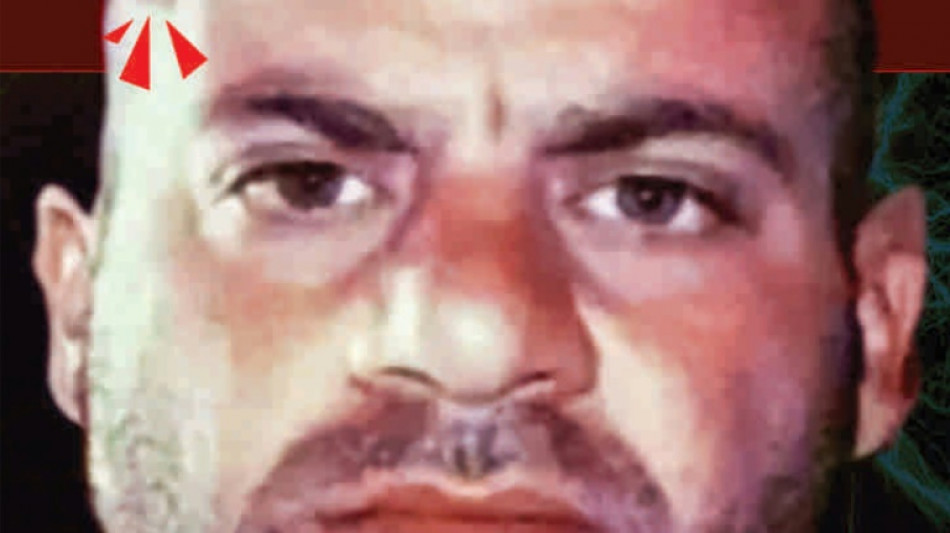
Dead IS chief was Iraqi ex-officer nicknamed 'Destroyer' / Photo: ©

 Lula win rattles Brazil markets over spending spree fears

 De la Fuente wins men's Ballon d'Or coach of year

 Trump slams 'rigged' Brazil election after ally loses to leftist Lula

 Nadal returns for Vegas hardcourt event

 Fainga'anuku named as loose forward for All Blacks northern tour

 Anthropic points to AI dangers, soaring sales in IPO filing
 Sinner to play rescheduled Saudi Six Kings in December
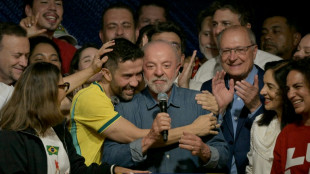 Brazilian lawmaker Andre Janones, Lula's social media 'general'
 Swiss Ebola patient repatriated from Nigeria
 Nations far from a deal as UN nature talks enter final stretch
 Brazil markets battered, tech in focus elsewhere

 French court adjourns trial over 2020 death of delivery driver
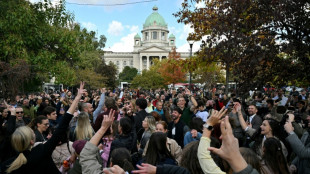 Serbian student movement eyes power after election triumph

 Machado ready to meet Venezuela leader after shock return

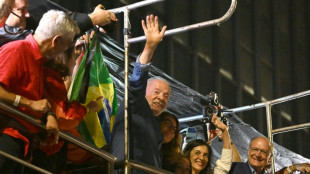 Lula celebrates election win as Brazil markets tumble
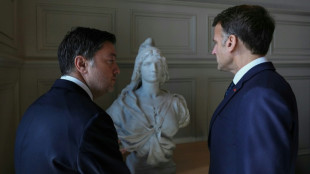 France's Macron accuses social media of sowing discord ahead of election
 Anthropic unveils IPO filing showing soaring sales and AI risks

 US singer Chris Brown avoids jail over London nightclub brawl
 US singer Chris Brown avoids jail over UK nightclub brawl
 Man Utd crisis deepens as Carrick faces axe
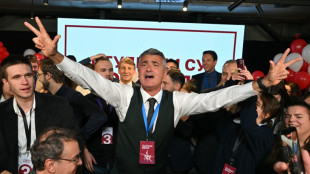 Serbian student movement eyes power after resounding snap poll victory
 Eala breezes past world number 411 in Tokyo opener

 Swedish Centre Party leader says government coalition talks failed
 Barca's big-game defeats pose familiar questions
 Russia says open to mini Ukraine ceasefires, but no let up in war
The head of Islamic State group, whom the US declared dead in a special-forces raid Thursday, was nicknamed the "Destroyer" and presided over massacres of Yazidis before assuming the leadership.
Abu Ibrahim al-Hashimi al-Qurashi, also known as Amir Mohammed Said Abd al-Rahman al-Mawla, took over the jihadist network two years ago after founder Abu Bakr al-Baghdadi blew himself up in a US special forces raid in October 2019.
Considered a low-profile but brutal operator, Qurashi had largely flown under the radar of Iraqi and US intelligence until that point.
He took over at a time when IS had been weakened by years of US-led assaults and the loss of its self-proclaimed "caliphate" in Syria and northern Iraq.
The US State Department slapped a $10 million bounty on his head and placed him on its "Specially Designated Global Terrorist" list.
Born in the northern Iraq town of Tal Afar and thought to be in his mid-40s, his ascension in the ranks of the extremist group was rare for a non-Arab, born into a Turkmen family.
Serving in the Iraqi army under Saddam Hussein, the late dictator toppled by the US-led invasion of Iraq in 2003, Qurashi joined the ranks of Al-Qaeda after Hussein was captured by US troops in 2003, according to the Counter Extremism Project (CEP) think-tank.
In 2004, he was detained by US forces at the infamous Camp Bucca prison in southern Iraq, where Baghdadi and host of future Islamic State figures met.
- 'Brutal policymaker' -
After both men were freed, Qurashi remained at Baghdadi's side as he took the reins of the Iraqi branch of Al-Qaeda in 2010, then defected to create the Islamic State of Iraq (ISI), later the Islamic State of Iraq and Syria (ISIS).
In 2014, Qurashi helped Baghdadi take control of the northern city of Mosul, the CEP said.
The think-tank said Qurashi "quickly established himself among the insurgency's senior ranks and was nicknamed the 'Professor' and the 'Destroyer'".
He was well respected among IS members as a "brutal policymaker" and was responsible for "eliminating those who opposed Baghdadi's leadership", it said.
He is probably best known for playing "a major role in the jihadist campaign of liquidation of the Yazidi minority (of Iraq) through massacres, expulsion and sexual slavery," said Jean-Pierre Filiu, a jihadism analyst at the Sciences Po university in Paris.
On Thursday, US President Joe Biden said that a global "terrorist threat" had been removed when Qurashi blew himself up after US special forces swooped on his Syrian hideout in an "incredibly challenging" night-time helicopter raid.
Hans-Jakob Schindler, a former UN official and director of CEP, called his death a "a major setback for ISIS" in terms of losing a second leader, but doubted it would be a game changer.
IS is thought to prepare for the killings of its leaders with plans for who will take over.
- Global spread -
Schindler said Quraishi "was not a very transformational leader" because IS had already started to shift from a group that controlled territory in Iraq and Syria to an international network of jihadist organisations under Baghdadi.
But Filiu argued that Qurashi's assassination could be "harder to overcome" than Baghdadi's.
He was "a genuine operational chief whose elimination risks preventing the resurgence of the jihadist group, at least temporarily."
Damien Ferre, director of the Jihad Analytics consultancy, said that Qurashi's legacy would be the reinforcement of the Afghan branch of IS, which has been increasingly active since the United States agreed in 2020 to withdraw its troops from the country.
Other researchers also see the rise of an IS branch around Lake Chad in west Africa as significant, with the group managing to draw fighters from the ranks of the Nigerian terror group Boko Haram.
"On the operational front during his time, Islamic State regained momentum in 2020 before seeing the quality and the quantity of its attacks fall last year," said Ferre.
On January 20, IS fighters launched their biggest assault since the loss of their caliphate nearly three years ago, attacking the Ghwayran prison in the Kurdish-controlled northeast Syrian city of Hasakeh to free fellow jihadists, sparking battles that left over 370 dead.
K.Brown--BTB