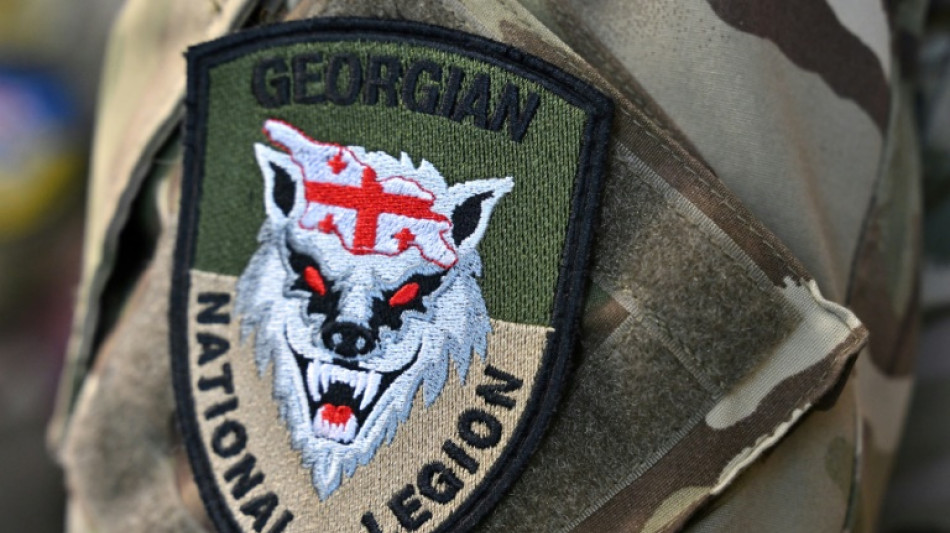
Georgian fighters in Ukraine wrestle with international humanitarian law / Photo: © AFP/File

 Bayeux tapestry to arrive in London in secret, high-stakes operation
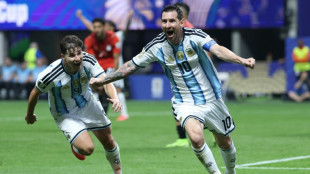
 Messi World Cup magic masks familiar penalty frailty
 Trump lashes out at allies as key NATO summit begins
 Swiss party into the night after reaching World Cup quarter-finals

 Trump says Iran ceasefire 'over' after fighting flares
 Thai beer dynasty mother drops 'ungrateful child' case against son
 France v Morocco rematch as World Cup quarter-finals get under way

 Modi visits Australia for minerals talks and rockstar welcome
 Sensors, early starts: how Spain keeps working when heat hits
 Kenya Rastafarians hope for freedom to smoke
 Pacific nation of Tuvalu condemns Chinese missile launch into Pacific
 How a viral post sparked India's Gen-Z protest
 Cambodia wants to bring tigers back, but should it?
 Chinese repairwomen smash stereotypes with power tools
 Ecuador's Death Canal: watery grave for victims of gang violence
 'Unique event': Solar eclipse fever fills empty Spain

 Venezuela says Caracas airport to reopen to commercial flights 'soon as possible'
 World Cup: Eight teams remain in the hunt for glory
 'A nice surprise': Marathon man Djokovic revels in Wimbledon epic
 Switzerland beat Colombia on penalties to reach World Cup quarter-finals
 Djokovic survives Wimbledon's longest quarter-final to book Sinner blockbuster
 'Flunked': US soccer seeks answers as World Cup dream shattered
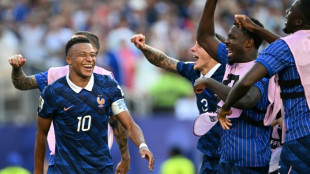 Mbappe revels in captain's role for France at World Cup
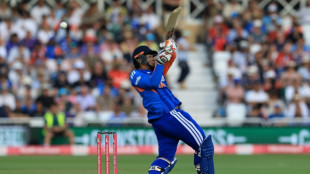 Iyer's India 'atrocious' in record 125-run T20 defeat by England

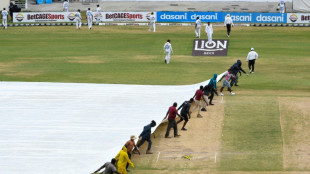 Rain hands West Indies series win over Sri Lanka
His forearm tattooed "Never forget, never forgive," the head of the Georgian National Legion Mamuka Mamulashvili listens intently to a presentation on the need for fighters in Ukraine to respect international humanitarian law.
The event in the capital Kyiv is organised by a Swiss NGO called Geneva Call as part of its efforts to meet and provide guidance to a wide range of Ukrainian combatants.
As fighting rages, Geneva Call aims to impartially convey the rules of international combat to fighters who may have had little or no training, says Marie Lequin, head of its Eurasia region.
Held in an office centre with PowerPoint screens, the setting contrasts sharply with the battle-hardened appearance of the Georgian Legion fighters.
A fluent English speaker, Mamulashvili, who is Georgian, leads around 800 fighters from some 32 countries, fighting in southeastern Ukraine.
The Legion boasts that it recruits only volunteers with combat experience and so far has suffered injuries but no deaths.
Squadron leaders, mostly bearded and tattooed, flank him at the session in Kyiv.
Issues such as prisoners of war and rules on proportionality are covered. Other topics include whether to give relatives details on how a soldier died -- not necessarily -- and whether the conflict is legally defined as "international" -- it is.
Finally, the participants sign an undertaking to observe international norms, posing with their flag decorated with a red-eyed wolf.
"Today it's one step in a process we call humanitarian engagement... setting up a kind of dialogue with armed organisations to leverage some kind of change in policy and behaviour," Lequin tells AFP.
- 'Blurred lines' -
The treatment of civilians and human rights organisations prompts much discussion at the presentation.
Warning of potential "blurred lines" in the war, Lequin stresses that "it's important that humanitarian work, assistance, is separated from military operations".
But Mamulashvili counters that humanitarian organisations "should be more involved in the process and not stop at lectures".
He insists that his fighters "are getting the basic information about the Geneva Convention and different international laws that they should be aware of".
The Legion at the end of the session signed a commitment to protect the civilian population and allow access to humanitarian groups.
At the same time, he says the Legion carries out some humanitarian activities itself due to a lack of NGOs on the ground.
"We were transporting civilians from areas that have been shelled by Russians," he tells the session.
"We are doing it with cars that we bought with our own money and they're not armoured and it's quite dangerous for civilians."
Geneva Call says that if an armed group carries out a humanitarian aid distribution or evacuation, or accompanies humanitarian groups, it must ditch uniforms and not carry weapons while doing so.
"We don't carry arms with us when we distribute to volunteers the humanitarian aid," branch commander Taras Reshetylo tells AFP.
- 'Let's be models' -
Lequin warns that such well-intentioned actions can put civilians in danger by making them a potential target.
"It's confusing from a civilian perspective to understand if you are providing humanitarian assistance or if you are leading military operations to protect civilians," she tells Mamulashvili.
For NGOs, too, "it's very difficult to assess whether the military presence will turn us into a military objective or not," she adds.
Actions can be interpreted differently, or manipulated, Lequin tells AFP, adding that the conduct of war "will end up in court at some stage and it's important that we can document all this".
She urges Mamulashvili: "Let's be models and let's have the best practice."
- 'Grave violation' -
Some Ukrainian fighters in the war-torn east have used schools to accommodate soldiers and transported troops in yellow school buses, AFP journalists have seen -- making these potential targets.
"We have never used schools and I'm sure that Ukrainians are also not violating international law," Mamulashvili tells AFP.
But Russia, he claims, is "breaking all the rules" and he accuses it of using fake humanitarian aid organisations as covert means to bring in weapons.
Lequin says that this would be a "grave violation" and "perfidy".
Mamulashvili says the Legion, which carries out special operations, has units "spread everywhere on the front line".
"It is becoming heavier for us because Russia is not getting into contact fights anymore and they are only shooting artillery," he says, stressing Ukraine's need for more rocket systems to respond.
"Ukraine needs to protect its civilian population that is bombed daily and we have nothing to answer with," he warns.
Y.Bouchard--BTB