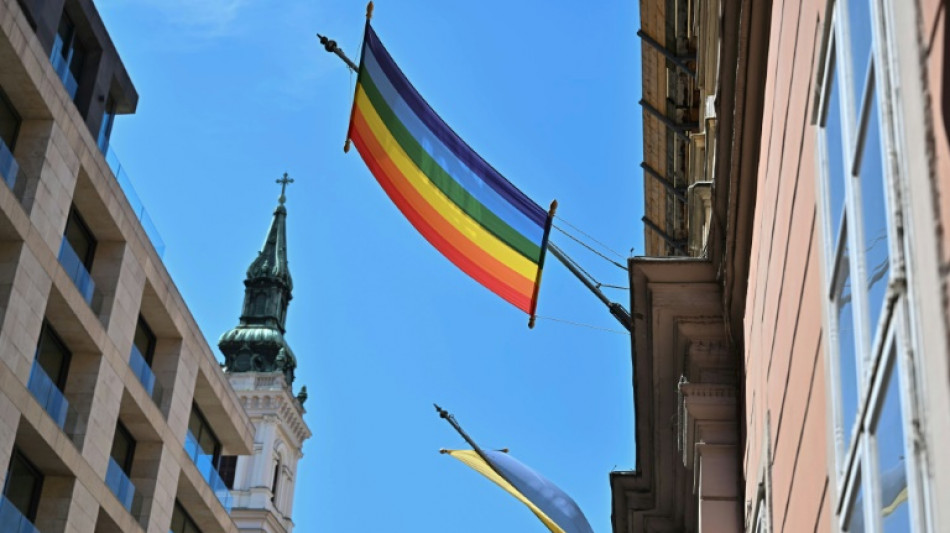
Budapest Pride to challenge Orban's ban in Hungary / Photo: © AFP

 Barred from elections, Russia's anti-war party vows to fight on

 Jaissle states Newcastle ambition but urges patience

 NBA star Cooper Flagg trading card a slam dunk for lucky buyer
 ForumPay Expands Payment Infrastructure with New Card and Bank Transfer Acceptance Solution
 Oil prices higher, stocks flat ahead of inflation report
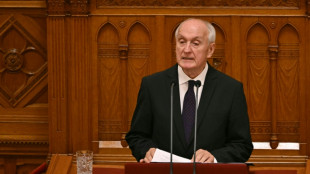 Orban-critic ex-judge becomes Hungary president after predecessor ouster
 US rights groups sue Trump over ICC sanctions

 Sphere 3D Corp. (Nasdaq: ANY) Attracts 6.5% Stake from Turnaround Bitcoin-Mining Investor
 Oil prices lower, stocks higher as Hormuz doubts drag on
 Colombia scrambles to find survivors as quake kills 181

 Colombia scrambles to find survivors as quake kills 169

 MEXC Report: 74.2% of Traditional Finance Users Have Shifted Their Trading Activity to Crypto Exchanges

 MEXC Lists DAPPOS (DOS) With $60,000 Worth of DOS and 10,000 USDT in Airdrop+ Rewards

 Jellyfish force shutdown of three reactors at French nuclear plant

 Hodgkinson, Werro sail through Euro 800m qualifying

 Somali referee denied World Cup 'proud' to oversee UEFA Super Cup

 French newspapers target Google over AI summaries

 Ebola death toll in DR Congo outbreak rises to more than 2,000

 PrimeXBT Launches MT5 Cent Account for Beginners and Risk-Conscious Traders

 British sprinter Hunt chasing three more golds after winning 100m
 Ethiopia's Tigray rebel authorities condemn army drone strikes
 Too hot to live? French buyers rethink housing choices after heatwaves

 Ukraine says Russia fired N. Korean missiles in deadly attack

 Oil prices jump further as hopes for Hormuz deal fade
 Trump says would be 'terrible mistake' to oust embattled Infantino

A record number of people are expected to attend Saturday's Pride march in the Hungarian capital Budapest, defying a ban that marks an unprecedented regression of LGBTQ rights in the European Union.
Prime Minister Viktor Orban's ruling coalition amended laws and the constitution earlier this year to prohibit the annual celebration, justifying his years-long clampdown on LGBTQ rights on "child protection" grounds.
While Orban has been emboldened by the anti-diversity offensive of US President Donald Trump, his own initiatives have drawn protests at home and condemnation from the EU and rights groups.
The nationalist leader on Friday said that while police would not "break up" the 30th edition of the Pride march, those who took part should be aware of "legal consequences".
Despite the risk of a fine, more than 35,000 people are expected to gather at 2:00 pm (1200 GMT) near Budapest's city hall, an hour before the march begins.
Ministers from several EU countries, and dozens of European lawmakers are expected to attend in defiance of the ban, reminiscent of that in Moscow in 2006 and Istanbul in 2015.
"We're not just standing up for ourselves... If this law isn't overturned, eastern Europe could face a wave of similar measures," Pride organiser Viktoria Radvanyi said.
- Freshly installed cameras -
Earlier this week, EU chief Ursula von der Leyen called on the Hungarian authorities to reverse the ban.
Thirty-three countries have also spoken up in support of the march.
While parade organisers risk up to a year in prison, attendees can face fines up to 500 euros ($580). The latest legal changes empower the authorities to use facial-recognition technology to identify those who take part.
Freshly installed cameras have appeared on lamp posts along the planned route of the march.
However, opposition Budapest mayor Gergely Karacsony has insisted that no attendee can face any reprisals as the march -- co-organised by the city hall this time -- is a municipal event and does not require police approval.
"The police have only one task tomorrow, and it is a serious one: to ensure the safety of Hungarian and European citizens attending the event," Karacsony said during a briefing with visiting EU equalities commissioner Hadja Lahbib.
Far-right groups have announced multiple counterprotests along the planned route of the procession.
Justice Minister Bence Tuzson this week sent a letter to EU embassies cautioning diplomats and staff against participating because of the police ban.
Several EU countries have informed their citizens of the potential of fines through travel advisories.
- 'Polarising society' -
Since Orban's return to power in 2010, the country of 9.6 million people has been steadily rolling back LGBTQ rights.
Legal changes have effectively barred same-sex couples from adopting children, prevented transgender people from changing their name or gender in official documents, and a 2021 law forbade the "display and promotion" of homosexuality to under-18s.
This March, lawmakers passed a bill targeting the annual Pride march, amending the 2021 law to prohibit any gathering violating its provisions.
A month later, parliament also adopted a constitutional change to strengthen the legal foundations for the ban.
"Orban is employing a tried-and-tested recipe ahead of next year's election by generating a conflict," political analyst Daniel Mikecz told AFP. Orban was "polarising society", he added.
Voter opinion polls suggest Orban's Fidesz party has been losing ground to the opposition.
The first Pride march was held in 1970 in New York to mark the anniversary of the city's Stonewall riots in June 1969, which sparked the gay rights movement.
K.Sutter--VB