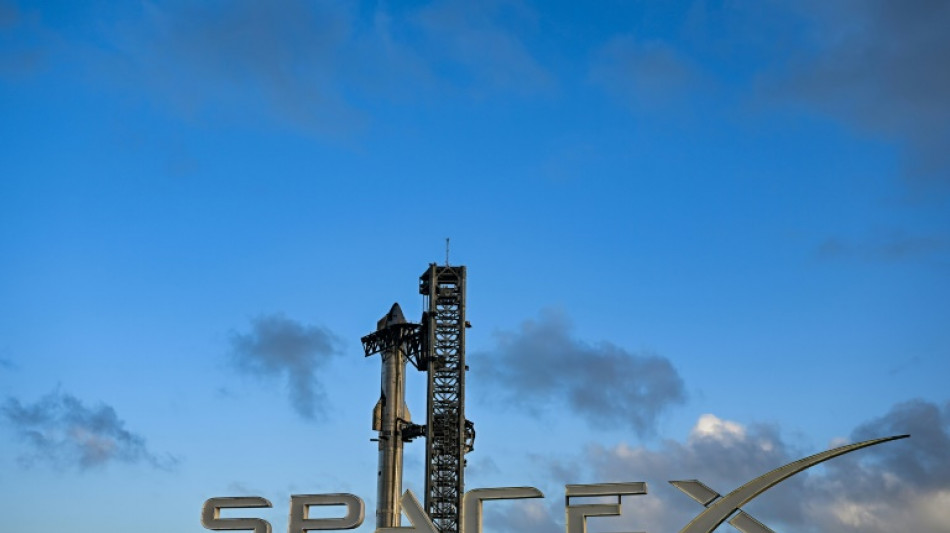
SpaceX Starship explodes on Texas launch pad / Photo: © AFP/File

 'Trying to bury the science': US climate research under siege
 Eurovision to bar countries at war from hosting

 Italian teenager Curtis breaks 50m backstroke world record at Europeans

 New mum Sjostrom wins 50m butterfly for 18th European gold

 Solar eclipse darkens Arctic Russia on course for Spain
 Russian economy rebounds in second quarter despite Ukrainian strikes

 NBA's Los Angeles Lakers to be sold for $12.5 bn: ESPN
 Trump sued over sale of access to Truth Social posts

 Europe looks to the skies as solar eclipse cast its shadow

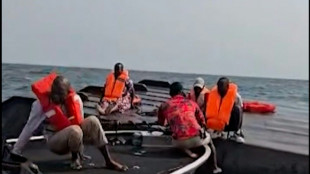 At least 44 drown after ferry overturns on Zimbabwe's Lake Kariba
 Grieving Argentine icon Messi unsure about playing on 'much longer'

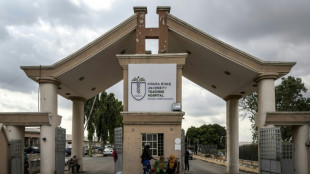 Nigeria kidnap victims escape 'hellfire' captivity beaten, malnourished
 Google unveils finder tag, new AI smartphone features
 US equities gain as inflation report eases fear of rate rise
 Colombia declares three days mourning for quake victims

 44 lives lost after ferry capsizes on Zimbabwe's Lake Kariba

 WallStreetPR Releases Report on China’s Gold Purchases and African Mining Investment
 Former Chinese premier Zhu Rongji dies aged 97
 Markets steady awaiting US inflation data

 WHO says Trump vaccine shake-up goes against evidence

 Eclipse chasers flock to Spain for 'breathtaking' experience
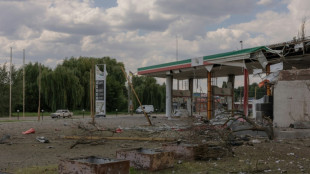 'To make the civilians leave': Russia pummels Ukraine's petrol stations

 Japan brushes off Australian PM's melon drama

 Rod Stewart cancels tour dates after heart surgery
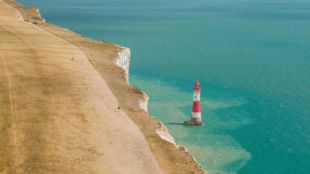 How Britain's mapmakers track climate change

A SpaceX Starship rocket exploded during a routine ground test in Texas late Wednesday, the company said, in the latest setback to billionaire Elon Musk's dream of sending humans to Mars.
The explosion -- which sent a towering fireball into the air -- happened at the Starbase launch facility at about 11:00 pm (0400 GMT Thursday), SpaceX and law enforcement officials said.
As the company prepared for a static fire test, "a sudden energetic event resulted in the complete loss of Starship and damage to the immediate area surrounding the stand," it said Thursday, updating its initial statement.
"The explosion ignited several fires at the test site which remains clear of personnel," it said.
"As is the case before any test, a safety zone was established around the test site and was maintained throughout the operation. There are no reported injuries, and all personnel are safe and accounted for."
During a static fire test, part of the procedures preceding a launch, the Starship's first-stage Super Heavy booster would be anchored to the ground to prevent it from lifting off during the test-firing.
Starbase, on the south Texas coast near the border with Mexico, is the headquarters for Musk's space project. The company was preparing for the 10th test flight of Starship.
"Initial analysis indicates the potential failure of a pressurized tank known as a COPV, or composite overwrapped pressure vessel, containing gaseous nitrogen in Starship's nosecone area, but the full data review is ongoing," SpaceX said.
Musk appeared to downplay the incident on Thursday.
"Just a scratch," he posted on his social media platform X.
- Mega-rocket -
Standing 403 feet (123 meters) tall, Starship is the world's largest and most powerful rocket and is central to Musk's long-term vision of building a long-term colony on Mars.
The Starship is billed as a fully reusable rocket with a payload capacity of up to 150 metric tons.
The latest setback follows the explosion of a prototype Starship over the Indian Ocean in late May.
That day, the biggest and most powerful launch vehicle ever built had lifted off from the Starbase facility, but the Super Heavy booster blew up instead of executing its planned splashdown in the Gulf of Mexico.
The previous two outings also ended poorly, with the upper stage disintegrating over the Caribbean.
However, the failures will likely do little to dent Musk's spacefaring ambitions.
SpaceX has been betting that its "fail fast, learn fast" ethos, which has helped it dominate commercial spaceflight, will eventually pay off.
The company has caught the Super Heavy booster in the launch tower's giant robotic arms three times -- a daring engineering feat it sees as key to rapid reusability and slashing costs.
NASA is also increasingly reliant on SpaceX, whose Dragon spacecraft is vital for ferrying astronauts to and from the International Space Station.
SpaceX said Thursday that there are "no commonalities" between the COPVs used on Starship -- the current focus on the investigation -- and those used on Falcon.
The Federal Aviation Administration approved an increase in annual Starship rocket launches from five to 25 in early May, stating that the increased frequency would not adversely affect the environment.
The decision overruled objections from conservation groups that had warned the expansion could endanger sea turtles and shorebirds.
burs-abs/sst/sla
A.Kunz--VB