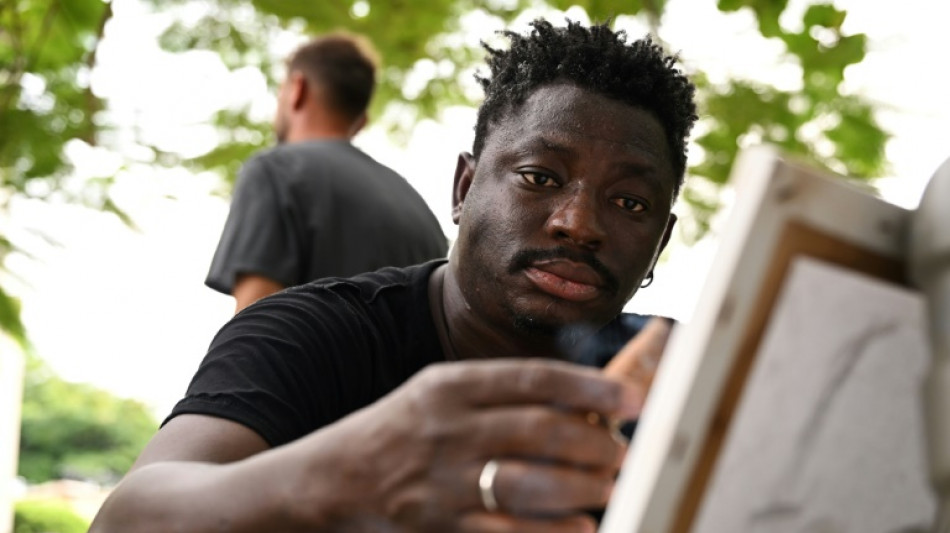
Ivorian painter Aboudia takes teen rebellion to top of the art world / Photo: © AFP

 Sooriyabandara, Mendis lead Sri Lanka fightback after follow-on
 With ropes and chants, thousands move Japanese castle
 Zurich Diamond League: five events to watch
 'Black smoke' chokes Pakistan maternity ward as hospital fire kills 14 infants
 French flight attendant wins landmark breast cancer ruling
 Sri Lanka 83-2 after India enforce follow-on in second Test
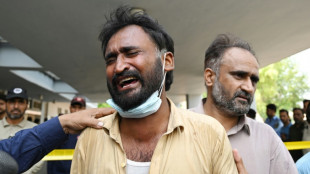 Pakistan hospital fire kills 14 infants

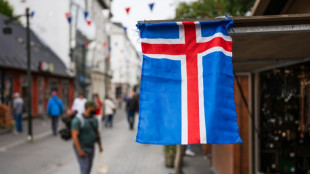 Iceland to vote on resuming EU talks in close referendum
 North Korea to 'bring joy' to Kim with 100 athletes at Asian Games
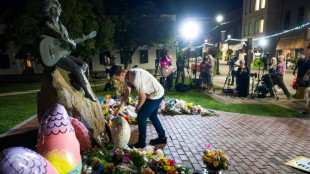
 US LGBTQ community mourns 'diva' Dolly Parton
 England bid to banish booze woes as Pakistan seek self-respect

 High quality, low risk: record number of Japanese in Premier League

 Stocks edge higher as oil drops on fresh Mideast hopes

 Pakistan's girls fight for their place in the boxing ring
 Five things to know about Anthropic ahead of Wall Street debut
 Social media use on the rise among Australian under-16s after ban: data

 Instagram chief admits touting teen safety tool while omitting it was barely used

 'Final Fantasy', 'The Witcher' in spotlight at Europe gaming bash
 Syrian Kurdish leader dissolves force that spearheaded jihadist fight

 Trump raises prospect of demolishing iconic Kennedy Center

 PGA Tour to end in two-week matchplay showdown from 2028: CEO

 United States of Dolly: how a country queen bridged America's divide

 PGA chief says 'no current plans' for LIV stars to return

 Golf giant Callaway apologizes after ad sparks outcry

 Ioane stars as New Zealand recover to beat Johannesburg Lions
With his paintings of Ivory Coast's street kids, Aboudia has taken his teenage misfit mutiny to the very top, becoming one of the world's bestselling artists along the way.
"When I was a teenager I wanted to paint but my father didn't want me to," Aboudia told AFP, remembering how artist was a synonym for "loser" at the time.
Today the painter, full name Abdoulaye Diarrassouba, has made a mockery of those jibes with his success.
Despite the challenges facing black African painters on the global market he ranks 1,311th out of the top 5,000 bestselling artists at auction worldwide, according to analyst firm Artprice.
And with 75 of his paintings bought in 2022 Aboudia was the contemporary artist who sold the most canvases that year, according to the Hiscox Top 100 rankings.
But before becoming a touchstone -- Aboudia, who spends most of his time in Ivory Coast's economic capital Abidjan -- had to pave his own path in a society that pays scant regard for his chosen profession.
His life story as much as his subject matter invites comparisons with African American painter Jean-Michel Basquiat: both "found themselves alone in the street, but knew how to profit from it", according to art critic Mimi Errol.
- 'Children of the street' -
It was Ivory Coast's post-election crisis of 2010-11 and its 3,000 dead that brought Aboudia to the world's attention, with the chaos of "The Battle of Abidjan" unspooling in brushstrokes across his canvases.
In line with his own past he paints young people -- "the children of the street" -- left to the war and to their own devices.
"This is not their place," he insisted, urging "parents, the authorities, any person aware of the cause of childhood, to get them out of there".
Aboudia took up his art studies at the conservatory in Abengourou, eastern Ivory Coast, before graduating to the Technical Arts Centre of Bingerville in the Abidjan suburbs.
Even then "Aboudia was already very attached to the universe of children", his old teacher and fellow well-regarded painter Jacobleu reminisced.
Galleries in Paris, London, New York or Lagos are now vying for his works -- a far cry from the reception he received when he brought his first paintings to Abidjan's Houkami Guyzagn gallery in the 2000s.
"I don't know how many times he came with works we found immature, which we thought unpolished," said Mimi Errol, who was working at the gallery at the time.
"He would leave without a word and come back the next day," until he found his artistic identity and convictions, the critic added.
- 'Work like a child' -
Aboudia's particular manner of painting people springs out of each canvas.
Lines swirl to form unsettling or provocative figures, either pitch dark or vividly colourful, giving off an air of being overwhelmed and neglected.
Aboudia portrays "the world of those who we cannot see... a life of young people who have trouble integrating into society, who have to fight", Mimi Errol said.
"People think it's something very basic and simple," but Aboudia "strips the person away to show them in their purest form," the critic added.
Aboudia agreed.
"What makes my style recognisable, I can say that it's that naive quality: being older but working like a child," the artist said.
"I never wanted to paint or work for anyone, I do what I want to do. If you like it, you like it, if you don't, then so be it."
In the face of the hurdles facing black African artists, "it's true that the level he has reached is quite remarkable", Jacobleu said of his former pupil.
On the international stage the works of Aboudia and his African peers are often pigeonholed in the "ghettoising" exhibitions linked to continent, he lamented.
At the head of a foundation bearing his name, Aboudia now passes on his artistic teachings, above all to the children who form his primary inspiration.
R.Flueckiger--VB