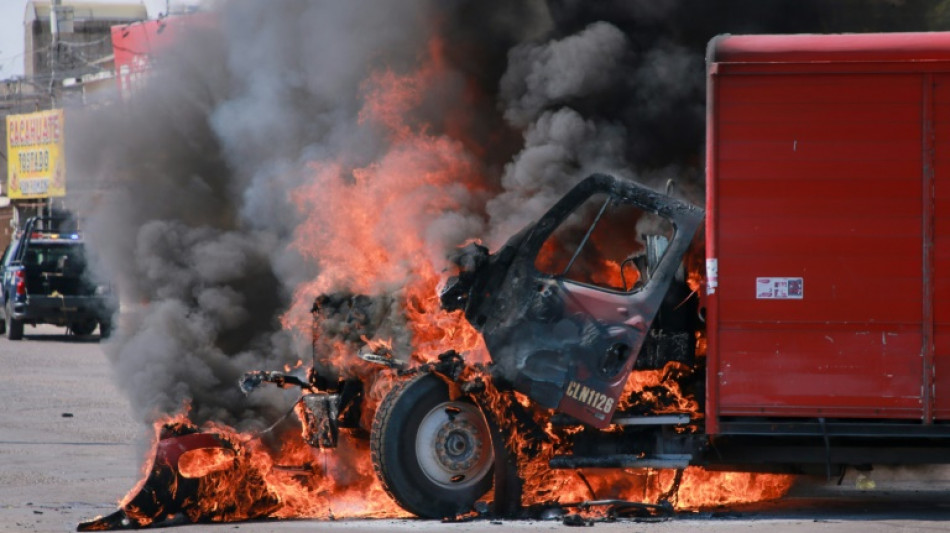
Could 'terrorist' designation lead to US strikes on drug cartels? / Photo: © AFP/File

 Mourinho says Mbappe worthy of Ballon d'Or

 Clashes rock Niger capital, junta says back in control

 India's Neeraj Chopra out for season with ankle injury
 Karnataka Rules Out Smaller Mysuru Dasara Despite Drought

 TVK Legislator’s Jallikattu Criticism Draws Demand for Party Clarification
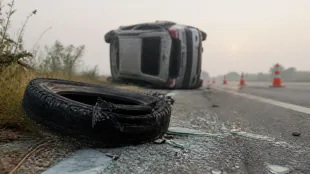 SUV Tyre Failure Kills Three Chennai College Students

 Three Students Die, Four Injured in Madurantakam Car Crash

 Ray J Open to Settling Blueface Dispute in Paid Boxing Match

 Influencers Agree to Keep Producing Joint Content During Divorce

 TMZ Poll Invites Readers to Weigh Week’s Celebrity and Political Stories

 Court Dispute Features Alleged Racist Texts Attributed to Milo Yiannopoulos

 Michelle Obama Says She Welcomes Life After Active Parenting Years

 College Values Debate Puts Harvard and Columbia Under Parental Scrutiny

 Technology Companies Warn Organizations Have Months to Prepare for AI Cyberattacks

 Study Finds Psilocybin Makes Brain Activity More Responsive to Immediate Experience

 KFF Health News Minute Tracks Weekly US Healthcare Developments

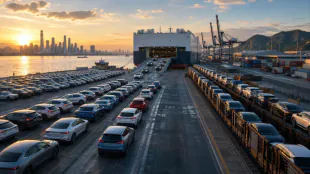 China Auto Exports Surge as Industry Moves Toward Overseas Production

 US Accelerates Review for 30-Year Trans-Alaska Pipeline Renewal

 Week 0 Betting Promotions Span Sportsbooks and Prediction Markets

 Notre Dame, LSU and Utah Selected at Different Levels of College Football Title Market

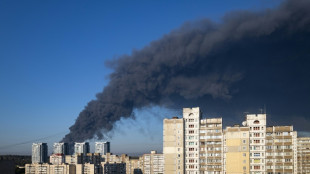 At least 37 dead after Russian strike on depot near Kyiv

 Clashes in Niamey after troops attempt to storm presidential palace

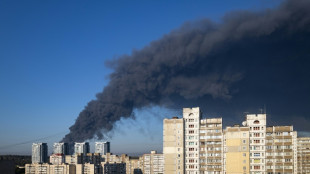 At least 27 dead after Russian strike on depot near Kyiv

 Tamil Nadu Assembly Clash Continues Over 10.5% Vanniyar Reservation

 Vijay Orders More Rehabilitation Opportunities During Puzhal Prison Visit

US President Donald Trump's decision to designate eight Latin American drug trafficking groups as "terrorist" organizations has raised speculation about possible military action on foreign soil.
What are the ramifications of the order targeting six Mexican drug cartels, Venezuela's Tren de Aragua and Mara Salvatrucha, the street gang with close links to Central America?
- Is military intervention likely? -
The cartels' designation as terrorist groups "means they're eligible for drone strikes" wrote tech billionaire Elon Musk, who has been given a prominent role in the Trump administration, on his social media platform X.
Experts, however, said that bombing Mexican cartels or sending troops over the border still appeared unlikely, although Trump's unpredictability makes it impossible to completely rule out.
The idea "used to be something that was found in a niche, very much on the fringes, and now it is at the center of the discussion," said Cecilia Farfan-Mendez, an analyst at the University of California Institute on Global Conflict and Cooperation.
Trump's negotiating style is to push his counterparts to the "extreme," said Steven Dudley, co-director of the InSight Crime think tank.
"The extreme is military invasion, of course, so what he's looking for is middle ground," Dudley said.
Vanda Felbab-Brown, an expert at the Washington-based Brookings Institute, believes that unilateral US military strikes against the cartels would risk dealing "a tremendous setback" to the fight against fentanyl smuggling.
"Mexico would consider this act an invasion, and whatever law enforcement cooperation that does exist would grind to a halt," she wrote in an article for Foreign Affairs magazine.
- Will it reduce fentanyl trafficking? -
The strength of fentanyl means that both its ingredients and pills can be transported in tiny quantities and still be profitable, according to experts.
"You don't need a truck, a boat, a plane, you need human beings," and the millions of people crossing the Mexican-US border every day make it "impossible" to control smuggling, Dudley said.
Farfan-Mendez said that Trump's strategy, focused on blaming and coercing Mexico, avoids addressing fentanyl as a health crisis that kills tens of thousands of Americans every year.
"If the goal is to prevent these deaths, this designation is not going to save more lives. It requires a public health policy," she said.
Felbab-Brown said that asking Mexico to completely halt the influx of fentanyl into the United States was "an unachievable demand."
- Will it enable US to dismantle cartels? -
According to Trump's executive order, it is US policy "to ensure the total elimination of these organizations' presence in the United States and their ability to threaten the territory, safety, and security of the United States through their extraterritorial command-and-control structures."
Dudley doubts that the cartels can be eliminated, either by deploying more troops on the ground or by using legal tools, because they are "sophisticated and very dispersed" organizations, capable of quickly recomposing.
"It cannot be solved by capturing a single person... or by dismantling an entire organization," he said.
According to Felbab-Brown, unilateral US military strikes "would almost certainly fail to destroy the cartels."
Replacements for leaders who were killed would be quickly found and the cartels "have repeatedly demonstrated a capacity to re-create damaged drug labs within days," she added.
- What are the risks for US companies? -
The designation "theoretically allows US authorities to impose penalties on entities and individuals that provide material support to cartels, including companies paying extortion fees under duress," according to the Mexican political risk consultancy EMPRA.
According to Dudley, the broad legal scope of the decree means that "in the hands of irresponsible authorities" it could be "extremely dangerous."
If the Mexican subsidiary of a US company pays extortion to a cartel, the parent company could be accused of "material support" for terrorism, he said.
"Providing even a pencil, a toy, or a cup of coffee can trigger severe criminal and financial penalties," Felbab-Brown said.
B.Baumann--VB