Germany knife attack on children reignites pre-vote migrant debate / Photo: © AFP

 US Open under the influence: content creators spark debate

 NBA hammers Clippers over Leonard salary cap violations
 NBA strips five first-round draft picks from Clippers for Leonard salary cap violations
 Kane brace helps Bayern win German Cup opener
 Migrant plight, local anger divide Ceuta one month after influx
 Outrage as Maltese tycoon acquitted of reporter's murder

 Rare train of Pacific cyclones fueled by historic El Nino
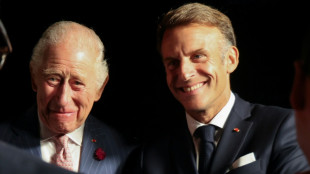 Macron, King Charles hail UK-France ties after viewing Bayeux Tapestry
 Fury hits out at 'coward' Joshua as 'Battle of Britain' talks go on
 Maltese tycoon acquitted of masterminding reporter's murder
 George Clooney: a Hollywood icon and campaigner
 Europe, US closer than they look on tech rules, says EU tech chief

 Clooney honoured as Hollywood-light Venice Film Festival kicks off
 Third-ranked Pegula, Medvedev power into US Open third round
 Davis-Woodhall a doubt for Ultimate Championship after car crash

 Third-ranked Pegula powers into US Open third round

 Uber says laying off 'about 10%' of workforce worldwide

 US judge rejects bid to break up Google's ad business

 Rupert Murdoch 'very happy' to be played by Guy Pearce in new film

 Wall Street stocks rise despite bond yields, oil rising

 Brennan claims third Vuelta victory in stage 11 sprint

 Nepal flood survivors cling to zipline to cross treacherous river

 US Treasury issues $1 coin with Trump's face on it
 Fernandez 'didn't hesitate' over record Man City move

 Dutch shift 86 tonnes of gold from US, Canada to UK
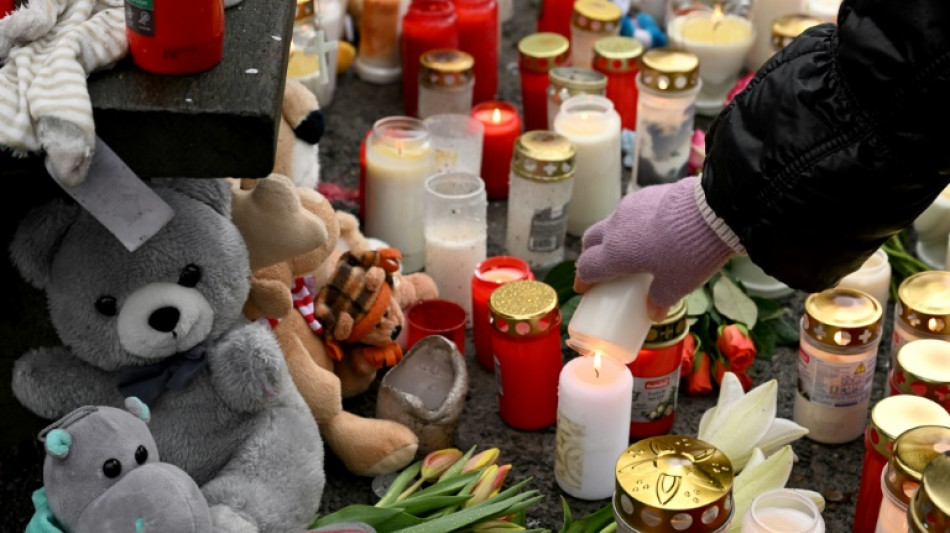
A deadly knife attack on a kindergarten group in Germany, where an Afghan man was arrested at the scene, reignited a bitter immigration debate Thursday, a month before elections.
Germany was stunned by what was the latest in a series of bloody attacks, in which a man wielding a kitchen knife on Wednesday attacked young children in a park in the Bavarian city of Aschaffenburg.
He killed a two-year-old Moroccan boy and a 41-year-old German man who had tried to protect the children and wounded three others, among them a Syrian girl also aged two who sustained neck wounds.
Following the attack, the conservative frontrunner in the February 23 polls, Friedrich Merz, vowed a "fundamental" overhaul of asylum rules and permanent border controls from day one, if elected to power.
His ally, Bavarian state premier Markus Soeder, called the attack on the toddlers "the most despicable and horrific crime you can imagine" and praised the heroism of a passer-by who died trying to protect the children.
The under-fire government of centre-left Chancellor Olaf Scholz denied blame but agreed that the current EU rules on managing asylum requests "no longer work".
Following the attack, police arrested a 28-year-old Afghan man, partially named by media as Enamullah O., who officials said suffered from mental health problems and should have been deported long ago to his first EU country of entry, Bulgaria.
Shocked and bereaved residents congregated on Thursday as city mayor Juergen Herzing laid a wreath in memory of the victims of the attack, which he said would be "engraved in the memory of the whole city".
He condemned those spreading "messages of hate without a word of regret for the injured and dead" but voiced hope his city's people "will stick together".
- 'Mentally disturbed' -
Scholz had on Wednesday condemned the "unbelievable act of terror" and convened a security meeting -- but Merz on Thursday went on the offensive over the government's record on immigration and security.
"Under my leadership, there will be fundamental changes to immigration law, asylum law and the right of residence in Germany," he said.
Merz added that, unlike Scholz, he did not see the attack as an "act of terror", but rather "as the criminal act of an obviously drug-dependent and mentally disturbed perpetrator".
On his first day as chancellor, he would instruct the interior ministry to "reject without exception all attempts at illegal entry", he said.
"This also explicitly applies to persons entitled to protection," he added, slamming the EU's current asylum system, known as the Dublin rules, as "recognisably dysfunctional".
"Germany must therefore exercise its right to the primacy of national law."
Interior Minister Nancy Faeser urged "more consistency in the enforcement of our laws".
She said that in the Afghan man's case, "Bulgaria was responsible for the asylum procedure under European law", but conceded that "the Dublin system no longer works".
She also pointed out that Germany had in the past sent back violent criminals to Taliban-ruled Afghanistan. "We are working intensively to deport more criminals" to Kabul, she said.
- Series of attacks -
German officials have said the Afghan suspect arrived in Germany in 2022, where he requested asylum. He had later agreed to leave Germany but never did.
Bavarian interior minister Joachim Herrmann said the man had been referred for psychiatric treatment and investigations pointed "very strongly in the direction of... mental illness".
Police who searched the suspect's room at an asylum centre found psychiatric medications but no evidence "of a radical Islamist attitude", he said.
Germany has been shaken by a series of deadly attacks, including a car-ramming through a Christmas market that killed five people and wounded over 200, with a Saudi man arrested at the scene in Magdeburg.
A knife attack last August killed three people and wounded eight in Solingen. The Islamic State group claimed the stabbing spree and police arrested a Syrian suspect.
The Solingen attack prompted the government to tighten controls on knives, strengthen security services with new powers and promise to push harder to enforce returns.
Scholz insisted the blame for the latest attack lay with the Bavarian authorities, who he said had not properly implemented existing policies.
"We have ensured that there are many options for returning someone who cannot stay here, but there is clearly a significant enforcement deficit," he said.
C.Bruderer--VB