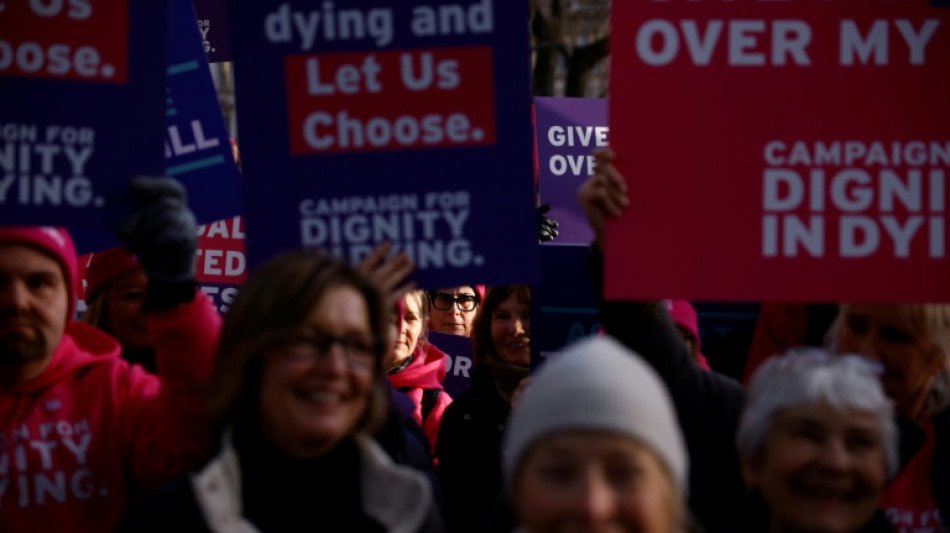
British MPs debate contentious assisted dying law / Photo: © AFP

 Davidovich Fokina wins in Mallorca for first ATP title

 Sabalenka urges Grand Slams to 'get it done' in prize money boycott row

 Russell snatches pole as Verstappen, Antonelli fourth for Austria GP grid

 Smith and supersub Foulkes strike for New Zealand in England finale

 Supersub Foulkes strike for New Zealand in England finale

 Wolff says Russell will be at Mercedes next season

 Djokovic inspired by Serena as he targets history at Wimbledon

 Stokes falls cheaply as England collapse in New Zealand decider

 Russell bounces back to beat Antonelli in final practice

 Iran says US violated peace deal as both sides trade fire

 Injured Australian pair Leckie, Italiano out of World Cup

 Farmers fear drought as Italy's longest river runs dry

 Budapest Pride to push for equality after reversed ban

 World Cup fans get taste of American life -- at the mall

 World Cup turns New York's Times Square into global fan hub

 Lebanon, Israel and US sign trilateral framework pact

 Cape Verde extend World Cup fairytale to set up Argentina meeting

 Messi to start dead-rubber World Cup group match on bench

 US and Iran trade strikes putting new strain on Mideast ceasefire

 Maple Leafs make teen McKenna top pick in NHL Draft

 California appeals court orders Weinstein resentencing for sex assault

 Scheffler fires 60 to grab 36-hole PGA Travelers lead

 Austria's Rangnick shuts down conspiracy talk ahead of Algeria World Cup clash

 Should we fear an AI bubble bust?

 US strikes Iran sites after cargo ship attack

UK lawmakers debated Friday whether to advance divisive and emotive legislation to allow assisted dying for terminally ill people in England and Wales, with a vote expected later in the day.
Parliament last debated, and defeated, a euthanasia bill in 2015, but public support for giving terminally ill people the choice to end their lives has since shifted in favour.
Opening the debate, Labour MP Kim Leadbeater, who is behind the Terminally Ill Adults (End of Life) Bill, said changing the law would give terminally ill people "choice, autonomy and dignity at the end of their lives".
But dozens of opponents gathered outside parliament holding signs with "Kill the Bill, not the ill" and "care not killing" as they urged MPs to vote against the proposed legislation.
Two polls last week indicated that a majority of Britons back changing the law, which would see England and Wales emulate several European and other countries.
Supporters say allowing assisted suicide would make some deaths less painful.
However, faith leaders are among the stringent opponents, with nearly 30 signing a joint letter last weekend arguing they are "deeply concerned" by the plans.
Critics insist it could lead some people to feel pressured into ending their life, while some say the healthcare system is not ready for such a landmark change.
The bill would allow assisted suicide in England and Wales for adults with an incurable illness who have a life expectancy of fewer than six months and are able to take the substance that causes their death themselves.
Any patient's wish to die would have to be signed off by a judge and two doctors.
The measures are stricter than assisted dying laws in other European countries and also proposed legislation being considered in France.
The bill is a so-called private members' bill and is not part of the government's agenda. The debate was due to end at 2:00 pm, with a vote on progressing the bill to its next parliamentary stage highly likely but not guaranteed.
- 'Right to choose' -
The legislation follows Prime Minister Keir Starmer's vow, before winning power in July, to allow parliament to revisit the issue.
The UK leader, who voted in favour of allowing assisted suicide in 2015 but with "robust" safeguards, has not revealed his current view.
The country's most senior civil servant has told cabinet members they "should not take part in the public debate" given the government is remaining neutral on the bill.
However, a number of senior ministers have aired their opinions, with Health Secretary Wes Streeting and Justice Secretary Shabana Mahmood both saying they are opposed.
Mahmood, the country's most senior Muslim politician, argued in a recent letter to constituents that "the state should never offer death as a service", while noting that her faith was informing her stance.
Broadcaster Esther Rantzen, who is terminally ill and has spearheaded the campaign for a law change, on Thursday urged other MPs to be honest about whether faith was the basis for any opposition.
"They have the right to choose but please be honest about your real motivation," she told LBC radio.
Meanwhile former prime minister David Cameron, who opposed the 2015 law change, revealed he had changed his mind on the issue.
"As campaigners have convincingly argued, this proposal is not about ending life. It is about shortening death," he wrote in The Times newspaper on Thursday.
However other ex-premiers -- including Liz Truss, Boris Johnson, Theresa May and Gordon Brown -- have all said they oppose the legislation.
In Scotland, which has a separate legal system and devolved powers to set its own health policy, it is not a specific criminal offence. But it can leave a person open to other charges, including murder.
S.Leonhard--VB