Japan PM scraps overseas trip after 'megaquake' advisory / Photo: © AFP

 Japanese 11-year-old wins Asian Games eSports gold

 TikTok agrees to teen limits in US settlement following Meta

 Venezuela's oil cradle pins hopes on US energy deals

 US, China buy time with trade truce as pressure builds

 'Leo, Leo': Young Catholics give pope rockstar welcome in France

 Lula bans sports betting days ahead of Brazil's election

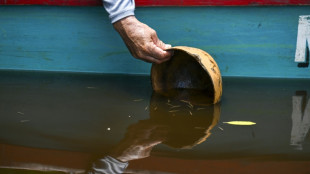 Guatemala ensures survival of vulnerable 'fossil' fish
 Mancini finds positives in Italy loss, accepts fans' jeers

 Alcaraz helps Europe into Laver Cup lead

 Six missing after building collapses in historic Athens district

 Mbappe scores but suffers knee injury as Zidane gets debut France win

 Mancini's Italy return spoiled by Belgium defeat

 Rodri confident in Man City innocence despite reported charges

 Jay-Z rape accuser says she made 'false accusations'
 Senegal draw first match under Vieira and Nigeria survive scare
 Trump, Xi end summit long on pomp, but short on progress

 Russia not preparing for conflict with Europe, Putin says

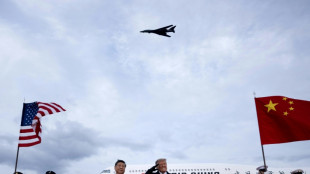 Trump's photo of Xi greeting carries signs of AI

 Six missing after building blast in historic Athens district

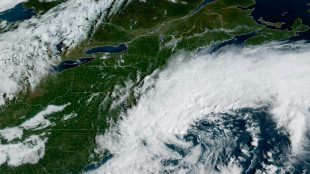 Millions in US northeast brace for powerful storm

 Assefa seeks 'better than my best' at Berlin marathon

 US court refuses to overturn Pentagon ban on Anthropic

 Verstappen and Norris blame slow cars as Mercedes tops qualifying

 Crowds cheer pope in Paris after AI 'paradise of machines' warning

 Teen swimmer makes Games history as Thai, Chinese sprinters win gold

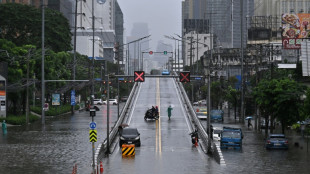
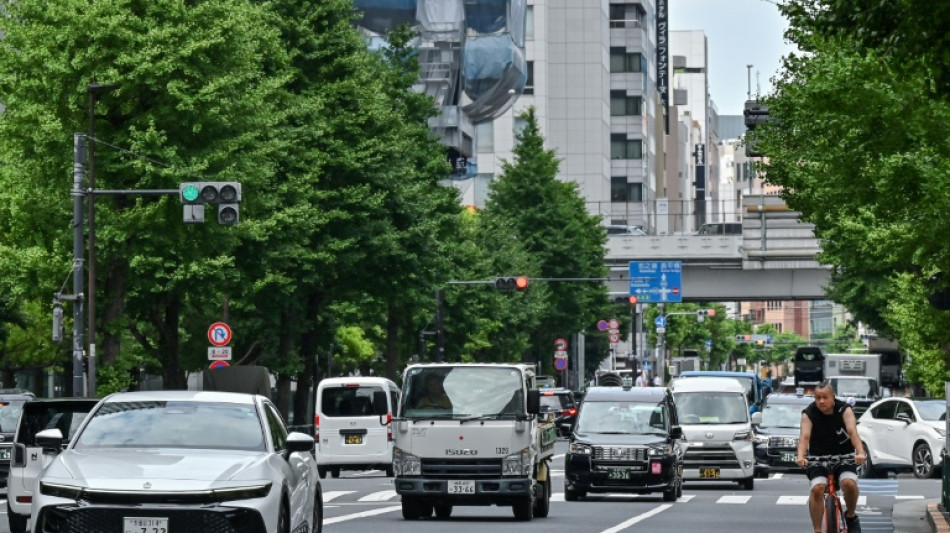
Japan's Prime Minister Fumio Kishida on Friday cancelled a trip to Central Asia after earthquake scientists warned the country should prepare for a possible "megaquake".
The Japan Meteorological Agency (JMA) issued the advisory on Thursday after eight people were on injured by a tremor of magnitude 7.1 in the south.
Kishida was due Friday to travel to Kazakhstan, Uzbekistan and Mongolia and had planned to attend a regional summit.
"As the prime minister with the highest responsibility for crisis management, I decided I should stay in Japan for at least a week," he told reporters.
Kishida added that the public must be feeling "very anxious" after the JMA issued its first advisory under a new system drawn up following a major magnitude 9.0 earthquake in 2011 which triggered a deadly tsunami and nuclear disaster.
"The likelihood of a new major earthquake is higher than normal, but this is not an indication that a major earthquake will definitely occur," the JMA said.
Traffic lights and cars shook and dishes fell off shelves during Thursday's earthquake off the southern island of Kyushu, but no serious damage was reported.
The Fire and Disaster Management Agency said eight people were hurt -- including several hit by falling objects.
Sitting on top of four major tectonic plates, the Japanese archipelago of 125 million people sees some 1,500 quakes every year, most of them minor.
Even with larger tremors the impact is generally contained thanks to advanced building techniques and well-practised emergency procedures.
The government has previously said a megaquake has a roughly 70 percent probability of striking within the next 30 years.
It could affect a large swath of the Pacific coastline of Japan and threaten an estimated 300,000 lives in the worst-case scenario, experts say.
- 'Risk elevated, but low' -
"While earthquake prediction is impossible, the occurrence of one earthquake usually does raise the likelihood of another," experts from Earthquake Insights said.
But they added that even when the risk of a second earthquake is elevated, it is "still always low".
On January 1, a 7.6-sized jolt and powerful aftershocks hit the Noto Peninsula on the Sea of Japan coast, killing at least 318 people, toppling buildings and knocking out roads.
In 2011, a mammoth 9.0-magnitude undersea quake off northeastern Japan triggered a tsunami that left around 18,500 people dead or missing.
It sent three reactors into meltdown at the Fukushima nuclear plant, causing Japan's worst post-war disaster and the most serious nuclear accident since Chernobyl.
A future megaquake could emanate from the vast Nankai Trough off eastern Japan that in the past has seen major jolts, often in pairs, with magnitudes of eight and even nine.
This included one in 1707 -- until 2011 the largest recorded -- when Mount Fuji last erupted, in 1854, and then a pair in 1944 and 1946.
T.Ziegler--VB