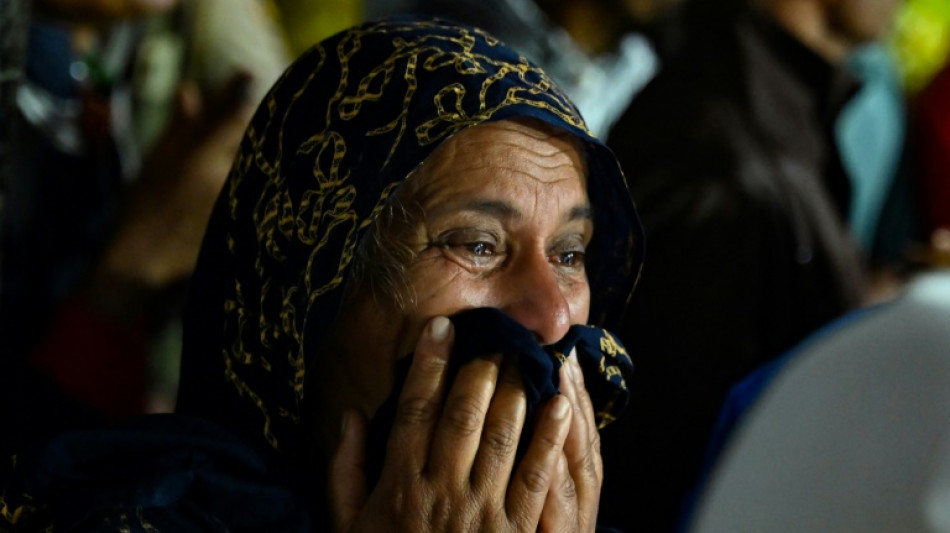
'No hope' as anguished families wait for India landslide bodies / Photo: © AFP

 AVEVA and PETROJET Sign MoU for Digital Twin Projects in Egypt
 Daily Horoscope November 20, 2026: Astrological Predictions for All Signs

 Desire Under the Elms review - a horror show that bruises more than it moves

 Saudi PIF Retains Top Sovereign Wealth Fund Brand Title for Third Year

 Phoenix Weekend Guide: Sangria Socials, Pie Markets, and New Brunch Spots

 Trent Perry’s Late Heroics Lift No. 7 UCLA Past Cal State Fullerton

 2027 Hyundai Elantra Review: Brutalist Design and Expanded Dimensions
The roar of moving earth startled manual labourer Abdul Kareem and his wife awake, allowing them to make a hasty escape before their Indian village was swallowed by muddy water.
Waiting outside an overwhelmed clinic to watch the regular arrival of bodies salvaged by rescue teams, he had no expectations that his relatives and neighbours had managed to do the same.
"My wife's father can't walk well," he told AFP. "I called my sisters the night before, they were at home and they were caught in it.
"We have no hope. That's how bad the situation is there."
Kareem, 52, believes a dozen or more family members living in the area were among at least 150 killed when landslides hit their remote corner of coastal Kerala state before dawn on Tuesday.
Some homes were buried under mud and debris while others were engulfed by raging flood waters, displaced by tonnes of rock and soil.
Wayanad district, famed for its lush tea plantations, experiences regular floods at the height of the annual monsoon season when torrential downpours carry on for days.
Kareem said he was used to taking shelter temporarily with relatives each year when the nearby Iruvazhinji river bursts its banks and partially floods his home.
"But this year it was horrible," he said.
Kareem and hundreds of other distraught locals kept an anxious vigil overnight outside the clinic at Meppadi, which was transformed into a triage centre for the rescued and a makeshift morgue for recovered bodies.
Crowds thronged ambulances as family members craned their necks to catch sight of a familiar article of clothing or jewellery from underneath sheets draped over the dead.
- 'Huge bomb sound' -
A team of volunteers worked to clean off the mud and slush coating the remains of those brought inside for identification.
Arun Dev, who lived close to the clinic and offered his help to the beleaguered medical team, said the force of the floodwaters had caught many who managed to escape the initial impact of the landslides.
"Those who escaped were swept away along with houses, temples and schools," he told AFP.
Dev said rescuers had made the gruesome discovery of severed limbs and other body parts several miles downstream from the disaster site.
"It's going to be bad for the next few days," he said.
The only bridge connecting the worst-hit villages of Chooralmala and Mundakkai was washed away, so rescue teams were forced to use ziplines to cart bodies out of the disaster site.
Soldiers, fire crews and volunteers have rescued hundreds of people while more than 3,000 others are taking shelter in relief camps set up nearby.
Tea plantation worker Kedarbai told AFP the roar of the landslide had jolted her awake, giving her time to flee her bedroom with her young child before it was buried by mud.
"It was like a huge bomb sound," the 30-year-old, who goes by one name, told AFP.
"We were not sure what was going to happen to us," she said. "We're very lucky to be alive."
O.Schlaepfer--VB