S.Africa to dish up more zebra to boost jobs and conservation / Photo: © AFP

 Asian Games set to close after records, rancour and rain

 Cry for help as French-Swiss lake dries up
 Sabalenka swept out of China Open in third round

 US urges 'restraint' as Ethiopia's Tigray crisis rocks region

 Teens on target again as USA down Mexico 3-0

 World records prove Asian Games were a hit, says top official

 US prison chief who oversaw botched execution resigns

 'Chaotic' Asian Games threaten Japan hopes of hosting Olympics again
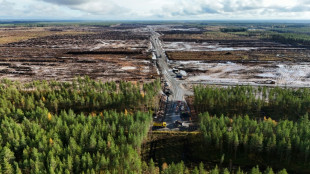 Finnish town braces for change from Google data centres
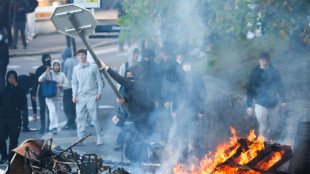 What is fuelling French school protests?
 Without lawyers, migrant children face deportation from the US
 Three-peat seeking Dodgers open playoffs with a win, Rays hold off Yankees

 Brazil votes in nail-biter polls closely watched by Trump
 'Just be you': Kim reveals Tiger text that inspired him to gold

 Myanmar migrants returned to war-torn nation from Malaysia

 ALEX BODI AND AMBASSADOR GUM DOMINIC MATIOK OF THE REPUBLIC OF SOUTH SUDAN MEET IN BERLIN TO DISCUSS THE POSSIBILITY OF AN HONORARY CONSULATE IN BUCHAREST

 Lula, Bolsonaro wrap up campaigns ahead of Brazil's knife-edge vote

 Toulouse edge Castres in Top 14 derby

 Murakami homer propels White Sox to MLB playoff win over Guardians
 Israel targets top Hamas leader in deadly Gaza strike on anniversary
 Houthis say struck oil facility near Riyadh, as Saudis hit Sanaa

 AI needs safety layers like nuclear plants: ex-OpenAI engineer

 MVP Judge will miss Yankees' MLB playoff series against Rays

 New lizard species discovered in Peru

 Fernandes hails Portugal's 'greatest symbol' Ronaldo, calls for unity
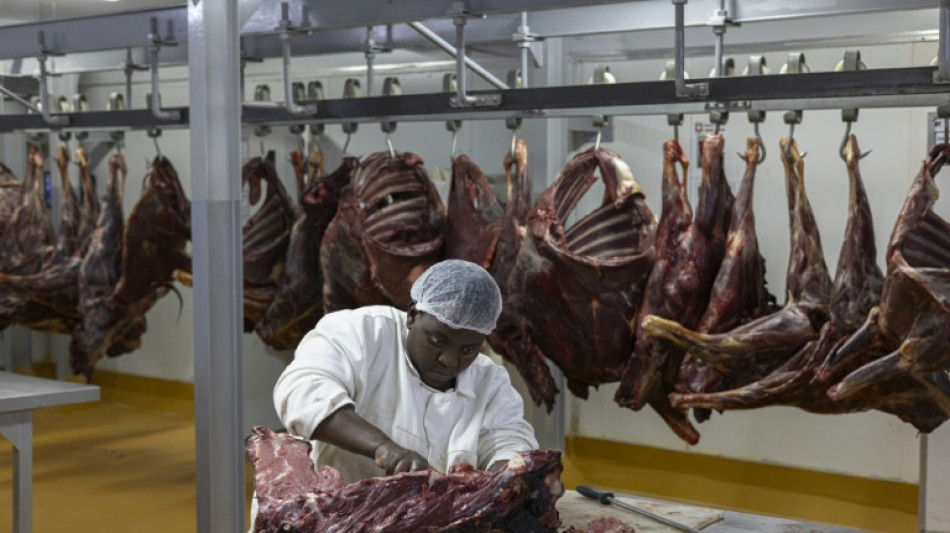
Carcasses of impala, kudu and wildebeest hang from a slaughterhouse rail, ready to be turned into steaks, sausages and burger patties of the kind South Africa wants to see more of on the dinner table.
The abattoir in Bela Bela, north of Johannesburg, is among only a handful in the country dedicated to game meat.
Authorities say the untapped sector could create jobs and help preserve wildlife -- while pleasing the palates of climate- and health-conscious meat eaters.
"We want to add a dimension into your dinner plate by giving you an organic game meat from the wild," Khorommbi Matibe, the environment ministry's biodiversity economy chief, told AFP.
A top wildlife tourism destination, South Africa produces around 60,000 tonnes of game meat a year -- equivalent in weight to roughly 60,000 giraffes.
But only a fraction ends up in butcheries and supermarkets. Ninety percent is hunted and consumed informally, according to the government.
Even less is exported.
In 2019, just over 3,000 tonnes of ostrich, crocodile and zebra were shipped to the European Union, China and the UAE, it said.
Authorities would like to serve up much more.
In March, they said they want to grow the sector from 4.6 billion rand ($250 million) in 2020 to 27.6 billion rand by 2036, adopting a strategy published late last year.
- Less methane -
With unemployment sitting at 32.9 percent nationally, this could create jobs in rural, economically deprived areas.
Matibe said there are good reasons for barbecuing more springboks.
Game animals release less methane -- a greenhouse gas -- than cattle, whose burps are a top source of global warming emissions from agriculture.
Foraging in the wild, their meat is by definition free-range and lean.
A 2023 study by researchers at Stellenbosch University, found that zebra meat in particular was highly nutritious and very low in fat.
Eating more of it could also help conservation efforts, the government argues.
South Africa has long adopted a market-oriented approach to conservation, based on the belief that farmers have a better incentive to look after wildlife if they can profit from it.
Critics say the model exploits and commoditises animals. But it has proved largely successful.
The country's wildlife population has grown from about 500,000 in the 1960s to more than 20 million today. About 80 percent is in private game reserves that attract tourists and hunters.
Some meat could come from the hundreds of herbivores that are culled every year to keep numbers within sustainable levels, the government says.
And it wants to convert one million hectares of communal land to game meat production, which could boost black ownership in a sector where, 30 years after the end of apartheid, more than 94 percent of operators are white males, said Matibe.
Requiring little equipment, game has "really low" input costs -- an advantage for newcomers, added Darren Horner, owner of producer Aloes Meat.
- Meaty problems -
Yet, in a country mad for barbecue, locally known as braai, little currently ends on the grill.
This is partially due to the belief that game is less tender than beef and tastes unusual, according to the strategy, which envisages marketing campaigns to boost consumption.
"Our grandmothers used to stuff it with bacon and leave it in red wine for three days to get rid of that wild taste. To me it only needs a bit of olive oil and salt," said Charl de Villiers, head of Game SA, an industry group.
There are other hurdles.
Authorities plan to draw up quality standards so that all meat can be traced to the source and trusted by supermarkets and restaurants.
But these can't be too stringent or risk scaring away informal producers, said Horner.
Meanwhile, exports of cloven-hoofed animals to Europe have been banned for years as South Africa struggles to contain outbreaks of the foot and mouth disease that farmers blame on inadequate border controls.
State laboratories to test meat are small and outdated, which further limits export potential, producers say.
De Villiers currently has to ship his ostrich meat to Britain for testing, which ups costs.
- Big disappointment -
Stephen Nel, owner of the Camo Meat abattoir in Bela Bela, said he applied for an export licence in 2017 but has since given up on it.
"It was a very big disappointment for me. The government failed us," Nel said, wearing khaki shorts and a matching shirt inside his refrigerated facility.
About 4,000 animals a year are skinned, weighed, deboned, processed and packaged there.
Almost all are brought in by hunters keen on eating some of their prey.
Expanding production to supply supermarkets would require investments, but these are hard to come by, amid scepticism around the sector's potential, he said.
The government has been talking about growth for over a decade, but "nothing gets laid down", said Nel.
Yet, Matibe is confident the strategy will soon start to bring results and will remain on track even after elections in May that forced the ruling African National Congress to form a coalition government.
"In the next three years, we should be able to see a ramp up of this product coming to the market," he said.
I.Stoeckli--VB