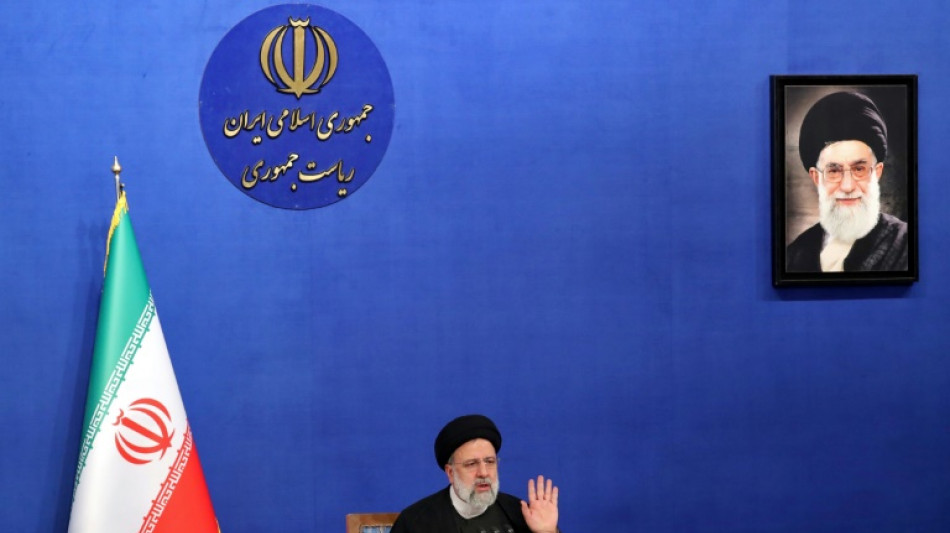
Raisi death reshapes Iran succession, puts focus on Khamenei son / Photo: © AFP/File

 Rubio touts US power, calls on Europe to emerge from 'slumber'
 Trump says 'we don't think' Russian plague is bio-weapon
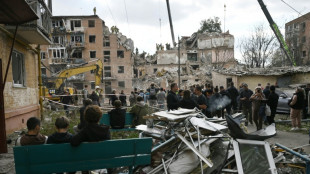 Five children among 26 killed in Ukraine after Russian strikes
 Man City should 'accept' punishment for rule breaches, says Lineker
 US woman who survived botched execution is awake and speaking
 From 1800s to modern pharma: a Nobel-winning chemistry quest

 Southampton boss Eckert given suspended ban over 'Spygate'
 Russia warns of 'false' information as second plague case reported
 IEA ready to release more oil reserves if necessary
 HSBC 'consults' over UK unit job cuts amid AI adoption
 UK court quashes five ex-traders' Libor rate rigging convictions
 XM Receives “Global Customer Experience Leader Award 2026” at the TrustFinance Performance Awards
 Stocks slide as oil climbs on Mideast flareup
 Heavy casualties in Ukraine after Russian strikes
 French wine harvest set to hit historic low
 Kyiv 'cannot agree' to EU membership limiting food exports: minister

 Arteta targets more Arsenal glory after signing new deal until 2030
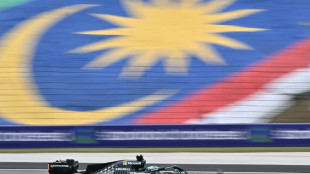 Russell hit with Singapore grid penalty for taking new power unit
 Spotify expands audiobooks to more than 180 markets

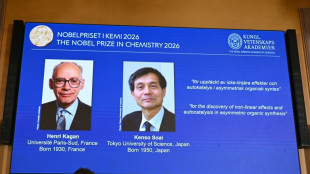 French-Japanese duo wins chemistry Nobel for solving molecular 'mystery'
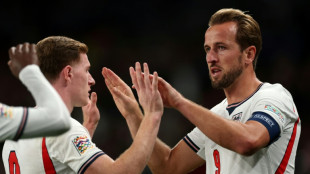 England's Nations League surge helps heal World Cup wounds

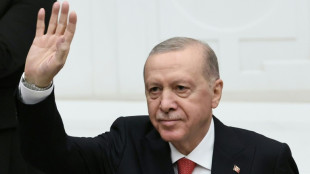 Mayor of opposition stronghold Izmir defects to Erdogan party
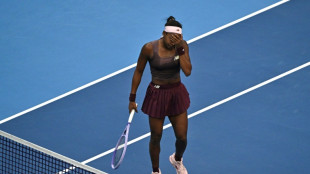 Mertens beats Gauff to set up Swiatek clash at China Open
 Benin full of pride at role in Messi's last dance
 France suspends stun grenade use at student protests ahead of PM speech
The death in a helicopter crash of president Ebrahim Raisi, seen as a possible successor to supreme leader Ayatollah Ali Khamenei, has reshuffled the cards in the succession process and increased the spotlight on the Iranian number one's son Mojtaba as a contender.
While analysts emphasise it is impossible to know for sure the intentions of Iran's leadership, Raisi's record as a pillar of the Islamic republic over several decades made him an inevitable candidate to become its third supreme leader after Khamenei and revolutionary leader Ayatollah Ruhollah Khomeini.
The supreme leader serves for life after being appointed by the Assembly of Experts body and has the final say on all key matters including foreign policy. Khamenei, 85, has held the post since Khomeini's death in 1989.
Ali Fathollah-Nejad, director of the Berlin-based think tank Center for Middle East and Global Order, said it is "very hard to tell" if Raisi was seen as a successor but noted that Khamenei had "catapulted his longtime confidant into major positions".
These included head of the judiciary and the presidency, indicating "a desire to provide him with the kind of profile that would facilitate his ascendancy to the supreme leadership", he told AFP.
"In Iran's opaque political environment, none but a handful at the top know how likely Raisi was to become the next supreme leader," added analysts Ali Vaez and Naysan Rafati of the International Crisis Group in a study.
"But if he was to get the job, his death puts a big question mark on the succession."
- 'Cards reshuffled' -
Other than Raisi, the other widely tipped contender was Khamenei's son Mojtaba, 54, a shadowy figure rarely seen in public but hugely influential behind the scenes and sanctioned by the United States.
"Khamenei has long desired to position his son Mojtaba as his successor," said Fathollah-Nejad, describing Mojtaba Khamenei as "a central actor in the shadows".
He emphasised that even within the Iranian leadership there were concerns over "dynastic rule" given how this was so vehemently rejected by the Islamic revolutionaries who ousted the last shah.
"Now, however, with Raisi's demise, the cards regarding Khamenei's succession are reshuffled. As a result, the focus of attention now shifts back to Mojtaba," he said.
Keeping a low public profile, rarely mentioned in media reports and without any official title, Mojtaba Khamenei is believed by observers to be the second-in-command at the office of the supreme leader behind the longstanding chief gatekeeper Mohammad Golpayegani.
One of the few official insights into his importance came in November 2019 when the US treasury announced sanctions against Mojtaba Khamenei, saying Ali Khamenei had "delegated a part of his leadership responsibilities" to his son.
Raisi's death would "reshape the looming succession process", said Suzanne Maloney, director of the foreign policy programme at the Brookings Institution, adding Raisi had emerged in recent years as "one of the leading candidates" to succeed Khamenei.
Maloney said Mojtaba Khamenei was "the most prominent contender" aside from Raisi and a figure who has wielded "considerable power behind the scenes". But there were also questions over his religious credentials as well as hereditary governance, she added.
Analysts do not exclude that another name could emerge as a potential supreme leader with some attention focusing on Ali Reza Arafi, a cleric who is a member both of the Assembly of Experts and the Guardians Council oversight body.
- 'Renewed popular protests' -
Ensuring stability and continuity will be the number one priority for the leadership especially after the 2022 nationwide protests that exposed popular frustrations among young people over social restrictions in the Islamic republic, particularly for women.
Power in the Islamic republic has in the last years become ever more concentrated in the hands of conservatives, a trend confirmed by parliamentary elections this year that saw the lowest ever turnout in a legislative poll in Iran.
While the president's powers are limited, Raisi's death was still a shock -- he is only the second president of Iran to die in office after Mohammad Ali Rajai who was killed in a 1981 bomb attack after less than a month in office.
Fathollah-Nejad said that in the wake of the 2022 protests and an ever-deepening economic crisis in the face of Western sanctions, the transition of power to a new supreme leader would represent a risky period for the authorities.
"If Khamenei dies and/or if Mojtaba is declared as his successor, renewed popular protests against the regime would not be unlikely," he said.
"The big question is if in such a scenario of a power vacuum or a contested succession decision, we would see cracks within the power and security apparatus that could open up the window for unexpected events," he added.
B.Wyler--VB