Tandem heatwaves, storm surges increasingly batter coasts: study / Photo: © AFP

 Two dead as Istanbul endures heaviest rainfall in 80 years

 After latest Nepal flood, survivors fear for future

 EU leaders clash over budget as spectre of French elections looms

 'No place to breathe': life in Indonesia's fire epicentre

 'Can't sleep': Spain's housing crunch upends lives

 Musk calls on Ukraine's Zelensky to 'go' after satellite slowdown row

 Still smiling at 117, Albanian may be world's oldest woman

 Pope has 'good night' in hospital: Vatican
 China's economy seen missing target as global shocks bite: AFP poll

 Costa Rica opens jail inspired by El Salvador mega-prison

 Same-sex couple takes fight for equality to Slovakian court

 'High hopes' as Indonesian women get a football league, again

 'Expectations high' for Bordeaux-Begles' Champions Cup hat-trick bid, says Depoortere

 Rennie urges All Blacks to stay focused against 'hurting' Wallabies

 Palmeiras beat Fluminense 2-1 in Libertadores semi-final first leg

 Brewers blasts leave Dodgers on brink

 Tech stock lead rout after US inflation fuels rate hike bets

 Al-Fayed survivors say UK police missing 'bigger picture'

 Online 'witch hunt' sweeps up Asians misidentified as US rape accused

 Prospect of Bolsonaro win looms large over Brazil's Indigenous

 Freed from Belarus, founder of Lady Gaga's biggest fan site tells his story

 Behind AI's carbon footprint, a potential climate tool

 Trump's new press secretary faces scrutiny over credentials

 PSG 'got lucky' to win Man City thriller, says Luis Enrique

 Real Madrid comeback stuns Roma as Mourinho enjoys happy reunion

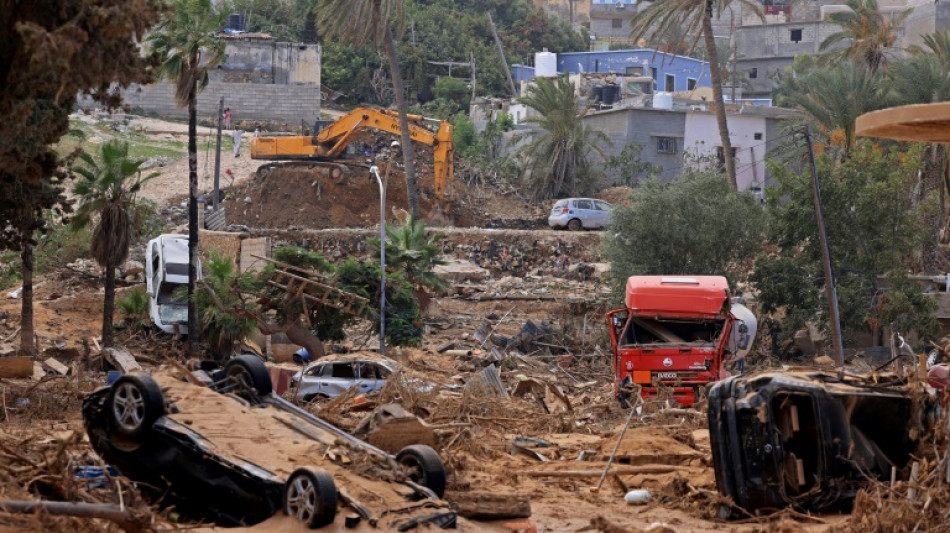
Coastal communities need to prepare for simultaneous extreme weather events as heatwaves increasingly overlap with surges in sea levels due to climate change, a study published on Thursday warned.
Extreme heat and sea levels are typically monitored and studied individually but researchers from Hong Kong Polytechnic University found they were occurring simultaneously -- a phenomenon that could multiply fivefold by mid-century.
The study's lead author, Mo Zhao, told AFP these events pose "very dangerous" risks, from deadly heat to floods, that may "exceed the coping capacity" of communities to respond.
"We don't have sufficient resources or sufficient human resources to handle these two extremes," she said.
Previous studies have shown that heat contributes to storm systems like tropical cyclones that bring surging sea levels, said Shuo Wang, co-author and assistant professor of hydroclimatic extremes.
But the study published in the journal Communications Earth and Environment found that high temperatures not only precede storms but persist through them, leaving communities battered by two extremes at once.
Already, global coastal areas have seen these combined events occur an average of 3.7 days more per year between 1998 and 2017 compared to the previous two decades.
The study projected these events would increase by an average of 31 more days per year by 2049 under a worst-case scenario if planet-heating greenhouse gas emissions continue unabated.
Tropical regions such as southeast Asia, West Africa and eastern parts of South America would see the greatest increases.
- Urgent emissions cuts required -
With 40 percent of the world's population living in the tropics, the study said billions of people were facing the potentially deadly consequences.
And the solution is not as simple as air conditioning.
Cooling systems are not common in households in poorer countries, the study noted.
Meanwhile, richer countries that do have them have shown that power cuts become a risk, particularly during storms.
"People cannot use air conditioners. But at the same time they suffer from heat... so we have adverse impacts on human health, especially for the elderly and children," Wang said.
The researchers said the world could avoid reaching this worst-case scenario by making rapid and deep cuts to emissions.
"If we take urgent action to mitigate the climate change... the situation would be better," Wang said.
But with the effects of climate change already being felt, extreme events cannot be avoided totally.
Instead, governments need to invest in adapting coastal infrastructure to better protect communities from the changing conditions, Wang said.
Early warning systems that measure the multiple variables contributing to complex crises are also needed so people can better prepare, he added.
R.Buehler--VB